The Complete Guide to Bodyweight Back Exercises for Posture and Pain Relief
Bodyweight back exercises are one of the most effective - and accessible - ways to reduce back pain, correct poor posture, and build lasting spinal strength. You need no gym, no equipment, and no complicated programming to get started.
Bodyweight back training is a form of resistance exercise where your own body mass provides the load needed to strengthen the muscles that support your spine, posture, and movement.
Used consistently, these exercises can reverse the muscle imbalances caused by sitting, slouching, and sedentary habits - the root causes behind most everyday back pain.
TL;DR
- Bodyweight back exercises target the muscles that support your spine and posture
- They work the upper, mid, and lower back without weights or gym access
- Poor posture and back pain are often caused by weak, underused back muscles
- Consistency matters far more than intensity - 3 sessions per week is enough to see results
- Personalized routines outperform generic exercise lists for long-term correction
- Apps like Backed AI can guide your form, track progress, and build consistency
What Are Bodyweight Back Exercises?
Bodyweight back exercises are movements that use your own weight as resistance to strengthen the muscles running along your spine and shoulder blades. They require no barbells, machines, or gym membership.
These exercises fall into two main categories:
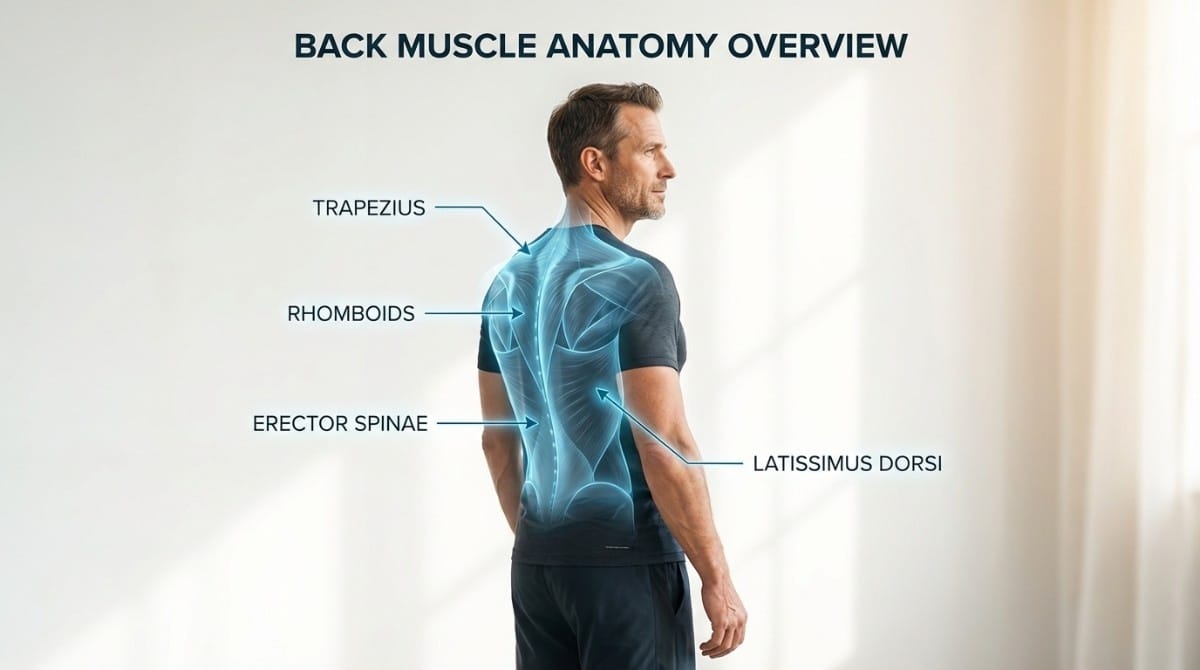
Extrinsic back muscles - the visible outer muscles including the trapezius, lats, rhomboids, and levator scapulae. These control shoulder blade movement, arm pulling motions, and upper body posture.
Intrinsic back muscles - the deeper stabilizing muscles including the erector spinae, multifidus, and paraspinal group. These hold the vertebral column upright and maintain your posture during daily movement.
Both groups need regular activation to function properly. Most people with poor posture or recurring back pain have weaknesses in both.
Why Does Back Weakness Lead to Poor Posture?
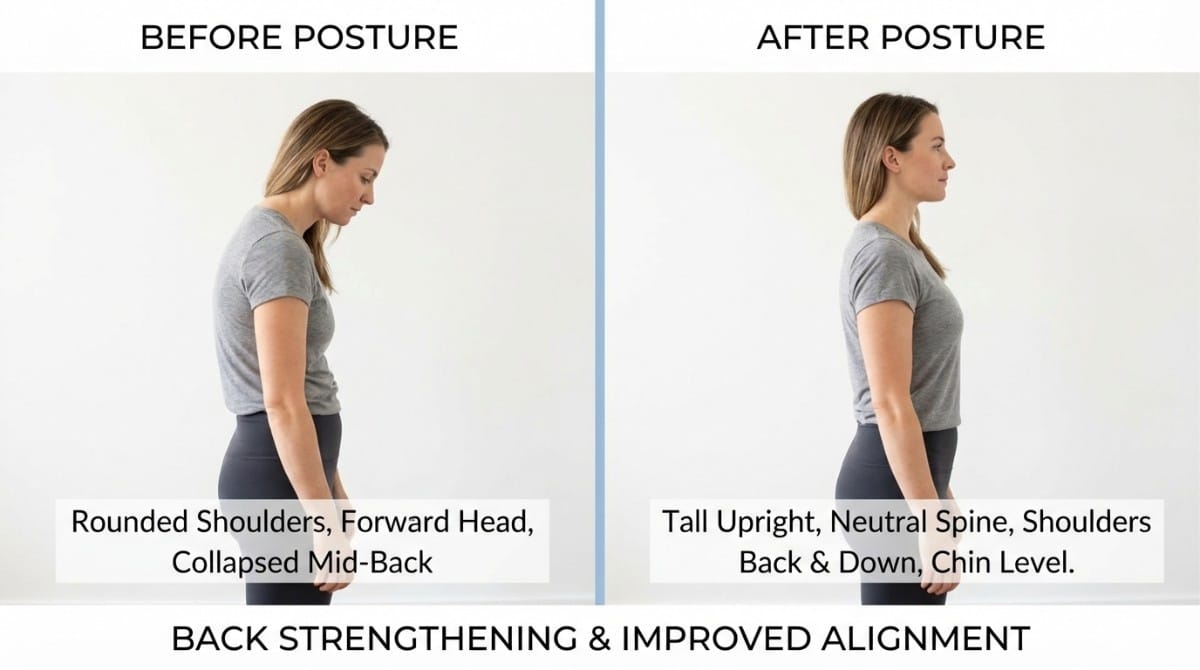
Most posture problems are not structural - they are muscular. When the muscles that hold your spine upright become weak or tight from prolonged sitting, the body compensates by shifting into easier, lower-effort positions.
This creates a chain reaction:
- Weak rhomboids allow the shoulders to roll forward
- Weak erector spinae causes the lower back to slump
- Tight hip flexors pull the pelvis out of neutral
- The head drifts forward to compensate for thoracic rounding
The result is rounded shoulders, a hunched upper back, and persistent tension in the neck, mid-back, and lower back.
Posture specialists suggest that strengthening the posterior chain - the entire back side of the body - is the most reliable way to restore neutral alignment without devices or braces.
How Do Bodyweight Back Exercises Actually Fix Posture?
Strengthening the back muscles pulls the skeleton back into its intended alignment. When your rhomboids are strong, your shoulder blades retract naturally. When your erector spinae is activated, your spine extends upright without effort.
This is why physiotherapists often recommend targeted bodyweight back work as a first-line intervention for posture correction - before resorting to passive treatments like massage or manipulation.
The key is not doing hundreds of exercises. It is doing the right ones, with correct form, repeatedly over weeks.
Best Bodyweight Back Exercises (Quick List) 💪
Here are the most effective bodyweight back exercises for posture correction and pain relief, organized by primary target zone.
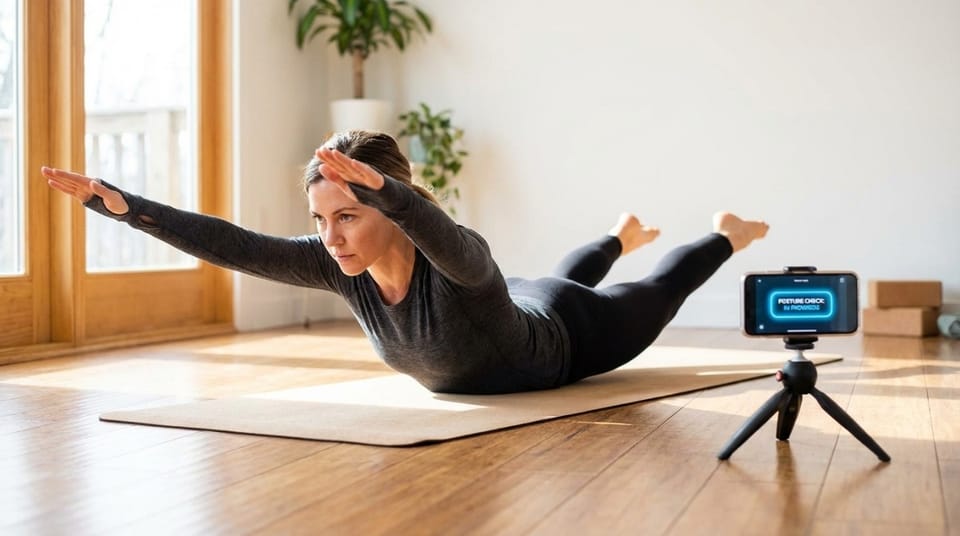
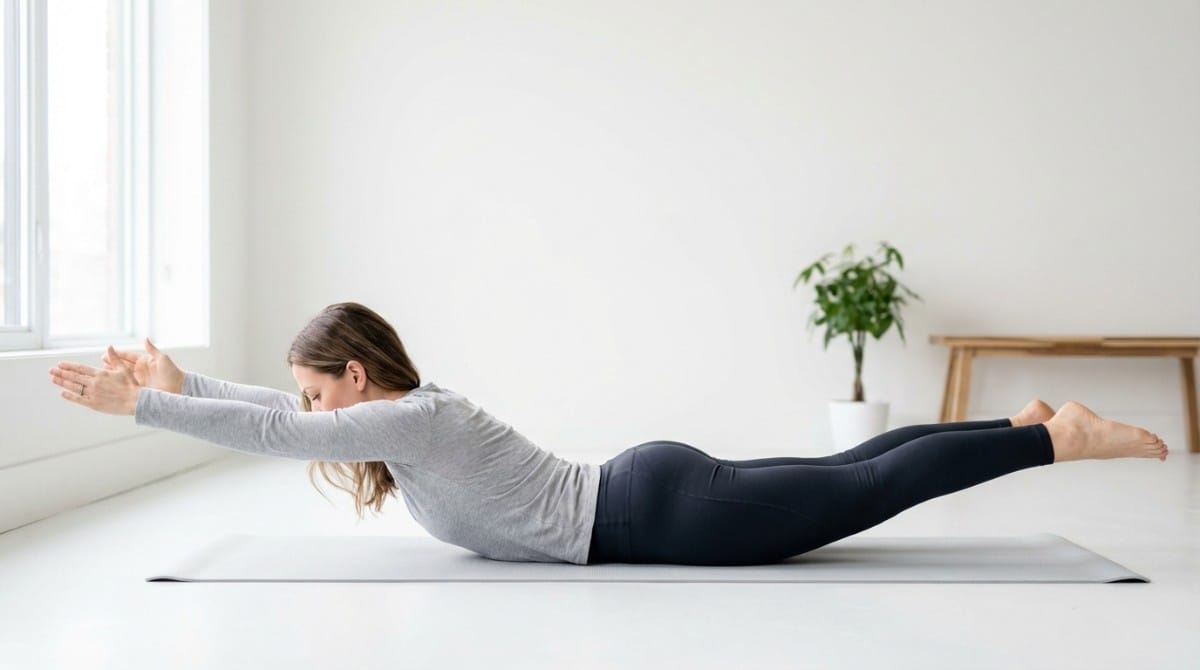
1. Superman Hold Targets the upper and lower back, rhomboids, glutes, and erector spinae. Lie face down, extend arms forward, and lift your arms and legs simultaneously. Hold 5 seconds. 3 sets of 12 reps.
2. Reverse Snow Angel Targets the upper and mid-back, lats, and levator scapulae. Lie face down, sweep arms in a wide arc from overhead to your sides. Excellent for shoulder retraction and thoracic mobility. 3 sets of 12 reps.
3. Prone Pull Targets lats, rhomboids, trapezius, and posterior shoulders. Lie face down, arms extended, then draw elbows back toward the lower back while squeezing shoulder blades together. 3 sets of 12 reps.
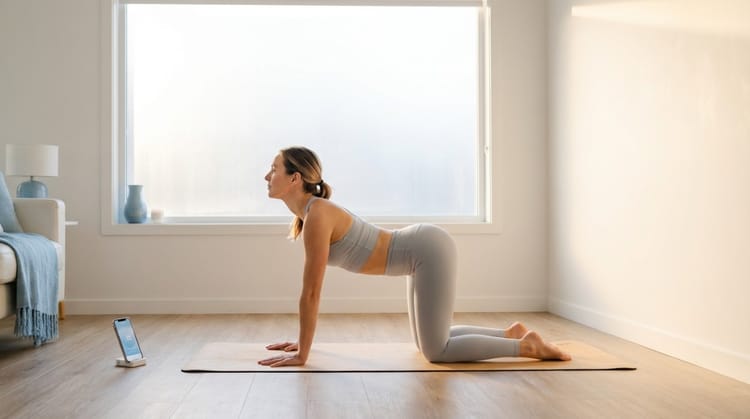
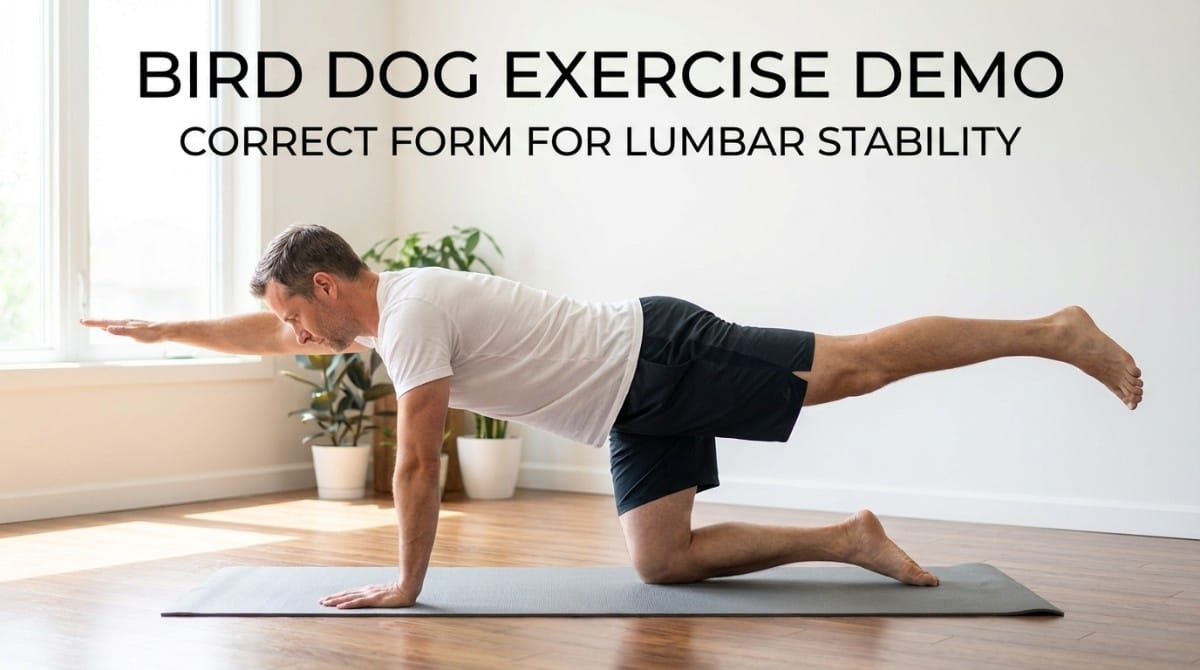
4. Bird Dog Targets the erector spinae, multifidus, glutes, and core. Start on all fours, then extend opposite arm and leg simultaneously while keeping the spine neutral. The most effective exercise for lumbar stability. 2 sets of 10 reps each side.
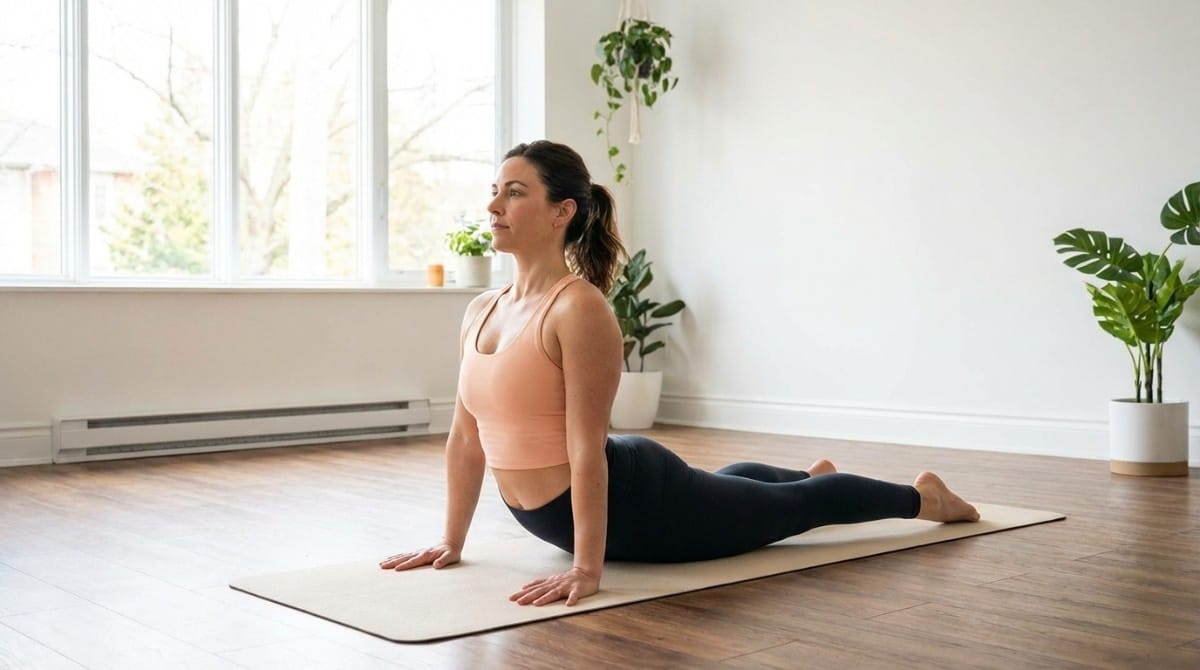
5. Cobra Pose Targets the entire posterior chain - lats, trapezius, erector spinae. Lie face down, hands at ribs, then press up to extend the spine. Excellent for lower back decompression. 2 sets, hold 20-30 seconds.
6. Plank Row (with resistance band or improvised anchor) Targets lats, rhomboids, trapezius, core, and arms. Begin in a plank, then row one arm back in a controlled motion. Builds upper back strength with simultaneous core engagement. 2 sets, 30 seconds per side.
7. Hip Hinge (Good Morning) Targets the erector spinae, glutes, and hamstrings. Stand with feet hip-width apart, hands behind your head. Hinge forward at the hips until your back is near parallel, then drive back up. 3 sets of 12 reps.
8. Inverted Row (using a table or low bar) Targets lats, rhomboids, trapezius, biceps, and core. Lie under a sturdy table, grip the edge, keep your body straight, and pull your chest to the surface. One of the most effective no-gym pulling exercises. 3 sets of 10 reps.
Step-by-Step Recovery Framework: Building a Weekly Back Routine
Week 1-2: Foundation Focus on form. Choose 3 exercises - Superman, Bird Dog, and Cobra. Perform 2-3 sets of each, 3 times per week. Rest 60 seconds between sets.
Week 3-4: Volume Add the Prone Pull and Hip Hinge. Increase to 3 sets per exercise. Begin tracking whether your posture improves between sessions.
Week 5-6: Progression Introduce the Inverted Row and Plank Row. Begin pairing back exercises with a 5-minute mobility warm-up (arm circles, thoracic rotations, cat-cow).
Week 7+: Maintenance Aim for 3 focused sessions per week. Adjust based on where you feel residual tightness. Begin monitoring posture during daily activity - sitting, standing, walking.
💡 Key Insight: Research in musculoskeletal rehab shows that back strengthening programs need at least 6-8 weeks of consistent effort to produce measurable postural changes. The first 2 weeks are about rewiring motor patterns, not building visible muscle.
Bodyweight Back Exercises by Muscle Zone - Quick Reference Table
What Happens If You Only Stretch and Never Strengthen?
Stretching alone will not fix posture. This is one of the most common mistakes people make.
Stretching relieves tension temporarily - but without strength behind it, the muscles return to their shortened, overactive state within hours.
Posture correction requires a two-part process:
- Releasing tight muscles (chest, hip flexors, neck)
- Strengthening weak muscles (rhomboids, erector spinae, glutes)
Skipping the strengthening phase means your posture will keep reverting no matter how often you stretch.
Common Mistakes That Kill Your Progress ⚠️
Arching the lower back during superman. This compresses the lumbar spine. Keep glutes engaged and avoid forcing range of motion.
Rushing through bird dogs. Speed destroys the stabilization benefit. Move slowly with full control.
Skipping the warm-up. Cold, stiff muscles compensate incorrectly. Spend 5 minutes on cat-cow, arm circles, and gentle thoracic rotations first.
Doing only floor exercises. Prone exercises are essential, but adding a pull-based movement (inverted row, resistance band row) dramatically accelerates upper back correction.
Doing too much, too fast. Starting with 5 exercises in one session often leads to soreness, discouragement, and quitting. Begin with 3 focused movements done well.
Research & Expert Insight 🔬
Research in musculoskeletal rehabilitation consistently shows that targeted spinal extensor training reduces lower back pain intensity and improves functional movement quality in sedentary adults.
Physiotherapists often recommend the bird dog as one of the first exercises prescribed for lower back rehabilitation because it activates the multifidus - a deep spinal stabilizer that tends to disengage with prolonged sitting.
Posture specialists suggest that exercises combining spinal extension with scapular retraction - like the prone pull and reverse snow angel - are particularly effective for reversing the rounded-shoulders pattern common in desk workers.
Evidence from ergonomic health studies suggests that desk workers who perform 10-15 minutes of targeted back strengthening three times per week report significant reductions in upper back tension and self-reported posture improvement within 4-6 weeks.
When This Approach Doesn't Work
Bodyweight back exercises work for the vast majority of people with posture-related back pain. But there are situations where they need to be adjusted or supplemented.
When it may not be enough:
- Structural disc herniation or nerve compression - medical assessment comes first
- Severe scoliosis - exercise is helpful but requires professional guidance on safe movement patterns
- Acute injury (within 72 hours) - rest and ice before beginning any exercise
- Chronic pain that worsens during exercise - stop and consult a physiotherapist
When generic exercise lists fail most people:
- No clear starting point tailored to your specific weakness pattern
- No feedback on whether your form is correct
- No progression structure - doing the same exercises at the same intensity forever
- No consistency mechanism - life gets busy, routines collapse
This is where a personalized approach becomes essential.
🔵 Take Your Back Training Further With Backed AI
(Soft mid-article note: If you want more than a list of exercises - and a system that tells you exactly what to work on based on your posture - scroll to the bottom.)
Final Takeaway
Bodyweight back exercises are not a temporary fix. They are the foundation of long-term posture correction and back pain relief.
The key principles to remember:
- Strength is more important than flexibility for posture correction
- Consistency over 6-8 weeks creates real structural change
- Form quality matters more than rep volume
- A routine that matches your specific weakness pattern will always outperform a generic list
Start with 3 exercises, 3 days per week, and build from there. Your back will respond.
Why Most Exercise Plans Fail - And What to Do Instead
Most people who try to fix their back pain and posture start well. They find a list of exercises, do them for a week or two, and then stop.
This is not a motivation problem. It is a systems problem.
Generic exercise lists fail because:
- They are not matched to your specific posture pattern or weak points
- There is no form feedback - you cannot tell if you are doing the movement correctly
- There is no progression - the same exercises get easier and stop producing results
- There is no accountability or reminder system to keep the habit alive
The result is short bursts of effort that never accumulate into meaningful change.
A Smarter Way to Correct Your Back 💙
Backed AI is an AI-powered posture correction app designed to solve exactly these problems.
Instead of following a generic routine, Backed AI:
- 📸 Analyses your posture using your phone camera to identify your specific imbalances
- 🎯 Builds a personalised exercise plan based on what your body actually needs - not a one-size-fits-all list
- 📈 Tracks your progress so you can see improvement over time and stay motivated
- ⏰ Sends smart reminders that build the consistency habit most people struggle to maintain
Whether you are a desk worker dealing with rounded shoulders, someone recovering from chronic lower back tension, or simply someone who wants to stand taller with less effort - Backed AI gives you a structured, personalized path forward.
Generic YouTube routines give you exercises. Backed AI gives you a correction system.
Download Backed AI and start correcting your posture today. 👉 backedapp.com
FAQ
Q1: Can bodyweight back exercises really fix posture?
Yes. Consistent bodyweight back exercises strengthen the muscles that hold your spine in alignment. Most posture problems are caused by muscle weakness and imbalance - not structural damage - making targeted exercise one of the most effective corrections available.
Q2: How often should I do bodyweight back exercises?
Three times per week is the recommended starting frequency. This allows adequate recovery between sessions while building enough stimulus for muscle adaptation. Daily training is not necessary and can slow recovery in beginners.
Q3: Which bodyweight back exercise is best for lower back pain?
The bird dog is consistently recommended by physiotherapists as the most effective beginner exercise for lower back pain. It activates the multifidus and erector spinae - the deep stabilizers that tend to switch off with prolonged sitting - without loading the spine.
Q4: How long does it take to see results from back exercises?
Most people begin to notice reduced tension and improved posture awareness within 2-4 weeks. Measurable postural change typically takes 6-8 weeks of consistent training. Strength gains in the posterior chain can take 8-12 weeks of progressive training.
Q5: Can I do bodyweight back exercises every day?
Light exercises like cobra pose and bird dog can be performed daily. More intensive movements like inverted rows and plank rows need 48 hours of recovery between sessions. Overtraining the back without adequate rest can increase rather than reduce pain.