Can Bad Posture Cause Chest Pain? What's Actually Happening and How to Fix It
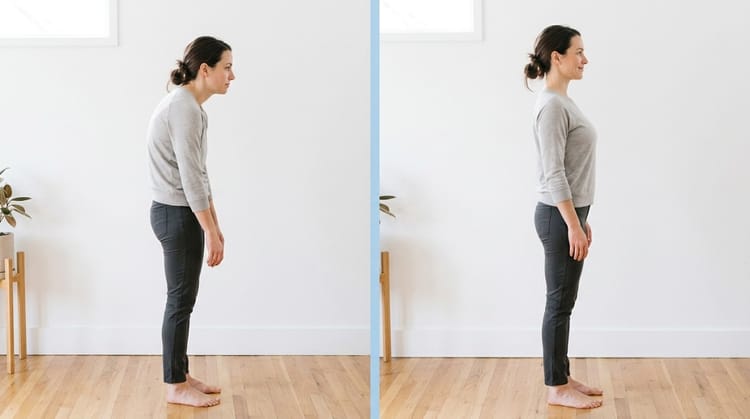
Yes, bad posture can cause chest pain. When your spine rounds forward and your shoulders collapse inward, the muscles around your chest, ribs, and upper back become compressed and strained, creating real, recurring discomfort that has nothing to do with your heart.
Bad posture-related chest pain is a musculoskeletal condition where poor spinal alignment creates muscle tension, restricted breathing mechanics, and nerve irritation in the chest and rib cage.
The good news: it is correctable. This article explains why it happens, how to tell if yours is posture-related, and exactly what to do about it.
TL;DR
📌 Bad posture compresses chest muscles and limits rib cage movement, causing real pain
📌 Rounded shoulders and forward head posture are the most common triggers
📌 Symptoms worsen after long sitting sessions and improve with movement
📌 This is different from cardiac chest pain, but always rule out serious causes first
📌 Targeted stretching, strengthening, and breathing retraining resolve most cases
📌 Personalized posture correction produces faster, more lasting results than generic exercises
What Is Posture-Related Chest Pain?
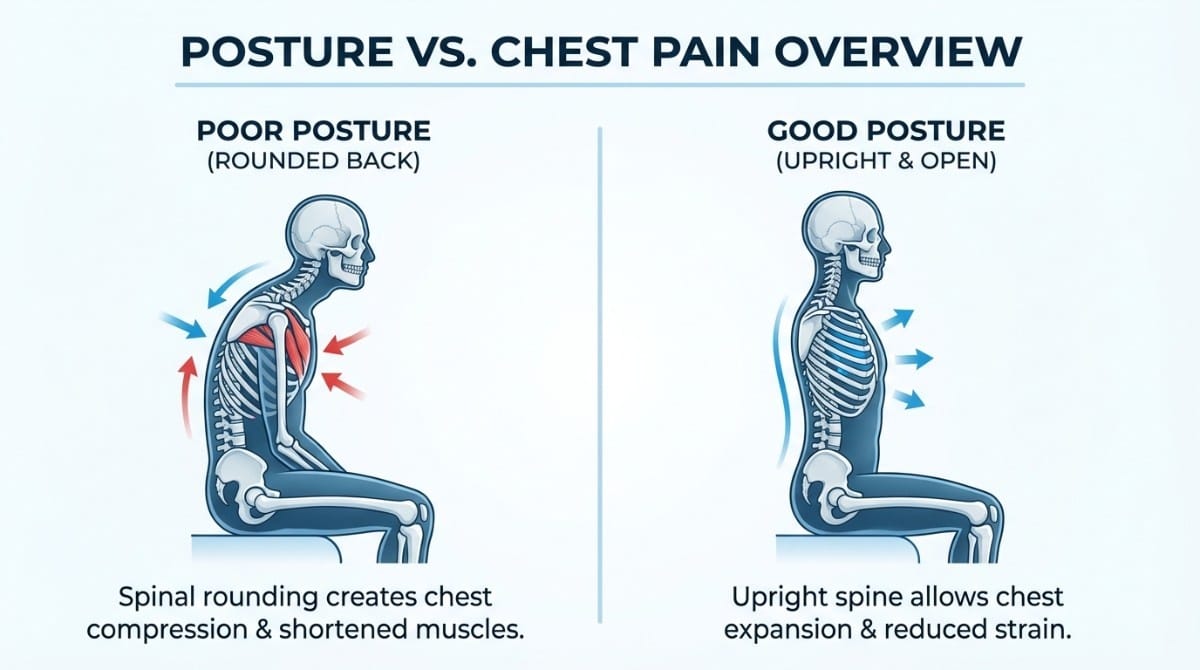
Posture-related chest pain is discomfort in the chest, ribs, or sternum that originates from muscle imbalances and structural compression, not from the heart or lungs directly.
It happens when long periods of poor alignment create a cascade of problems:
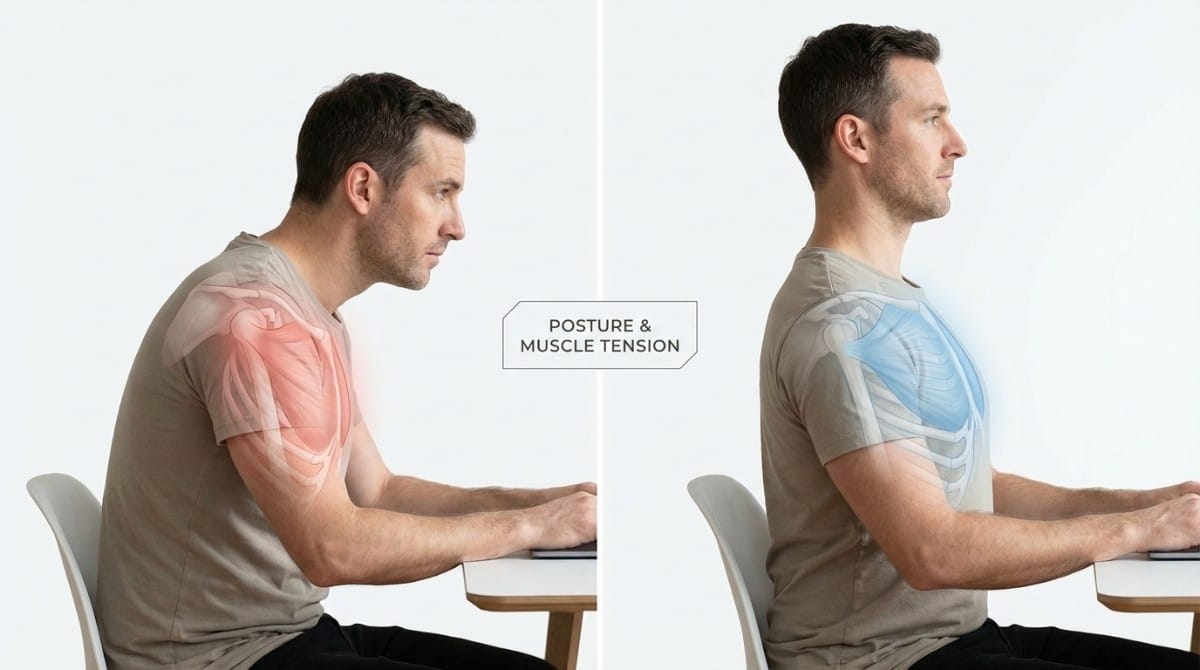
- Chest muscles, or pectorals, tighten and shorten
- Upper back muscles weaken and lengthen
- The rib cage is pulled inward, restricting full expansion
- Nerves in the thoracic spine become irritated
- Breathing becomes shallow, relying on the wrong muscles
This type of pain is extremely common in desk workers, people who spend long hours looking at phones, and anyone with a habitual rounding posture.
Why Does Bad Posture Cause Chest Pain?
There are several distinct mechanisms at work. Most people experience a combination of more than one.
Tight Chest and Intercostal Muscles
When you slouch, your pectoral muscles, the large muscles across your chest, stay in a shortened position for hours at a time. Over weeks and months, they adapt to that length.
Tight pec muscles pull your shoulders forward. This compresses the space between your ribs, affects the intercostal muscles, and limits how fully your chest can expand when you breathe.
Posture specialists note that compressed intercostal muscles are one of the most overlooked sources of persistent, low-grade chest discomfort.
Forward Head Posture and Referred Pain
Key Insight: Every inch your head shifts forward from your shoulders adds roughly 10 extra pounds of load on your neck muscles. Those muscles, particularly the scalenes, attach directly to your upper ribs and can refer pain into the chest and down the arm.
Forward head posture, which is extremely common among desk workers, creates tightness and trigger points in the neck that generate chest sensations that feel muscular but confusing in location.
Thoracic Kyphosis and Nerve Irritation
Excessive rounding of the upper spine, called thoracic kyphosis, can irritate or compress the thoracic nerves. These nerves travel around the trunk in a circular pattern and can cause chest pain, rib pain, or a tight, band-like sensation across the chest wall.
Research in musculoskeletal rehab shows that thoracic nerve irritation from postural kyphosis is a clinically recognized, non-cardiac source of anterior chest pain.
Restricted Breathing Mechanics
Slouched posture reduces lung capacity. When your rib cage is compressed and your diaphragm is crowded, you shift to shallow chest breathing using your neck and upper chest muscles instead of your diaphragm.
This chronic overuse of the wrong breathing muscles creates soreness and fatigue in the chest wall, particularly noticeable after long work sessions or physical activity.
Costochondritis From Rib Misalignment
Poor posture can cause small misalignments in the rib joints where they connect to the sternum. This creates inflammation of the rib cartilage, a condition called costochondritis, which produces sharp, localized chest pain that can easily be mistaken for a cardiac event.
How to Tell If Your Chest Pain Is From Posture
Before doing anything else, rule out cardiac and pulmonary causes with a doctor. Posture-related chest pain is real, but chest pain always deserves proper evaluation first.
Once serious causes are excluded, look for these signs that point to posture as the culprit:
| Feature | Posture-Related Chest Pain | Cardiac Chest Pain |
|---|---|---|
| Trigger | Sitting, desk work, screen time | Exertion, stress, or rest |
| Location | Chest wall, ribs, sternum | Center of chest, often radiating to arm or jaw |
| Worsens with | Prolonged sitting, forward lean | Physical activity, emotional stress |
| Improves with | Movement, stretching, position change | Rest, medication |
| Accompanied by | Upper back tightness, neck tension | Shortness of breath, sweating, nausea |
| Pressure test | Tender when pressing on chest wall | No change with pressure |
A simple self-check: sit up tall and open your chest. If your pain eases noticeably within 30 to 60 seconds, posture is very likely a contributing factor.
What Happens If You Ignore Posture-Related Chest Pain?
Untreated postural imbalances tend to worsen over time, not stay the same.
- Muscle tightness becomes more chronic and harder to reverse
- Breathing mechanics deteriorate further
- Upper back weakness accelerates
- Thoracic stiffness reduces mobility and increases pain sensitivity
- Confidence drops, and slouching affects how you carry yourself publicly
Physiotherapists often note that early intervention dramatically reduces recovery time. The longer dysfunctional patterns persist, the longer correction takes.
Best Exercises for Posture-Related Chest Pain
These exercises target the root causes, not just the symptoms. Work through the full sequence consistently for results.
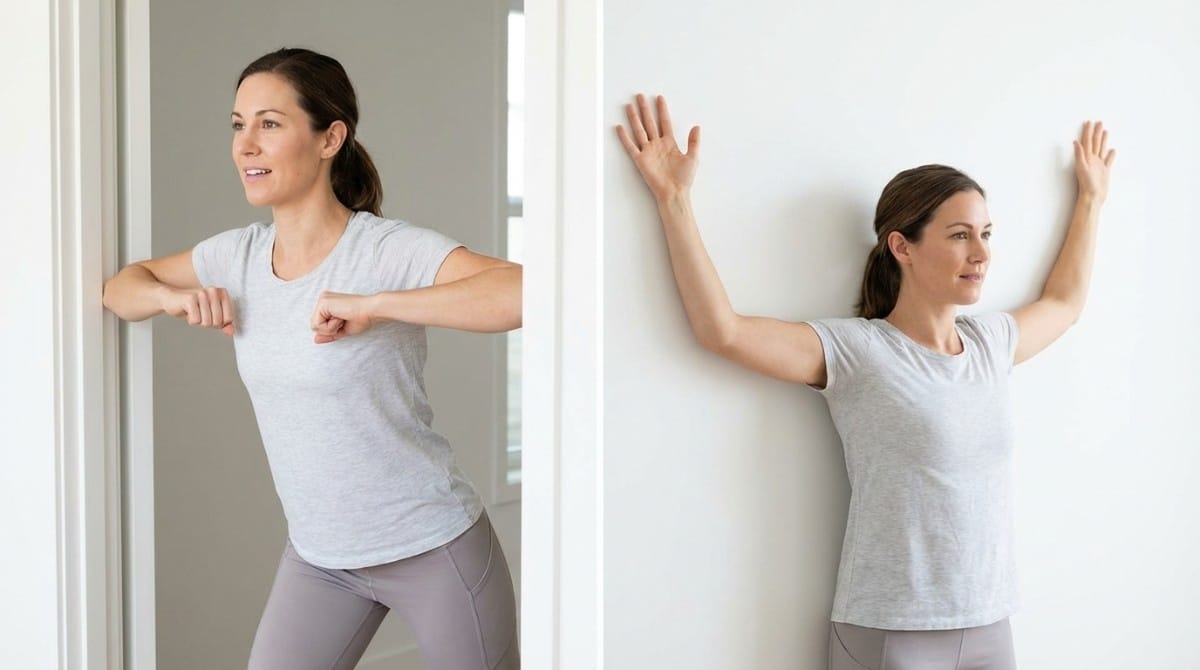
- Doorway Chest Stretch
Stand in a doorway with your arms at 90 degrees and lean gently forward. Hold for 30 seconds. This releases shortened pec muscles that compress the chest. - Thoracic Extension Over Foam Roller
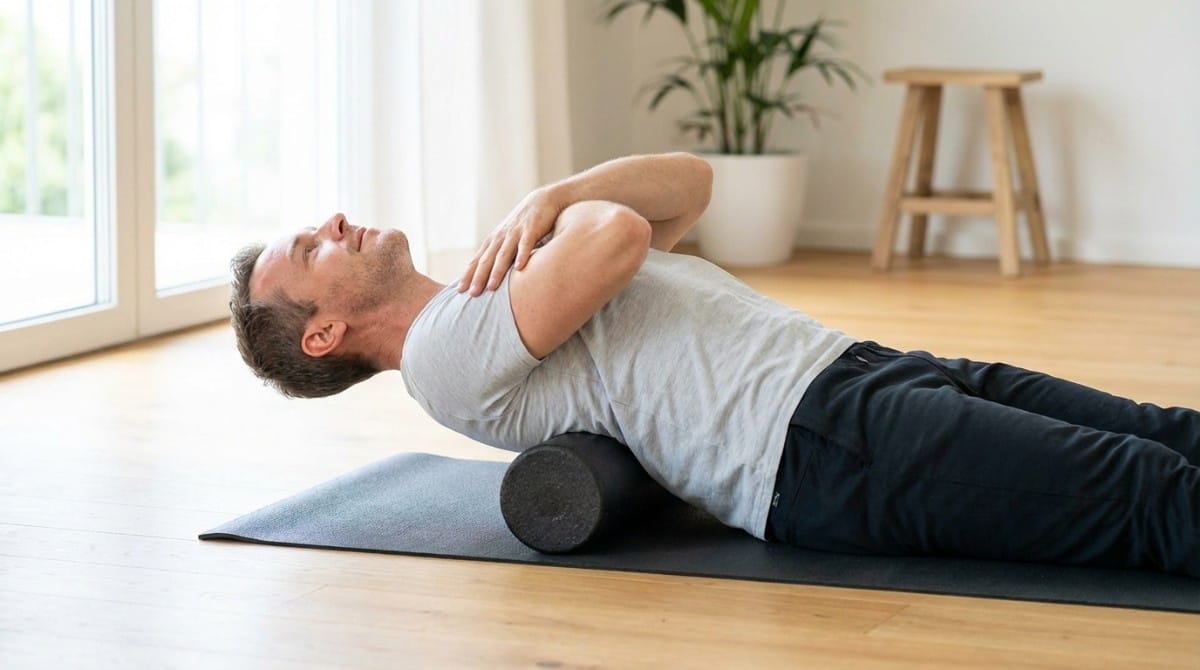
Place a foam roller horizontally under your upper back. Gently extend backward over it for 30 to 60 seconds. This directly counteracts thoracic kyphosis. - Wall Angels
Stand with your back flat against a wall and slowly slide your arms up and down in a snow angel motion. This reactivates weak upper back muscles and improves scapular positioning. - Chin Tucks
Gently retract your chin straight back to create a double chin. Hold for 5 seconds and repeat 10 times. This corrects forward head posture and reduces scalene tension. - Scapular Retractions
Seated or standing, draw your shoulder blades together and down. Hold for 5 seconds and repeat 15 times. This builds the mid-back strength needed to support an open chest. - Diaphragmatic Breathing
Lie on your back with one hand on your chest and one on your belly. Breathe so only your belly rises. Practice 5 to 10 minutes daily. This re-patterns breathing mechanics and reduces accessory muscle overuse. - Cat-Cow Stretch
On hands and knees, alternate between arching and rounding your spine for 10 reps. This mobilizes the thoracic spine and releases intercostal tension.
Step-by-Step Recovery Framework
Use this 4-phase approach for consistent, lasting improvement.
Phase 1: Mobilize (Week 1 to Week 2)
Focus entirely on releasing tightness. Do doorway stretches, foam roller thoracic extension, and cat-cow daily. The goal is to restore range of motion to the chest and upper spine.
Phase 2: Re-Pattern Breathing (Week 2 to Week 3)
Add diaphragmatic breathing practice for 10 minutes daily. This reduces the overuse cycle driving chest muscle fatigue.
Phase 3: Strengthen (Week 3 to Week 6)
Add scapular retractions, wall angels, and band pull-aparts. The goal is to build the upper back endurance needed to maintain an open chest throughout the day.
Phase 4: Integrate (Ongoing)
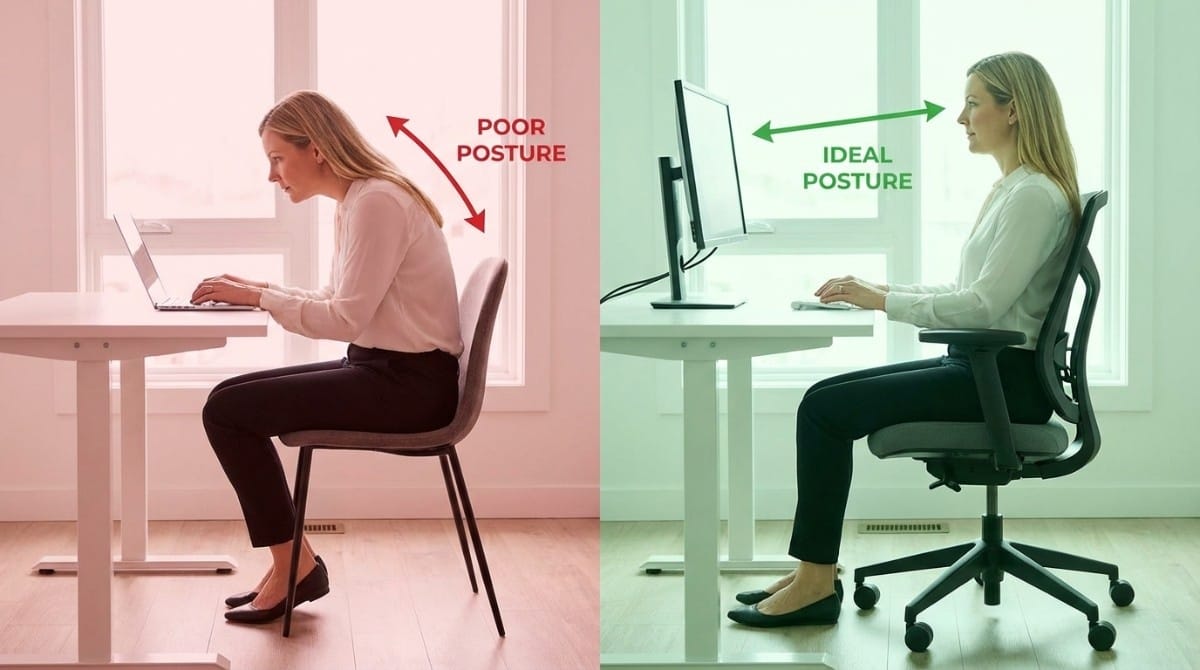
Bring correct posture into daily life. Make workstation adjustments, take movement breaks every 45 to 60 minutes, and do regular posture check-ins.
💡If you want a program that tracks your progress through these phases automatically, Backed AI builds a personalized routine around your specific posture issues and adapts as you improve, rather than giving you the same exercises regardless of where you are in recovery.
When This Approach Does Not Work
Posture correction exercises work well for most musculoskeletal chest pain, but there are situations where you need professional support.
- Pain does not improve with position change, so seek medical evaluation
- Pain started suddenly with no postural trigger, so rule out cardiac or pulmonary causes
- You have a diagnosed herniated thoracic disc, and unsupervised extension exercises can worsen symptoms
- Pain is accompanied by shortness of breath, sweating, or arm numbness, so seek urgent care
- You have significant scoliosis, and a personalized physio-guided plan is essential
This exercise framework is designed for healthy adults with postural imbalances. It is not a substitute for professional medical assessment when symptoms are severe or unclear.
Research and Expert Insight
Musculoskeletal research consistently supports the link between thoracic posture and chest symptoms. Studies measuring lung capacity in slouched versus upright individuals show meaningful reductions in respiratory efficiency with poor alignment. Those reductions correspond with increased chest muscle fatigue and discomfort.
Physiotherapists often recommend addressing both the structural cause, such as tight anterior muscles and weak posterior muscles, and the functional cause, such as dysfunctional breathing patterns, at the same time for the fastest resolution.
Posture specialists note that costochondritis, one of the most common posture-related chest diagnoses, responds well to consistent pec stretching, thoracic mobility work, and postural retraining over 4 to 8 weeks.
The core principle is simple: posture-related chest pain is a mechanical problem. Mechanical problems respond to mechanical solutions applied consistently.
Final Takeaway
Bad posture causes chest pain through a well-understood chain of events: tight anterior muscles, compressed ribs, restricted breathing, and irritated thoracic nerves. It is not dangerous, but it is worth taking seriously.
The correction path is straightforward: mobilize what is tight, strengthen what is weak, retrain your breathing, and build the daily habits that prevent recurrence. Most people see meaningful improvement within 3 to 6 weeks of consistent effort.
The key word is consistency.
Why Most Exercise Plans Fail, and What to Do Instead
Most people who try to fix posture-related chest pain do some stretches for a week, feel better, then stop. The pain comes back. They repeat the cycle.
This happens for four predictable reasons:
- Wrong exercises for their specific pattern, because not everyone’s chest pain has the same root cause
- No progression, because the same routine gets easier but nothing adapts to reflect improvement
- Inconsistency, because without structure it is easy to skip days and lose momentum
- No feedback on form, because doing an exercise incorrectly reinforces the very patterns causing pain
Generic YouTube routines and one-size-fits-all programs cannot solve these problems. They are built for everyone, which means they are optimized for no one.
A Smarter Alternative: Backed AI
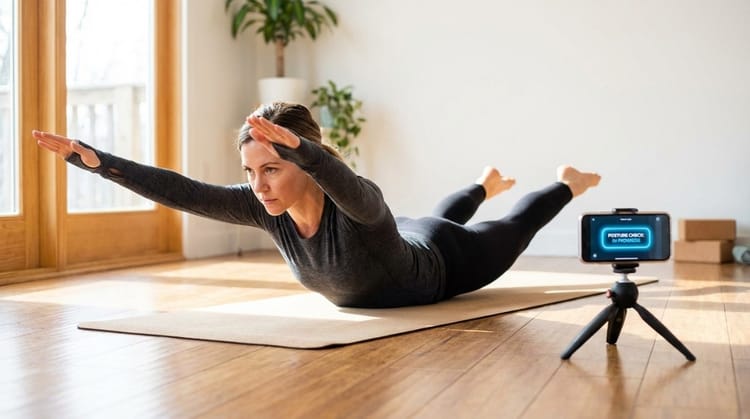
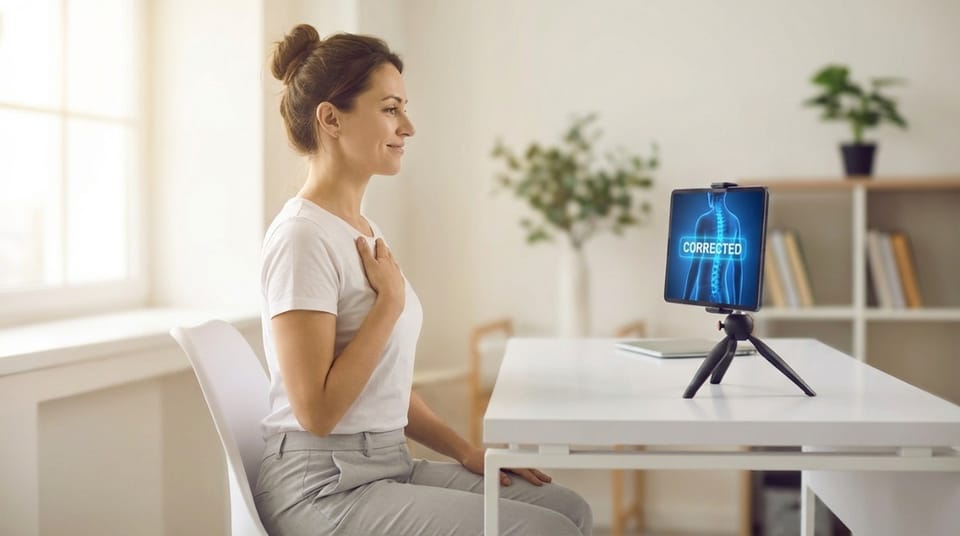
Backed AI is an AI-powered posture correction app that analyzes your specific alignment using your phone’s camera and builds a personalized corrective program around what it finds.
Rather than guessing which exercises apply to you, Backed AI identifies your actual postural patterns, whether that is rounded shoulders, forward head posture, thoracic kyphosis, or a combination, and creates a routine designed for your body.
What makes it different:
- 🎯 AI posture analysis gives you a personalized starting point, not a generic routine
- 📈 Progress tracking shows whether you are actually improving over time
- 🔔 Built-in habit reminders keep you consistent through the recovery phases that matter most
If your chest pain is posture-driven, fixing it is a process, not a one-time event. Backed AI is built for that process.
Download Backed AI and start correcting your posture today: backedapp.com
Frequently Asked Questions
Q1: Can bad posture really cause chest pain?
Yes. Poor spinal alignment tightens the chest muscles, compresses the rib cage, and irritates thoracic nerves, all of which produce genuine chest discomfort. It is one of the most common non-cardiac causes of chest pain.
Q2: How do I know if my chest pain is from posture and not my heart?
Posture-related chest pain typically worsens after prolonged sitting, improves with movement or position change, and is tender when you press on the chest wall. Cardiac pain typically occurs with exertion or stress and does not improve with stretching. Always consult a doctor to rule out cardiac causes before assuming the cause is postural.
Q3: What muscles cause chest pain from bad posture?
The primary culprits are the pectoral muscles in the chest, the scalene muscles in the neck, and the intercostal muscles between the ribs. When these become shortened and overactive due to poor posture, they create compression, trigger points, and restricted breathing that produce chest pain.
Q4: How long does it take to fix posture-related chest pain?
Most people notice improvement within 2 to 4 weeks of consistent corrective exercise. Full postural rebalancing typically takes 6 to 12 weeks depending on how long the imbalance has been present.
Q5: What exercises help chest pain from bad posture?
The most effective exercises are doorway chest stretches, thoracic extension over a foam roller, wall angels, chin tucks, scapular retractions, and diaphragmatic breathing. Performed consistently 5 to 6 days per week, these address both the tightness and weakness driving the problem.