How to Fix Flat Back Posture: The Complete Recovery Guide 🧠
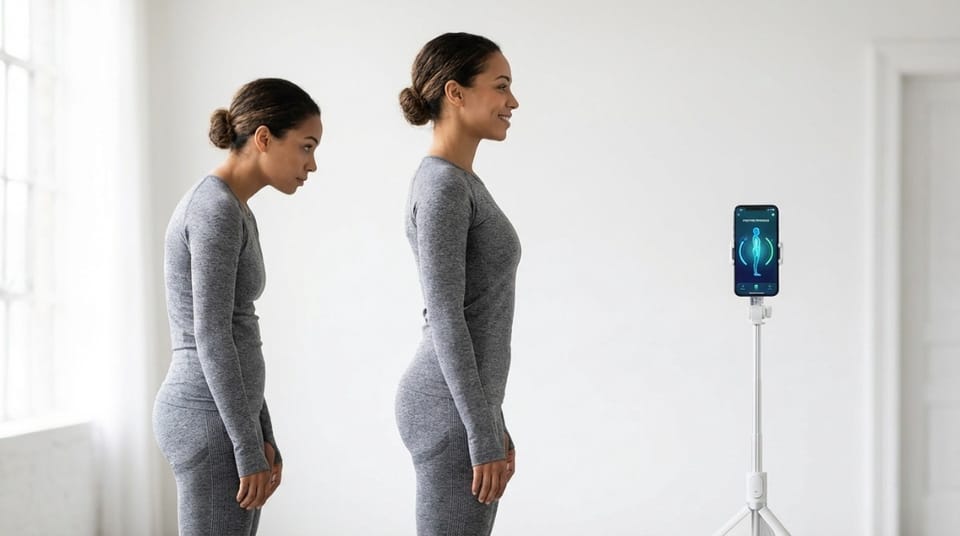
Flat back posture can be corrected with targeted exercises that restore the lower spine's natural curve, reduce muscle imbalances, and strengthen the core.
Most people see meaningful improvement within 4-8 weeks of consistent, structured practice. The key is addressing the right muscles in the right order - not just doing random stretches.
TL;DR:
- Flat back posture means your lower spine has lost its natural inward curve
- It's driven by tight abs and hamstrings plus weak lower back extensors and glutes
- It causes lower back pain, fatigue, forward lean, and difficulty standing upright
- The fix requires a combination of stretching, strengthening, and daily habit correction
- Generic exercise lists rarely work - sequencing and personalization matter significantly
- Backed AI can assess your specific pattern and build a corrective program around it
What Is Flat Back Posture?
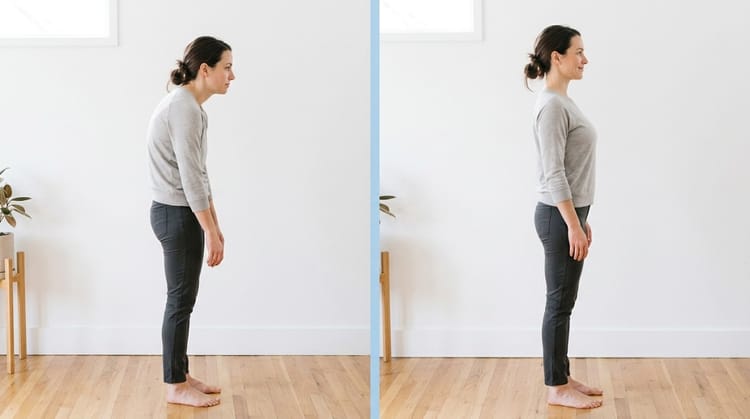
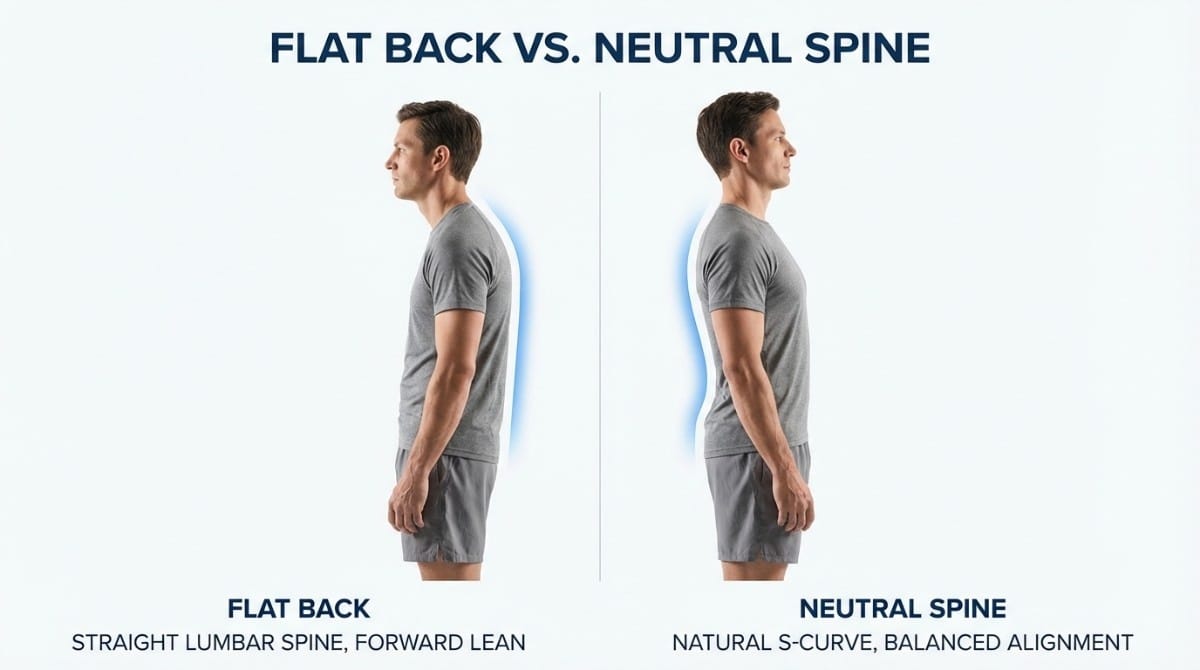
Flat back posture is a spinal alignment condition where the lumbar spine loses its natural inward curve, causing the lower back to straighten and the body to lean forward.
A healthy spine has an S-shaped curve when viewed from the side. The lower back (lumbar region) curves gently inward - this is called lordosis. That curve acts as a natural shock absorber and keeps your center of gravity balanced over your hips.
When that curve flattens, everything shifts forward. Your body compensates by tilting the pelvis, tightening the hamstrings, or jutting the head forward. Over time, this creates a cascade of discomfort and limitation.
Why Does Flat Back Posture Develop?
Flat back posture rarely appears overnight. It builds gradually through a combination of muscle imbalances and lifestyle patterns.
The main muscle drivers:
- Tight hip flexors and abdominals - these pull the pelvis into a posterior tilt (tucked under), flattening the lumbar curve
- Tight hamstrings - pulling on the base of the pelvis, locking the lower back into a flat position
- Weak glutes and lumbar extensors - without strong posterior chain muscles, the spine loses its natural support
Common lifestyle contributors:
Posture specialists note that flat back posture is increasingly common in desk workers who sit for 6+ hours daily - often misidentified as lower back stiffness rather than a structural pattern.
What Happens If You Leave Flat Back Posture Untreated?
Ignoring flat back posture doesn't just mean a bit of discomfort. It sets off a chain reaction across the entire spine.
Short-term effects:
- Lower back ache that worsens through the day
- Fatigue from muscles working overtime to keep you upright
- Difficulty standing straight for extended periods
Longer-term effects:
- Forward head posture developing as the neck compensates
- Increased load on lumbar discs and facet joints
- Reduced hip mobility and tight hamstrings that resist correction
- Reduced confidence and self-perception due to slouched appearance
Research in musculoskeletal rehab shows that corrective exercises targeting thoracolumbar alignment and full-body strengthening are effective in reversing flat back posture - but only when sequenced correctly.
🔑 Key Insight: Flat back and anterior pelvic tilt are often confused. In anterior pelvic tilt, the lower back arches too much. In flat back, it straightens too much. Exercises for one can worsen the other - getting the diagnosis right is critical before starting any program.
Best Exercises for Flat Back Posture (Quick List)
These exercises address the specific muscle imbalances that drive flat back posture. Work through them in order for best results.
- Cat-Cow Mobilisation - Restores lumbar mobility and reintroduces the natural spinal curve through controlled movement. Start with 10 slow repetitions.
- Cobra Pose (Sphinx Variation) - Gently extends the lower back, counteracting the flattened lumbar position. Hold 20-30 seconds per set.
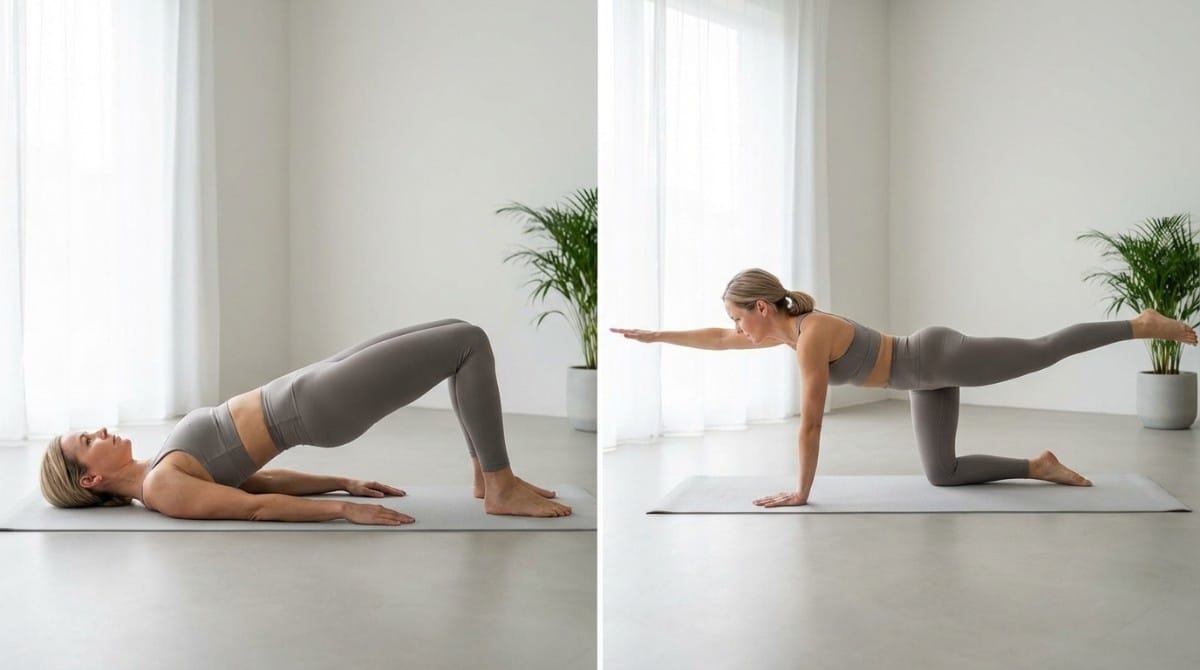
- Glute Bridge - Activates and strengthens the glutes and hamstrings while promoting posterior chain engagement. Aim for 3 sets of 12.
- Bird-Dog - Builds deep core stability and lumbar extensor strength without overloading the spine. 3 sets of 8 per side.
- Hip Flexor Lunge Stretch - Releases the tight hip flexors pulling the pelvis into a posterior tilt. Hold 30 seconds each side.
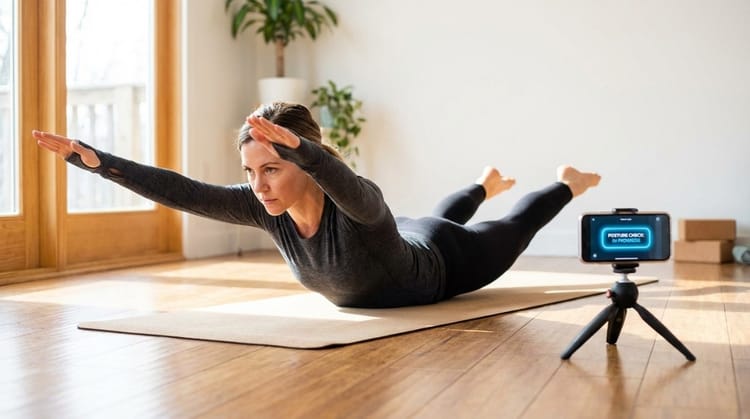
- Superman Hold - Directly targets the lumbar extensors and thoracic extensors. Hold 3-5 seconds per rep, 10 reps total.
- Wall Angels - Retrains shoulder and thoracic positioning to support upright posture. 3 sets of 10 slow reps.
- Pelvic Tilt Correction Drill - Teaches awareness of neutral pelvis position, the foundation of everything else. Practice 10-15 reps, twice daily.
Step-by-Step Recovery Framework for Flat Back Posture
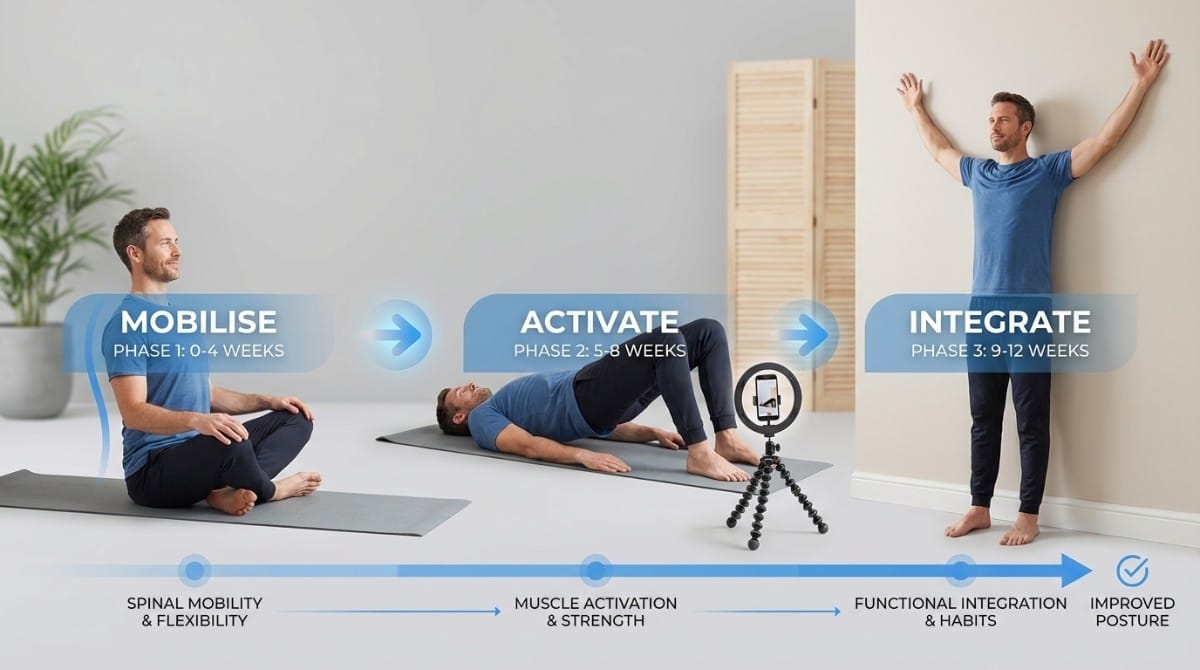
Physiotherapists often recommend a three-phase approach to correcting flat back posture:
Phase 1 - Mobilise (Weeks 1-2) Focus: Release tight muscles that are locking the pelvis in a posterior tilt.
- Daily: Cat-cow, cobra/sphinx, hip flexor stretch
- Goal: Restore lumbar range of motion
Phase 2 - Activate (Weeks 2-4) Focus: Switch on weak muscles that have stopped supporting the natural curve.
- Daily: Glute bridges, bird-dog, pelvic tilt drills
- Goal: Build posterior chain strength and pelvic awareness
Phase 3 - Integrate (Weeks 4-8) Focus: Carry corrected posture into standing, sitting, and movement.
- Daily: Superman holds, wall angels, seated posture checks
- Goal: Build automatic postural control
Progress tracking matters here. Without it, most people plateau in Phase 1 and never address the actual weakness patterns.
Research & Expert Insight
Physiotherapists often recommend combining spinal mobility work with posterior chain strengthening as the core treatment approach for flat back posture. A 2021 study on corrective exercises for flatback syndrome found that targeted thoracolumbar correction alongside whole-body resistive exercises produced measurable improvements in spinal alignment and pain reduction.
Posture specialists also emphasize that the pelvis is the control center of spinal alignment. Correcting pelvic positioning - specifically moving from a posterior tilt toward a neutral tilt - is often the single most impactful step in early recovery.
It's also well-established in musculoskeletal rehab that awareness precedes correction. Many people with flat back posture have simply never learned what neutral spine feels like - making proprioceptive drills like pelvic tilts and wall exercises essential early steps.
How to Prevent Flat Back Posture From Coming Back
Fixing flat back posture is only half the job. Keeping it corrected requires small daily habits:
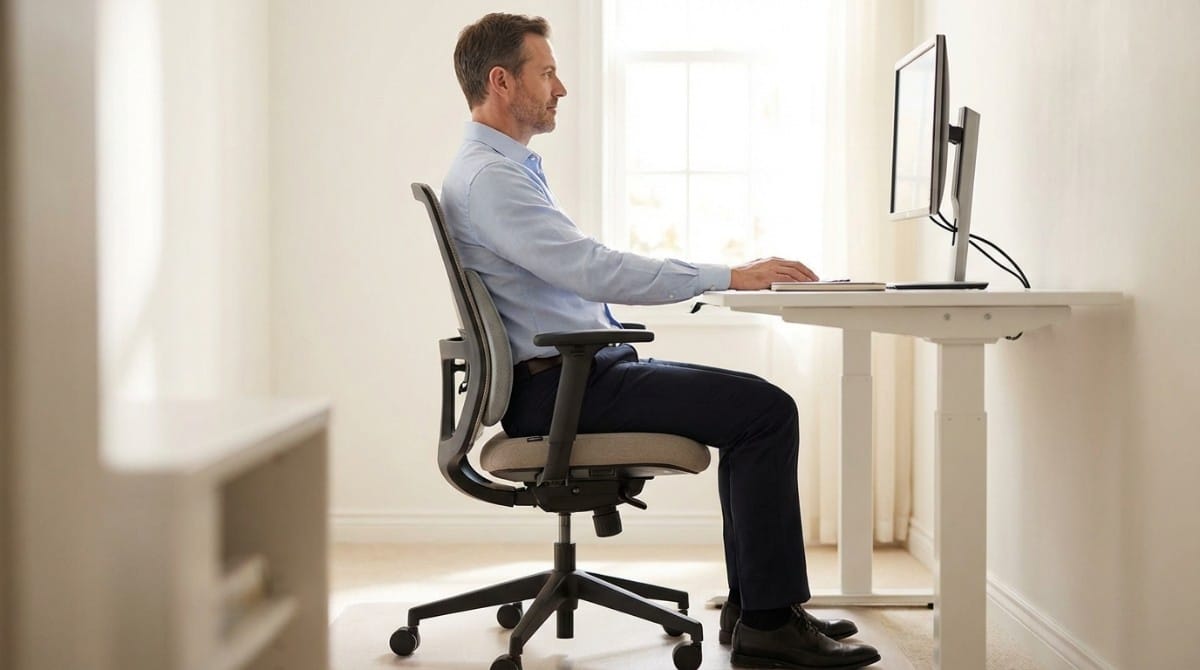
- 🪑 Adjust your sitting position. Sit with a slight arch in your lower back. Use a lumbar support if needed.
- 🚶 Take movement breaks. Aim to stand and walk for 5 minutes every hour.
- 📱 Check your phone posture. Holding your phone higher reduces the downward pull on your neck and upper spine.
- 🏋️ Strengthen consistently. Weak glutes and lumbar muscles will allow the flat-back pattern to return.
- 🔄 Don't stretch without strengthening. Releasing tight muscles without activating weak ones leads to regression.
💡 If you're not sure whether your pain is coming from flat back posture, anterior pelvic tilt, or something else entirely, Backed AI's posture scan can identify the pattern in minutes and build a corrective plan specific to your body.
When This Approach Doesn't Work
Exercises and habit correction work for the vast majority of postural flat back cases. But there are situations where more support is needed:
- Structural or surgical flatback - If flat back developed after spinal fusion, Harrington rod surgery, or has a skeletal cause, exercises alone won't restore the curve. A specialist evaluation is essential.
- Ankylosing spondylitis or degenerative disc disease - These conditions require medical management alongside any exercise program.
- Severe pain or neurological symptoms - If you experience radiating leg pain, numbness, or bladder changes, see a doctor before starting any exercise plan.
- No improvement after 8 weeks - If consistent, correct exercise isn't creating change, a physiotherapist should assess your specific pattern.
This guide is designed for postural flat back - the common, lifestyle-driven version. Always consult a healthcare professional if you're unsure.
Final Takeaway
Flat back posture is one of the most correctable postural conditions, but it requires more than a random list of stretches. The fix comes down to three things: releasing what's tight, strengthening what's weak, and building the daily habits that keep the curve in place. Work through a structured framework, stay consistent, and track your progress. Most people see meaningful change in 4-8 weeks when they approach it correctly.
A Smarter Way to Fix Flat Back Posture 📱
Backed AI was built specifically for this problem.
Using your phone's camera, Backed AI scans your posture and identifies your exact pattern - whether it's flat back, anterior pelvic tilt, rounded shoulders, or a combination. From there, it builds a fully personalized corrective exercise program that targets your specific imbalances.
Why it works where generic plans don't:
- 🎯 AI posture analysis identifies your pattern before you start any exercises
- 📈 Personalized progression adjusts your program as you improve
- ⏰ Habit-building reminders keep you consistent beyond the first week
If you've tried stretching and exercises before without lasting results, the issue isn't effort - it's personalization.
Download Backed AI and start correcting your posture today.
FAQ
Q1: Can flat back posture be fixed without surgery? Yes. Postural flat back - the most common type - responds well to targeted exercises, stretching, and habit correction. Most people see improvement within 4-8 weeks with a consistent, structured program.
Q2: What muscles are weak in flat back posture? The primary weak muscles are the glutes, lumbar extensors (erector spinae), and deep core stabilisers. Strengthening these alongside stretching tight hip flexors and hamstrings is the foundation of effective correction.
Q3: How long does it take to fix flat back posture? For postural cases, noticeable improvement typically appears in 4-6 weeks. Full correction - where the pattern no longer recurs - usually takes 3-6 months of consistent practice and habit integration.
Q4: Is flat back posture the same as a straight back? They refer to the same condition. A healthy spine has natural curves - when the lumbar region loses its inward curve and becomes straight or flat, this is called flat back posture or flat back syndrome.
Q5: Can flat back posture cause back pain? Yes. The loss of the lumbar curve places increased load on spinal discs, joints, and surrounding muscles. This leads to chronic lower back pain, fatigue, and difficulty standing upright for extended periods.