Rounded Shoulders: The Complete Guide to Causes, Exercises, and Correction
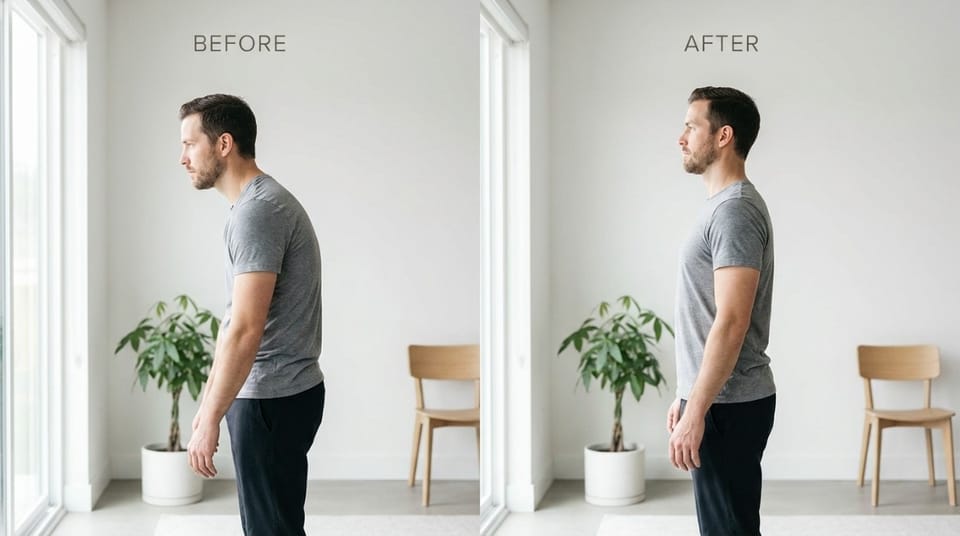
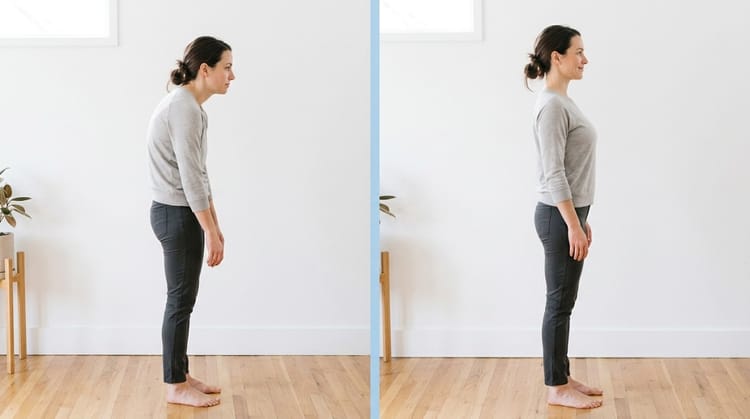
Look at your reflection side-on right now. Where are your shoulders sitting?
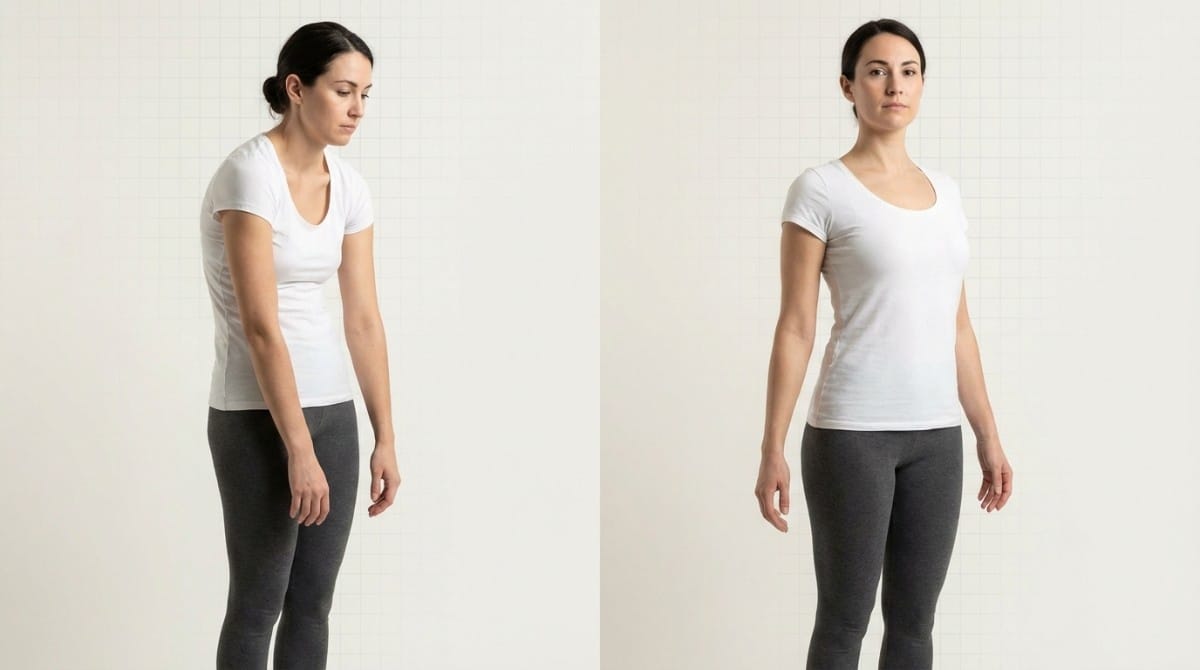
If the front of your shoulders is rolling forward of your torso line - if your arms hang in front of your hips rather than beside them - you have rounded shoulders. You are far from alone. It is one of the most common postural patterns in modern adults, and it is almost always the product of how we spend our days rather than anything structural or permanent.
The good news: rounded shoulders respond well to targeted exercise. The muscles causing the rounding can be released. The muscles that should be holding your shoulders back can be rebuilt. Most people see real, visible improvement within 4 to 8 weeks of consistent work.
This guide covers everything - the mechanism, the muscle chain, the exercises, the common mistakes, and a structured correction plan.
TL;DR - Rounded shoulders are caused by tight chest and anterior shoulder muscles combined with weak mid-back and scapular stabilisers - Correction requires both releasing tight structures AND strengthening weak ones - not stretching alone - The most important muscles to target are the pectoralis minor, rhomboids, serratus anterior, and mid-lower trapezius - Rounded shoulders and forward head posture almost always co-exist - addressing both together produces faster results - A structured daily routine produces visible improvement in 4 to 8 weeks
Rounded shoulders are a postural imbalance where the shoulder blades shift forward and outward from their neutral position, causing the chest to cave inward and the upper back to round - driven by tightness in the anterior shoulder structures and weakness in the posterior scapular stabilisers.
What Are Rounded Shoulders?
Rounded shoulders - sometimes called protracted shoulders or anterior shoulder displacement - occur when the shoulder blades move away from their neutral position on the ribcage. In neutral alignment, the shoulder blades sit flat against the back of the ribcage, angled slightly outward, with the front of the shoulder directly over the hip joint when viewed from the side. In rounded shoulders, the scapulae have shifted forward and often upward, pulling the front of the shoulder ahead of the body’s midline.
This is not simply a matter of “bad posture” in the sense of a momentary choice. It is a structural adaptation - the muscles on the front of the shoulder have shortened and tightened into a new resting length, and the muscles on the back of the shoulder have lengthened and weakened into their new position. Without direct intervention, the position does not self-correct.
Why Do Rounded Shoulders Develop?
The position is almost universally the product of loading the anterior (front) body repeatedly while the posterior (back) body goes underactivated.
The primary drivers are:
• Prolonged desk work and screen use - keyboard, mouse, and monitor use all position the arms forward of the body, chronically loading the chest and anterior shoulder while the mid-back muscles are passive
• Phone use - holding a phone in front of the body, especially with both hands, drives internal rotation of the shoulders and protraction of the scapulae
• Sleeping on one side with the arm pulled forward - reinforces the protracted shoulder position for 6 to 8 hours nightly
• Exercise imbalance - pushing movements (bench press, push-ups, overhead press) without adequate pulling movements (rows, pull-ups) creates an anterior-dominant strength imbalance
• Chronic stress and fatigue - the body’s protective “guarding” posture under stress naturally closes the chest and rounds the shoulders forward
Most people have multiple drivers running simultaneously. The pattern builds slowly and goes unnoticed until pain or visible rounding makes it impossible to ignore.
What Does Rounded Shoulders Actually Cause?
The consequences extend well beyond appearance:
• Neck and upper back pain - the upper trapezius overworks to stabilise the poorly positioned shoulder blade, creating the familiar knot at the top of the shoulder
• Shoulder impingement - the narrowed space under the acromion compresses the rotator cuff tendons during overhead movement, causing pain with reaching
• Reduced shoulder mobility - internal rotation shortening restricts the ability to reach behind the back, overhead, or across the body
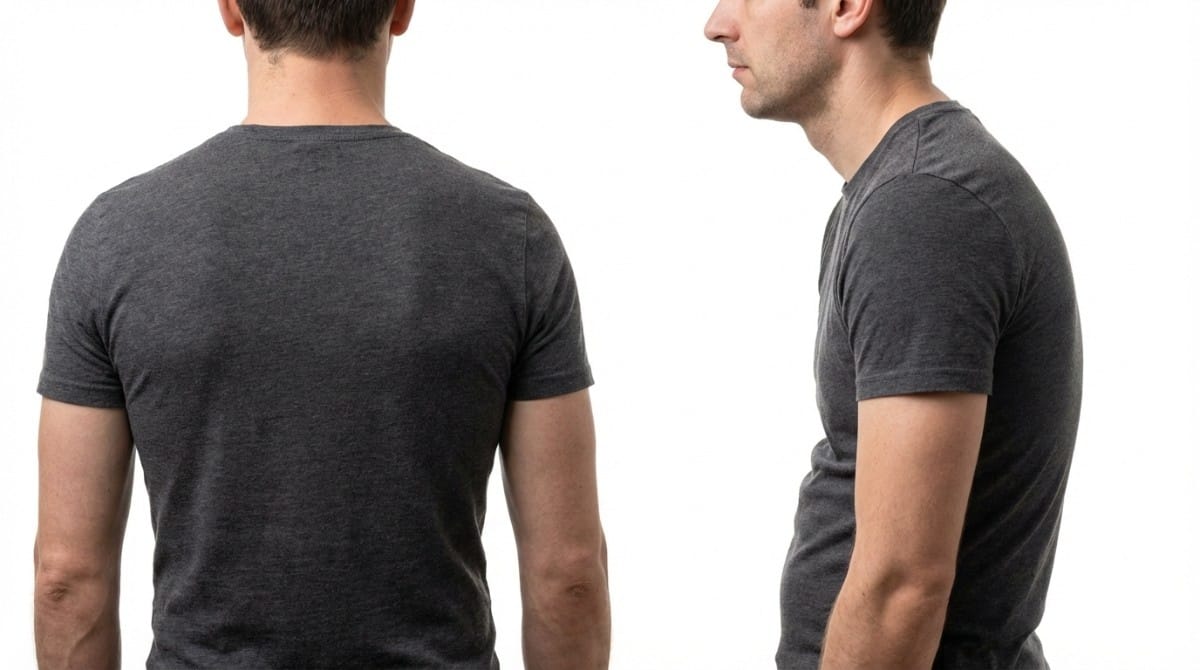
• Forward head posture - rounded shoulders pull the thoracic spine into flexion, which in turn pushes the head forward as the body compensates to keep the eyes level
• Breathing restriction - the caved chest reduces the space available for full lung expansion, particularly in the upper chest
Key Insight 💡: Rounded shoulders and forward head posture are the same dysfunction expressed across two different joints. Fixing one without addressing the other produces partial results. The most effective correction programs treat the entire upper-body postural chain together.
Why Does Rounded Shoulders Feel Normal?
One of the most consistent challenges in posture correction is that people cannot feel the difference between rounded and neutral until proprioceptive awareness is deliberately retrained. The brain recalibrates its sense of “normal” to the position it spends the most time in. Standing with shoulder blades retracted initially feels like leaning backward - even when you are simply standing straight. This is not a structural problem. It is a neurological recalibration that happens quickly with consistent practice.
The Muscle Chain Behind Rounded Shoulders
Understanding which muscles are involved makes the exercises far more targeted and effective.
|
Structure |
Role
in Rounded Shoulders |
Status |
|
Pectoralis
minor |
Pulls
the coracoid process forward, tipping the scapula |
Tight
and shortened |
|
Pectoralis
major |
Internally
rotates the humerus and pulls shoulder forward |
Tight
and shortened |
|
Anterior
deltoid |
Contributes
to internal rotation and forward shoulder position |
Tight
and shortened |
|
Subscapularis |
Strongest
internal rotator of the shoulder |
Overactive |
|
Rhomboids |
Retract
the scapula toward the spine |
Weak
and lengthened |
|
Mid
and lower trapezius |
Depress
and retract the scapula |
Weak
and inhibited |
|
Serratus
anterior |
Holds
the medial border of the scapula against the ribcage |
Weak
or dysregulated |
|
Lower
trapezius |
Depresses
and upwardly rotates the scapula |
Chronically
underactivated |
The pattern is consistent: the front pulls forward and tightens. The back lengthens and gives way. Effective correction addresses both sides of this equation.
Best Exercises for Rounded Shoulders (Quick List)
1. Doorway Pec Stretch - The most direct stretch for the pectoralis major and minor. Releases the primary structures pulling the shoulder forward.
2. Chest Opener Stretch - Targets anterior shoulder and chest with a standing variation that can be done anywhere, anytime.
3. Thoracic Extension over Foam Roller or Chair Back - Restores the thoracic extension range of motion that rounded shoulders eliminate - essential before strengthening will hold.
4. Thoracic Spine Rotation - Opens the upper back rotationally, reducing the rigid thoracic restriction that forces the shoulder blades into protraction.
5. Wall Angels - The single most effective exercise for training the scapular retraction and depression pattern against gravity. Addresses the full movement arc of the trapezius.
6. Prone Y-T-W Raises - Rebuilds the lower and mid trapezius from the floor - the physiotherapy standard for scapular stabilisation.
7. Isometric Row / Band Pull-Apart - Strengthens the rhomboids and mid-trapezius through the retraction movement most directly opposing the rounding pattern.
8. Face Pull - Targets the posterior deltoid and external rotators, directly countering the internal rotation component of rounded shoulders.
9. Serratus Anterior Activation (Wall Push-Up Plus) - Trains the serratus to hold the scapula flat against the ribcage - correcting the winging that accompanies rounded shoulders.
10. Dead Bug - Builds the deep core stability that provides the stable base from which the shoulder blades can sit correctly - often overlooked in upper body postural programs.
Step-by-Step Recovery Framework
Phase 1 – Weeks 1 to 2: Open the Front
Before the back of the shoulder can be strengthened into a new position, the front must release its hold. Phase 1 focuses entirely on the chest, anterior shoulder, and thoracic spine.
Daily routine (8 to 10 minutes): 1. Doorway pec stretch - 3 x 30 seconds each arm position (low, mid, high) 2. Chest opener stretch - 3 x 30 seconds 3. Thoracic extension over chair back - 60 to 90 seconds 4. Thoracic spine rotation - 8 reps each side
What to expect: Reduced tightness across the chest within 5 to 7 days. A sensation of the chest being slightly more open. Some people feel an initial increase in upper back awareness as the anterior restriction releases.
Phase 2 – Weeks 3 to 5: Rebuild the Back
Add the strengthening exercises progressively while maintaining the Phase 1 mobility work as a warm-up. Do not skip the release work - the tight structures will continue to pull the shoulders forward unless consistently addressed.
Add to routine (10 to 12 minutes total): 1. Wall angels - 3 x 10 reps 2. Prone Y-T-W raises - 2 x 10 reps each position 3. Isometric row or band pull-apart - 3 x 12 reps 4. Serratus wall push-up plus - 2 x 12 reps
Phase 3 – Weeks 6 onwards: Integrate and Load
Add resistance. Introduce face pulls with a band. Begin extending the correction into daily activity - noticing shoulder position while typing, driving, and carrying. Progress wall angels by reducing wall contact and moving toward free-standing shoulder CARs (controlled articular rotations).
Exercise Breakdown: Key Movements Explained
1. Doorway Pec Stretch
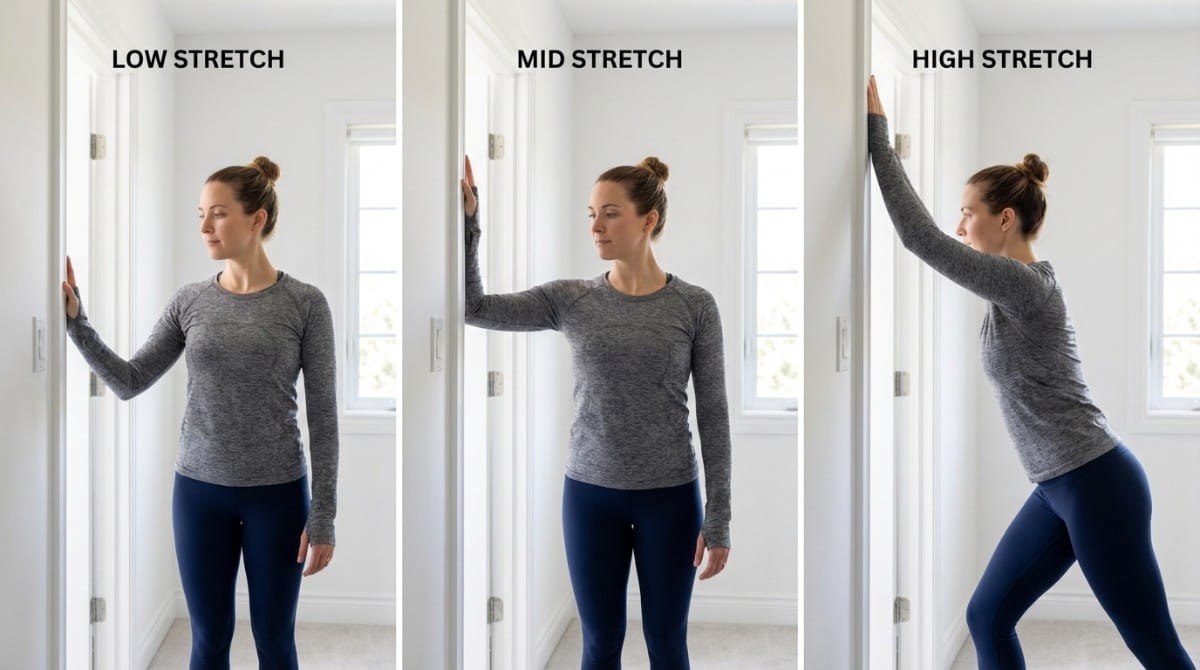
The pectoralis minor is the deepest driver of rounded shoulders - it attaches to the coracoid process of the scapula and physically tips it forward when shortened. The pectoralis major contributes internal rotation. Both must be addressed for the shoulder to return to neutral.
The doorway stretch is the most effective way to target both with progressive depth.
How to do it:
Position 1 (lower pec and pec minor): 1. Stand in a doorframe, arm at approximately 45 degrees below shoulder height 2. Place your forearm and elbow against the frame 3. Step one foot through the doorframe and rotate your torso away from the arm 4. Hold 30 seconds - you should feel the stretch deep across the front of the chest and coracoid region
Position 2 (mid pec): 1. Raise the arm to 90 degrees, elbow at shoulder height 2. Same rotation away from the arm 3. Hold 30 seconds
Position 3 (upper pec): 1. Raise the arm above 90 degrees - roughly 120 to 135 degrees 2. Same rotation 3. Hold 30 seconds
Perform all three positions on each side. Do both sides daily.
Common mistake: Allowing the lower back to arch excessively to create the stretch sensation. Keep the ribcage neutral. The stretch should be felt in the chest — not the lower back.
2. Wall Angels
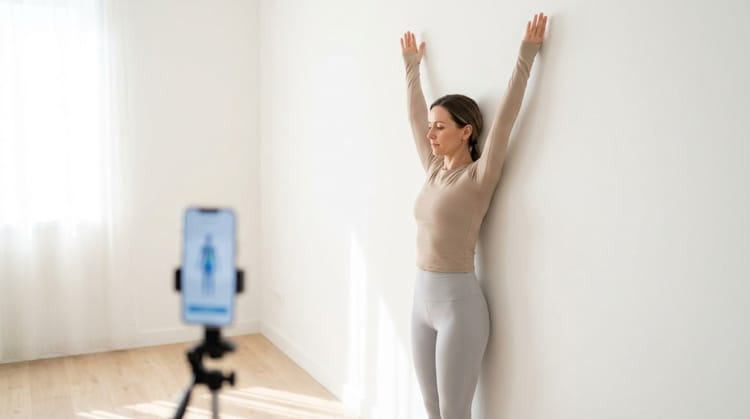
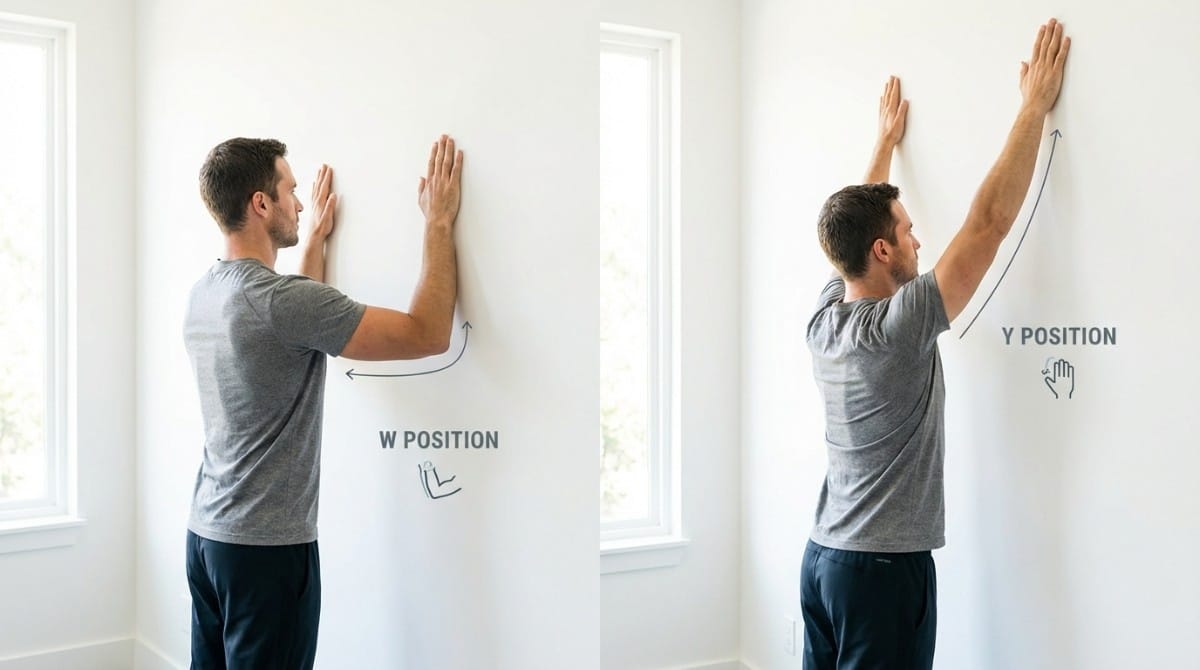
Wall angels are the most comprehensive exercise for training the scapular movement pattern that rounded shoulders have disrupted. They train the mid trapezius, lower trapezius, and serratus anterior through the full arc of shoulder blade movement - against gravity, with proprioceptive feedback from the wall.
How to do it: 1. Stand with back flat against a wall - feet 6 inches from the baseboard 2. Press the lower back, upper back, and the back of the head gently against the wall 3. Raise arms to a “W” position - elbows at 90 degrees, backs of elbows and hands touching the wall 4. Exhale and slowly slide arms overhead into a “Y” - maintaining contact throughout 5. Pause at the top, squeeze the shoulder blades down and together 6. Lower slowly back to “W” 7. Repeat 10 reps, 3 sets
Common mistake 1: Losing wall contact with the hands, wrists, or elbows as the arms rise. If this happens, reduce the range of movement rather than losing contact. Wall contact is the entire point - it provides the proprioceptive feedback and forces the correct muscle pattern.
Common mistake 2: Shrugging the shoulders upward during the movement. Focus on pulling the shoulder blades down away from the ears before initiating the arm slide.
Progression: Once 3 sets of 10 feel manageable with full wall contact, advance to performing the exercise on the floor (lying face up) to remove the wall assistance, then to standing free.
3. Prone Y-T-W Raises
These three floor-based positions target the three portions of the trapezius that are most critical for scapular health: the lower trapezius (Y), the middle trapezius (T), and a combination of lower and mid trapezius with external rotation (W). They are a physiotherapy cornerstone for shoulder blade rehabilitation.
How to do it:
Setup: Lie face down on a mat. Rest your forehead on a folded towel. Thumbs point toward the ceiling throughout.
Y raise (lower trapezius): - Extend both arms above your head in a Y shape - roughly 30 degrees from the midline overhead - Squeeze shoulder blades down and together, then lift both arms 2 to 4 inches off the floor - Hold 3 seconds, lower slowly. 10 reps.
T raise (middle trapezius): - Extend arms directly out to the sides in a T shape - Same squeeze and lift pattern. 10 reps.
W raise (external rotators + lower trap): - Bend elbows to 90 degrees in a W shape, thumbs up - Squeeze and lift. 10 reps.
Common mistake: Using momentum or lifting with the neck. The movement should come entirely from the shoulder blades drawing together and downward. The neck stays long and relaxed throughout.
Load progression: Begin with bodyweight only. Once 3 sets feel controlled and easy, progress to very light hand weights - 0.5 to 1 kg maximum. The load does not need to be heavy for these muscles.
4. Band Pull-Apart
This exercise directly strengthens the rhomboids and posterior deltoid through the horizontal abduction movement - exactly opposing the internal rotation and protraction of rounded shoulders.
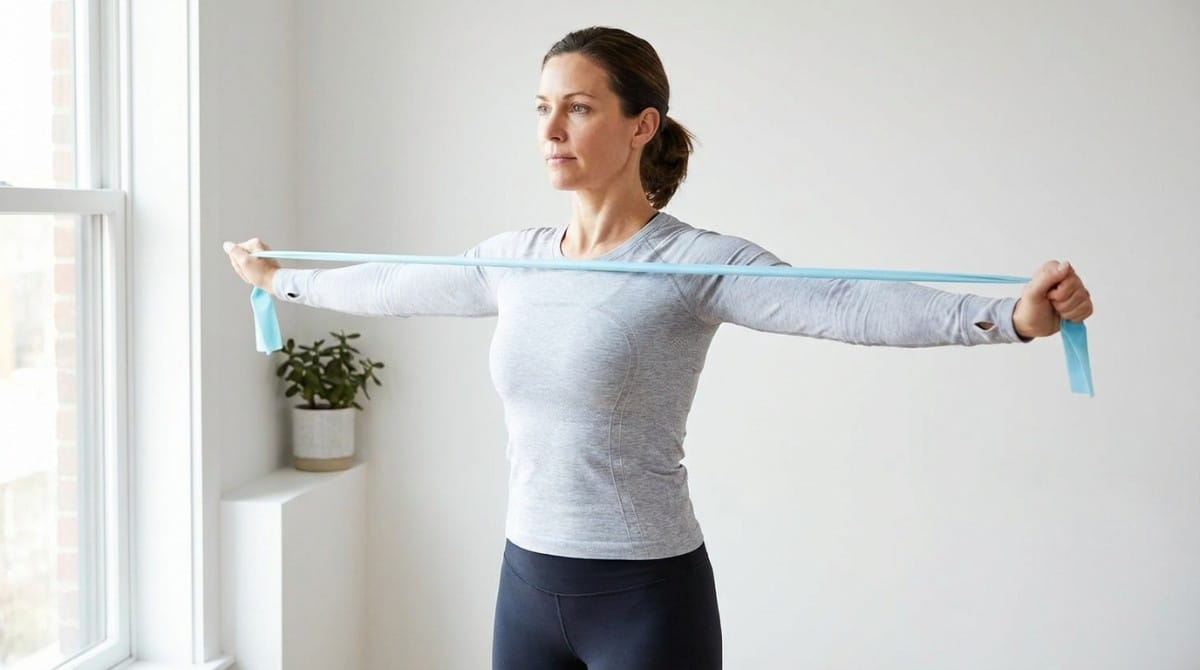
How to do it: 1. Hold a light resistance band (or towel) at shoulder height with both hands, shoulder-width apart 2. Keep both arms relatively straight - a soft elbow bend is fine 3. Exhale and pull the band apart horizontally, drawing both arms out to the sides 4. Squeeze the shoulder blades firmly together at the end position 5. Hold 2 seconds, return slowly to start 6. Repeat 15 reps, 3 sets
Common mistake: Shrugging the shoulders upward during the pull. Keep them depressed - actively pull the shoulder blades down as you pull them back. The movement is back AND down.
5. Serratus Anterior Activation: Wall Push-Up Plus
The serratus anterior is the muscle that holds the medial border of the scapula flat against the ribcage. When it is weak, the shoulder blade wings outward and the rounding pattern accelerates. Most posture programs completely miss this muscle - which is why rounded shoulders sometimes return despite doing everything else correctly.
How to do it: 1. Stand facing a wall, arms extended, hands at shoulder height on the wall 2. Lean in slightly so there is light load through the arms 3. Perform a wall push-up - lower your chest toward the wall, then push back 4. At the end of the push (arms extended), add an extra push - protracting the shoulder blades forward and pressing the upper back into a slight round 5. This final “plus” phase is the serratus activation moment 6. Hold 2 seconds, return to start 7. Repeat 12 reps, 2 to 3 sets
Why it matters: The serratus and lower trapezius work together as a force couple to hold the scapula in position. Training one without the other creates incomplete stability. The wall push-up plus completes the system.
Common Mistakes That Slow Rounded Shoulder Correction
Most people who fail to fix rounded shoulders are making one of these errors:
Stretching the chest without strengthening the back. The pec stretch releases the pull from the front. But without rebuilding the rhomboids and trapezius, there is nothing to hold the shoulder blades back once the stretch is over. Both sides of the equation must be worked consistently.
Doing too much upper trapezius work. Shrugs, heavy overhead pressing, and poorly executed rows all reinforce upper trapezius dominance - pulling the shoulders UP rather than back and down. Rounded shoulder correction requires mid and lower trap, not upper trap.
Ignoring the thoracic spine. If the thoracic spine is stuck in flexion, the shoulder blades cannot retract to their neutral position regardless of how much you strengthen the rhomboids. Thoracic extension mobility must come first.
Expecting quick results without daily consistency. Rounded shoulders develop over years of accumulated loading. A twice-weekly exercise session will not overpower daily hours of forward shoulder position. Daily practice - even 10 minutes - consistently outperforms occasional longer sessions.
Not addressing contributing habits. If the monitor stays too low, the exercise habit is fighting 8 hours of daily reinforcement. Environmental changes and movement habits must change alongside the exercise program.
Daily Habits That Drive Rounded Shoulders
Exercises build the capacity to correct rounded shoulders. Habits determine whether that capacity is expressed or undermined.
• Monitor height: The screen should be at eye level so the head stays neutral and the arms do not reach forward and inward. A monitor that is too low is one of the primary daily drivers of both rounded shoulders and forward head posture.
• Keyboard and mouse position: Arms should be close to the body with elbows at approximately 90 degrees. Reaching forward or to the side chronically loads the anterior shoulder.
• Exercise balance: For every horizontal pushing exercise in your training (push-ups, bench press), include at least one horizontal pulling exercise (row, pull-apart). For most people, pulling volume should exceed pushing volume during a correction phase.
• Sleeping position: Side sleeping with the lower arm pulled forward reinforces shoulder protraction overnight. Place the lower arm perpendicular to the body, or use a pillow to support the top arm so the shoulder does not roll forward.
• Carrying habits: Carrying a bag on one shoulder chronically loads the ipsilateral upper trap and alters scapular resting position. Switch sides regularly or use a backpack.
When This Approach Does Not Work
Targeted corrective exercise resolves rounded shoulders in the vast majority of people with habitual postural imbalances. Clinical assessment should be sought if:
• You experience pain during shoulder elevation or rotation that worsens with exercise
• You have been diagnosed with shoulder impingement, rotator cuff tear, or labral pathology
• Arm symptoms - numbness, tingling, or weakness - are present (possible thoracic outlet or cervical involvement)
• You complete 8 to 10 weeks of consistent exercise with no measurable improvement
• One shoulder is significantly more rounded than the other without a clear postural cause (possible structural asymmetry warranting assessment)
For the large majority of adults whose rounded shoulders come from desk work, exercise imbalance, and habitual daily patterns, targeted corrective exercise produces strong, lasting results.
Research and Expert Insight
The mechanism and correction of rounded shoulders are well-supported in shoulder rehabilitation science.
• Research in shoulder biomechanics shows that scapular protraction and anterior tilt - the two defining features of rounded shoulders - directly reduce the subacromial space, increasing the risk of rotator cuff impingement during overhead movement.
• Physiotherapists often recommend a progressive scapular stabilisation protocol - releasing pec minor, then strengthening lower trapezius and serratus anterior in sequence - as the most evidence-consistent approach for postural shoulder correction.
• Posture specialists suggest that the lower trapezius is the most underactivated muscle in modern desk workers - and its strengthening is the single highest-leverage intervention for scapular position in this population.
• Research in exercise science shows that posterior chain training volume -specifically horizontal pulling movements - is significantly lower than anterior chain volume in the average gym-going adult. This imbalance directly predicts rounded shoulder development over time.
• Studies in occupational physiotherapy consistently identify prolonged seated keyboard work as the primary modifiable driver of shoulder protraction and associated neck and shoulder pain in working adults.
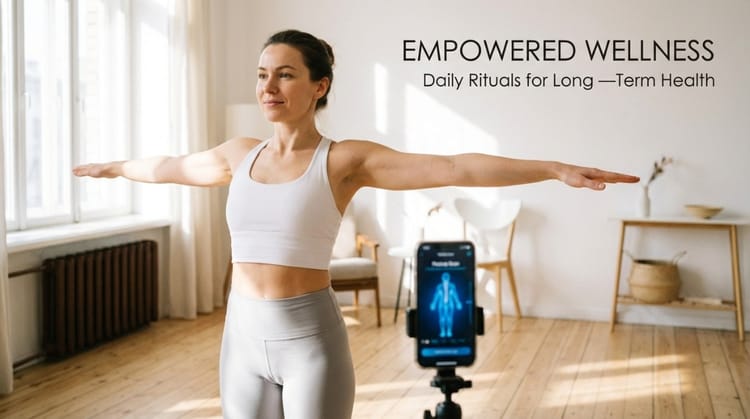
Rounded shoulders look the same from the outside - but the underlying imbalance is different for everyone. The degree of pec minor shortening, the level of lower trapezius inhibition, the presence or absence of serratus weakness - these vary from person to person and determine which exercises matter most for you. Backed AI scans your shoulder and upper back alignment with your phone camera and builds a corrective program around your specific pattern. Try Backed AI free →
Final Takeaway
Rounded shoulders are not a life sentence. They are a muscle imbalance - built gradually through daily loading patterns - and they respond directly to the right combination of release and strengthening.
The core principles of correction are simple:
• Open the front first. Release the pec minor, pec major, and anterior shoulder before expecting the back to take over.
• Restore thoracic extension. The shoulder blades cannot retract fully if the thoracic spine is locked in flexion.
• Rebuild the posterior scapular stabilisers. Wall angels, Y-T-W raises, and band pull-aparts target the exact muscles that have been switched off. They need daily repetition, not occasional effort.
• Do not forget the serratus. The wall push-up plus is the exercise most programs miss - and it is essential for complete, lasting correction.
• Change at least one daily habit. Monitor height, keyboard position, or exercise balance - pick the highest-impact change and make it permanent.
Four to eight weeks of daily commitment produces visible, measurable change. Most people notice it in photos, in how their clothes fit across the upper body, and in the reduction of the upper trap tension they had stopped noticing because it had become permanent background noise.
Why Most Rounded Shoulder Programs Fail
The internet is full of rounded shoulder fix content. Chest stretch videos, posture braces, “top 5 exercises” lists. Most of them produce limited results. Here is why:
1. They address the symptom, not the system. A chest stretch releases tightness in the front. But if the lower trapezius and serratus remain weak, the shoulder blade returns to its protracted resting position within hours. The full chain must be addressed together.
2. They skip the thoracic spine. The shoulder blades sit on the back of the ribcage. If the ribcage is locked in forward flexion, scapular retraction is mechanically limited regardless of how much you strengthen the rhomboids. Thoracic extension must come first.
3. Wrong muscles, wrong order. Many programs focus on upper trapezius and rhomboids - which actually pulls the shoulder blades UP rather than back and down. The lower trapezius and serratus anterior are the priority muscles for rounded shoulder correction. Most programs do not train them.
4. No daily habit intervention. If the monitor stays low and the keyboard stays forward, 8 hours of daily forward shoulder loading will outcompete 10 minutes of corrective exercise every time.
5. No personalisation for severity. Mild rounded shoulders need different exercise priorities than severe, long-standing cases. Generic programs cannot account for this - they give everyone the same protocol and produce average results for everyone.
The Smarter Alternative for Rounded Shoulder Correction 📱
Backed AI addresses what generic content structurally cannot.
• 🔍 AI posture scan – A quick camera scan from your phone analyses your shoulder blade position, scapular tilt, and upper-body alignment pattern - identifying the specific muscles driving your rounded shoulder presentation.
• 📋 Personalised corrective program – Instead of a generic exercise list, you receive a structured program built around your shoulder profile and the severity of your imbalance.
• 📈 Progress tracking – Your shoulder position is tracked over time. Seeing the correction happening is one of the strongest drivers of continued consistency.
The difference between a generic rounded shoulder article and a personalised AI-powered program is the difference between knowing the theory and knowing what your body specifically needs.
Download Backed AI and start correcting your posture today. → backedapp.com
FAQ
Q1: How long does it take to fix rounded shoulders?
Most people notice reduced chest tightness and improved shoulder awareness within 2 to 3 weeks of daily practice. Visible correction in shoulder position - noticeable in photos or mirrors - typically emerges within 4 to 8 weeks. Correction of long-standing rounded shoulder patterns, where the muscles have been in a shortened or lengthened state for years, may take 3 to 6 months of consistent daily work. The most important variable is daily consistency, not exercise duration.
Q2: Can a posture brace fix rounded shoulders?
A posture brace can provide a temporary reminder to hold the shoulders back, but it does not address the underlying muscle imbalance. In fact, wearing a brace for extended periods can reduce the active muscle work the scapular stabilisers need to do - potentially worsening the weakness that drives the condition. Targeted exercise produces lasting correction. A brace alone does not.
Q3: What is the most important muscle to strengthen for rounded shoulders?
The lower trapezius. It is the most chronically underactivated muscle in the rounded shoulder pattern and is responsible for the scapular depression and retraction movement that directly corrects the forward shoulder position. Prone Y raises and wall angels are the two exercises that most specifically target it. Most general shoulder routines significantly undertrain this muscle - which is one of the primary reasons rounded shoulders persist despite exercise.
Q4: Are push-ups bad for rounded shoulders?
Push-ups are not inherently harmful, but they load the anterior chain - pectorals and anterior deltoids - which are already tight and overactive in rounded shoulders. Performing high volumes of push-ups without equal or greater volumes of pulling exercises (rows, pull-aparts, face pulls) will reinforce and worsen the imbalance. During a correction phase, reduce push-up volume and increase pulling volume significantly.
Q5: Can rounded shoulders cause breathing problems?
Yes. The forward-caved chest position in rounded shoulders reduces the expansion space available to the upper chest and reduces the efficiency of the diaphragm. People with significant rounded shoulders often breathe more shallowly and with less upper chest involvement than people with neutral alignment. Chest opener stretches and thoracic extension work often produce a noticeable improvement in breathing depth within the first few weeks.