Types of Bad Posture: What Your Body Is Telling You (And How to Fix It)

Your posture is doing something right now. And if you've spent years at a desk, on your phone, or carrying heavy bags - it's probably not doing it well.
Bad posture is a pattern of spinal misalignment where muscles, joints, and ligaments are consistently loaded in ways they were not designed to sustain.
The good news? Most posture problems are correctable. But first, you need to know which type you're dealing with.
TL;DR
- There are 4 main types of bad posture: forward head, kyphosis, swayback, and flatback
- Each has distinct causes, physical effects, and correction strategies
- Poor posture affects more than appearance - it drives pain, fatigue, and breathing issues
- Most people have a combination of posture types
- Targeted exercises work better than generic stretches
- AI-powered tools like Backed AI can identify your specific pattern and build a correction plan
What Is Bad Posture?
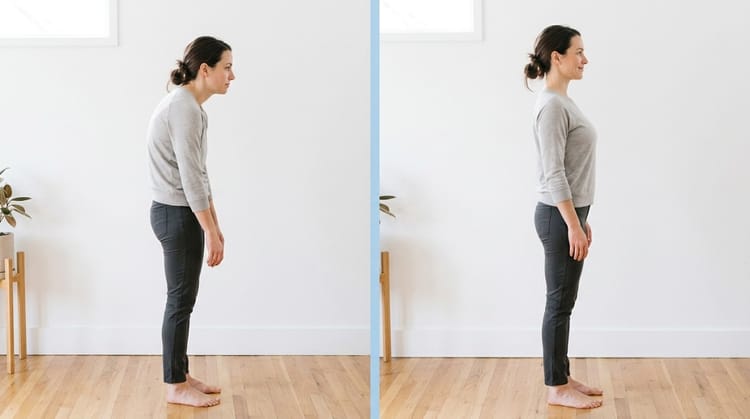
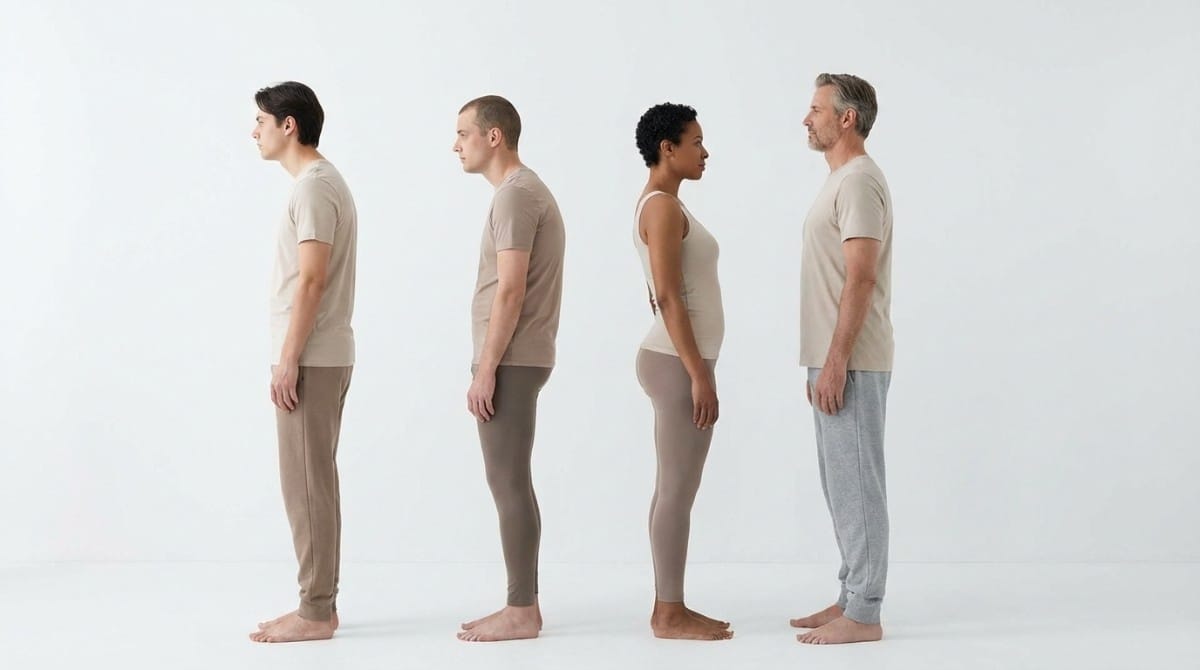
Posture describes the position your spine holds when you are sitting, standing, or moving. Healthy posture means your spine maintains its natural curves - a gentle inward curve at the neck, a gentle outward curve at the upper back, and an inward curve again at the lower back.
When those curves are exaggerated or flattened, your muscles and joints absorb strain they were not designed to handle long-term.
Most people develop poor posture gradually. It happens through repeated habits - looking down at screens, sitting for hours, or carrying tension in certain muscles. Over time, some muscles shorten and tighten while others become weak and overstretched.
The result is a posture pattern. Not just "bad posture" - a specific kind.
Why Does Posture Matter Beyond Appearance?
Posture affects far more than how you look. Research in musculoskeletal health shows that sustained postural misalignment is directly linked to:
- Chronic neck and shoulder pain
- Lower back pain and disc compression
- Reduced respiratory capacity
- Headaches and jaw tension
- Fatigue and reduced physical endurance
- Decreased confidence and mood
Physiotherapists often note that patients presenting with recurring pain show identifiable posture patterns that, when corrected, reduce or eliminate the pain cycle entirely.
The 4 Main Types of Bad Posture
1. 🔹 Forward Head Posture
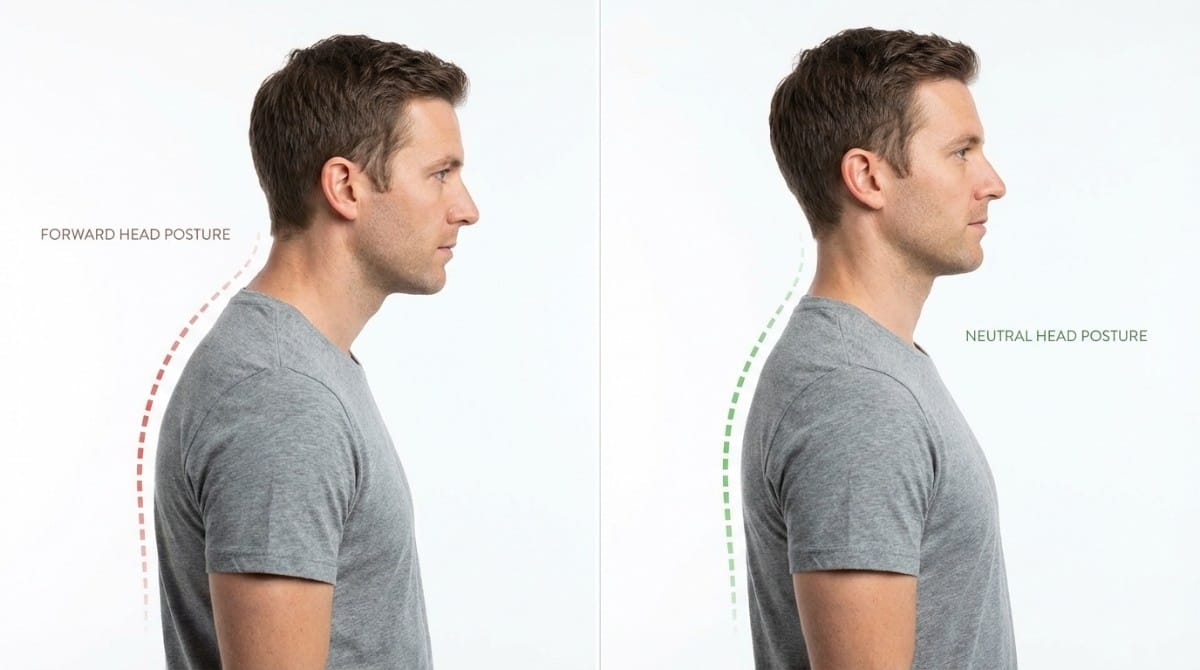
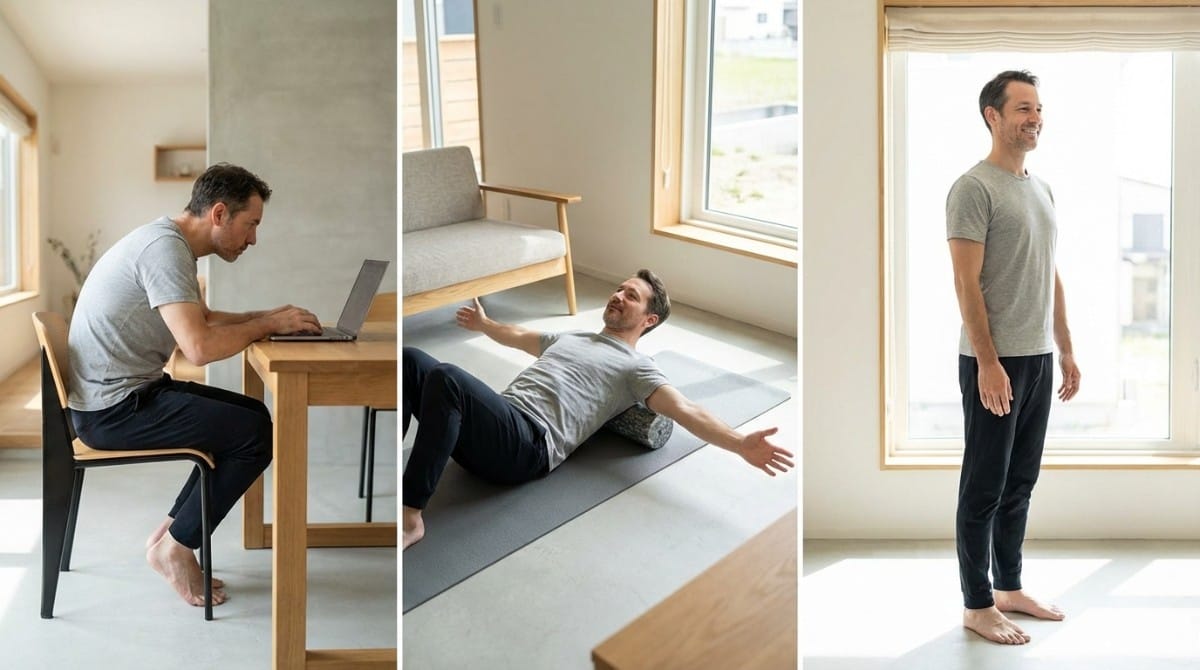
What it looks like: Your head sits in front of your shoulders rather than stacked above them. From the side, your ears are visibly ahead of your shoulder line.
What causes it: Prolonged phone use, working at a computer with a low monitor, driving with your chin forward, or sleeping with too many pillows.
What it feels like:
- Tightness and aching in the neck
- Upper back tension between the shoulder blades
- Frequent headaches at the base of the skull
- Jaw pain or grinding teeth
Why it matters: For every inch your head moves forward, the effective load on your cervical spine roughly doubles. Posture specialists note that a head in 15 degrees of forward tilt can feel like 27 pounds of load on your neck structures - compared to just 10-12 pounds in a neutral position.
Forward head posture is one of the most common posture conditions seen in desk workers today. It is often called "tech neck."
2. 🔹 Kyphosis (Rounded Upper Back / Hunchback)
What it looks like: An exaggerated outward curve of the upper spine. Your shoulders round forward, your upper back appears hunched, and your chest caves slightly inward.
What causes it: Weak upper back muscles, tight chest muscles, sustained slouching, osteoporosis-related bone changes, or previous spinal injury.
What it feels like:
- Persistent upper back aching
- Shoulder tightness and limited range of motion
- Breathing feels shallow or restricted
- Visible rounded appearance when standing
Why it matters: Severe kyphosis limits mobility and increases fall risk, particularly in older adults. Posture research shows it is estimated to affect a significant proportion of older adults, with the curve worsening progressively if left unaddressed.
For younger adults and desk workers, postural kyphosis is almost entirely caused by habit - and habit can be changed.
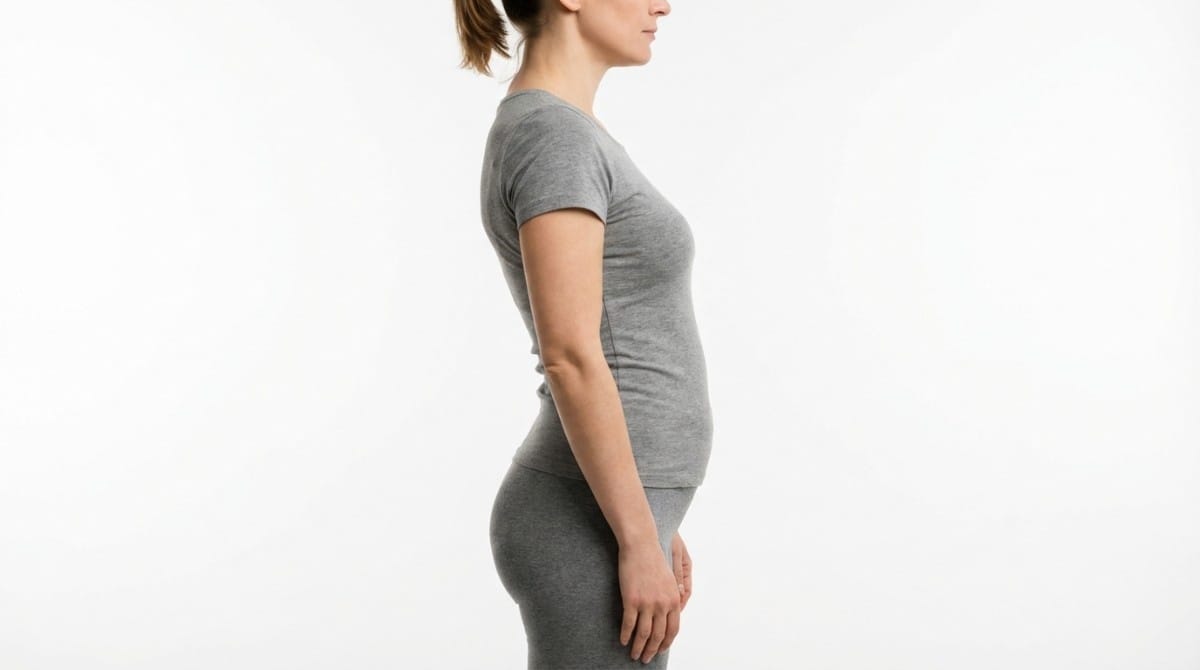
3. 🔹 Swayback (Hyperlordosis / Anterior Pelvic Tilt)
What it looks like: Your hips are pushed forward of your body's midline. Your lower back has an exaggerated inward curve. Your stomach appears to protrude even if you are not overweight. From the side, your body makes a visible "S" lean.
What causes it: Prolonged sitting weakens abdominals and glutes. Tight hip flexors pull the pelvis forward. Wearing high heels regularly or pregnancy can also contribute.
What it feels like:
- Persistent aching in the lower back
- Tightness across the front of the hips
- Glute weakness or difficulty activating the glutes
- Discomfort after standing for long periods
Why it matters: Swayback increases compression on the lumbar vertebrae and facet joints. It often goes unnoticed for years until lower back pain becomes chronic.
🔑 Key Insight: Swayback and anterior pelvic tilt are among the most common patterns seen in desk workers. Sitting for hours shortens the hip flexors and trains the pelvis into a constant forward tilt - the exact opposite of what a strong, neutral spine requires.
4. 🔹 Flatback Posture
What it looks like: The lower back loses its natural inward curve. Instead of a gentle lumbar arch, the lower spine looks straight. You may tend to lean forward at the hips when standing.
What causes it: Degenerative disc disease, ankylosing spondylitis, past back surgery, or chronic muscle imbalances that compress the lumbar curve over time.
What it feels like:
- Pain and fatigue when standing for more than a few minutes
- Difficulty standing upright comfortably
- Leg pain or aching
- Feeling better when sitting or slightly bent forward
Why it matters: Flatback places unusual stress on the hamstrings, which chronically shorten to compensate. It also creates significant forward-leaning fatigue during standing activities.
Common Posture Combinations
Most people do not have a single isolated posture type. Research in musculoskeletal rehab shows that posture patterns frequently overlap:
| Pattern Combination | Common Trigger |
|---|---|
| Forward head + kyphosis | Desk work + screen use |
| Swayback + forward head | Prolonged sitting + phone use |
| Flatback + kyphosis | Chronic low back issues + weak core |
| Kyphosis + anterior pelvic tilt | Sedentary lifestyle, low physical activity |
Identifying your combination is more valuable than treating a single type in isolation. This is where generic stretching programs consistently fall short.
How Does Bad Posture Develop Over Time?
Posture problems do not happen overnight. They build across months and years through repeated positions that your body gradually adapts to.
Stage 1 - Muscle shortening: Certain muscles tighten from staying in one position too long.
Stage 2 - Opposing muscle weakness: The muscles on the other side become underused and lose strength.
Stage 3 - Structural adaptation: Joints and connective tissue begin to adapt to the new "normal" position.
Stage 4 - Pain onset: The misalignment creates enough load and tension to trigger chronic pain or recurring injury.
The earlier you intervene, the easier the correction.
Best Exercises by Posture Type (Quick List)
🔹 Forward Head Posture
- Chin tucks - Pull your chin straight back. Hold 5 seconds. Repeat 10 times.
- Cervical retraction with wall - Stand against a wall, gently flatten your neck against it.
- Doorway chest opener - Arms at 90 degrees in a doorframe, lean forward gently.
🔹 Kyphosis
- Thoracic extension over foam roller - Upper back over the roller, gently extend backward.
- Face pulls with resistance band - Targets rear delts and mid-traps.
- Wall angel slides - Arms against wall in "goalpost," slide upward slowly.
🔹 Swayback / Anterior Pelvic Tilt
- Posterior pelvic tilt - Lie on back, flatten lower back to floor. Hold 10 seconds.
- Glute bridges - Activate glutes through full range of motion.
- Hip flexor kneeling stretch - Lunge position, tuck pelvis under, feel the hip front stretch.
🔹 Flatback
- Cat-cow stretches - Restore lumbar mobility through gentle spinal flexion and extension.
- McKenzie press-up - Prone on elbows, press upper body up gently to encourage lumbar curve.
- Standing lumbar extension - Hands on lower back, gentle backward lean.
Step-by-Step Posture Recovery Framework
Step 1 - Identify your posture type Use a camera or mirror. Take a side-profile photo standing naturally. Compare your head, shoulder, hip, and knee alignment.
Step 2 - Address the tight muscles first Stretch and mobilize the shortened structures before strengthening the weak ones.
Step 3 - Strengthen the opposing muscles Target the muscles that have become weak or inhibited from your habitual position.
Step 4 - Rebuild movement habits Change how you sit, stand, walk, and sleep. Small consistent changes compound over weeks.
Step 5 - Track your progress Without feedback, most people fall back into old patterns within weeks.
💡 Backed AI guides you through each of these steps with personalized video routines, reminders, and AI-powered progress tracking - so you know what to do, when to do it, and whether it's working.
When This Approach Doesn't Work
Exercise and habit correction works for most postural problems. But there are situations where professional assessment is essential first:
- Pain is severe, constant, or worsening rather than improving
- You have a history of spinal fractures, osteoporosis, or disc herniation
- Posture changes occurred suddenly rather than gradually
- You experience numbness, tingling, or radiating pain into your arms or legs
- You have been diagnosed with a condition like ankylosing spondylitis or scoliosis
In these cases, see a physiotherapist or spine specialist before beginning any correction program.
Research & Expert Insight
Posture research consistently shows that musculoskeletal pain is strongly correlated with identifiable alignment patterns. Studies in cervical spine mechanics have demonstrated that forward head displacement increases spinal load exponentially with each degree of forward tilt. Research in kyphosis among aging populations shows a meaningful link between thoracic curvature severity and both mobility loss and increased mortality risk in older adults. Physiotherapists treating chronic lower back pain regularly identify anterior pelvic tilt and hip flexor shortening as primary contributing factors in desk-working patients.
The clinical consensus across musculoskeletal rehab: posture correction works best when it is specific, progressive, and consistent.
Final Takeaway
There is no universally "bad" body - but there are posture patterns that put your spine, muscles, and joints under unnecessary stress. Identifying whether you have forward head posture, kyphosis, swayback, or flatback posture is the first step toward real relief.
Generic advice to "sit up straight" does not solve the underlying muscle imbalances. Targeted correction - addressing the specific tight and weak areas for your posture type - does.
Start with awareness. Then build a consistent, progressive plan.
Why Most Exercise Plans Fail
Most people who try to fix their posture with YouTube videos or generic routines give up within two weeks. Here is why:
- No personalization: One-size-fits-all exercises do not address your specific posture pattern
- No progression: Without increasing challenge over time, muscles plateau and habits stall
- No consistency mechanism: Without reminders and check-ins, routines disappear during busy weeks
- No feedback loop: You cannot tell if your form is right or if you are actually improving
The result? Temporary relief, returning pain, and the frustrating cycle of starting over.
📱 Upgrade Your Correction with Backed AI
Backed AI was built specifically for this problem.
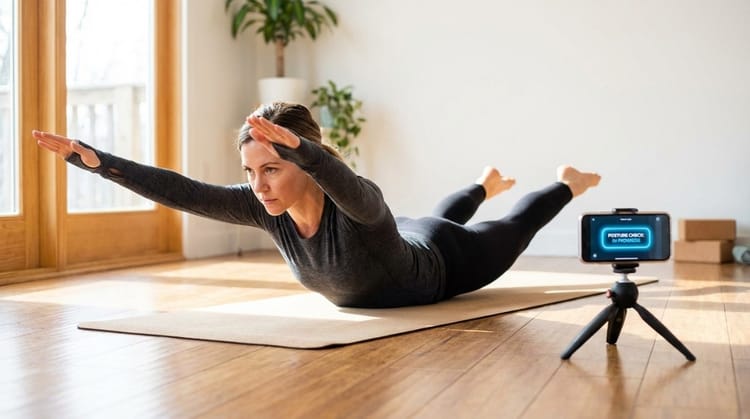
Instead of guessing which exercises apply to you, Backed AI uses your phone's camera to analyze your posture pattern in minutes. It then builds a personalized correction routine - targeted to your specific misalignment.
What makes it different:
- 🎯 AI posture scan identifies your posture type accurately, not generically
- 📋 Personalized exercise programs matched to your specific pattern and current level
- 📈 Smart progress tracking so you can see change week over week
Whether you have forward head posture from years of screen use, rounded shoulders from desk work, or a swayback from too much sitting - Backed AI builds the right plan for your body.
Download Backed AI and start correcting your posture today. 👉 backedapp.com
Frequently Asked Questions
Q1: What are the 4 main types of bad posture?
The four main types are forward head posture, kyphosis (rounded upper back), swayback (anterior pelvic tilt), and flatback posture. Each involves a distinct spinal misalignment pattern with different causes and correction strategies.
Q2: How do I know which posture type I have?
Take a side-profile photo while standing naturally and relaxed. Look at where your ears, shoulders, hips, and knees align. A forward ear position suggests forward head posture. A rounded upper back suggests kyphosis. Hips pushed ahead of your midline suggest swayback.
Q3: Can bad posture be permanently corrected?
Yes, for most people. Postural correction requires consistent targeted exercise, habit changes, and progressive loading over 4-12 weeks depending on severity. Structural changes from injury or disease may require clinical support.
Q4: Is bad posture causing my back pain?
Often yes. Sustained postural misalignment places abnormal load on spinal discs, joints, and muscles. Many cases of chronic neck pain, upper back pain, and lower back pain have a direct postural component that responds well to targeted correction.
Q5: How long does it take to fix bad posture?
Most people notice meaningful improvement in 4-8 weeks with a consistent, targeted program. Full correction of deeply ingrained patterns may take 3-6 months. Consistency and specificity matter more than intensity.