Wall Angels: The Simple Daily Exercise That Resets Your Posture and Unlocks Shoulder Mobility
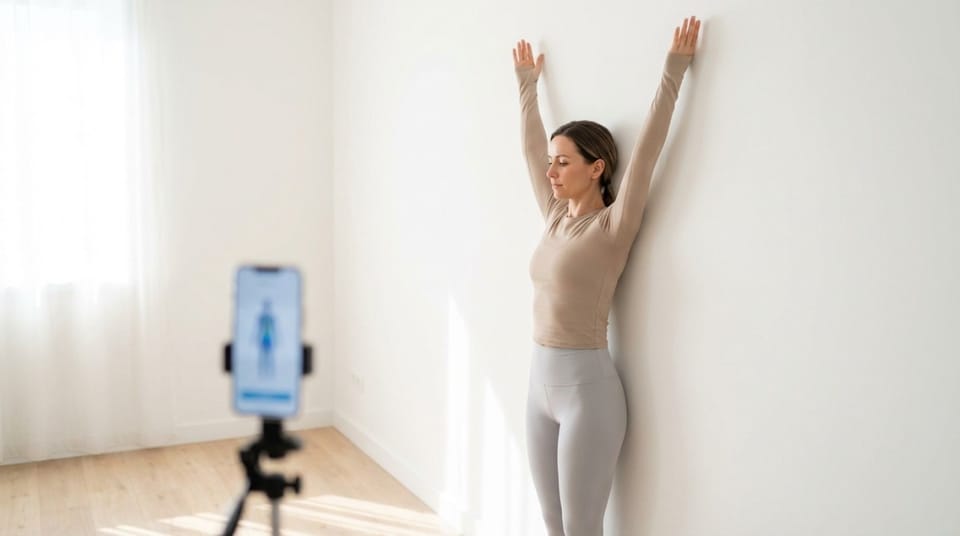
Wall angels work by pressing your entire back against a wall and sliding your arms through a controlled range of motion - actively correcting rounded shoulders, tight upper back muscles, and forward head posture in a single movement. Done consistently, they are one of the most effective postural reset exercises for desk workers, parents, and anyone sitting for long hours.
Wall angels are a posture correction exercise where the spine is held flat against a wall while the arms move through a V-to-W arc, training thoracic extension, shoulder mobility, and upper back engagement simultaneously.
TL;DR
- Wall angels train your upper back, rhomboids, and rotator cuff muscles in one move
- They directly counteract rounded shoulders and forward head posture
- Correct form requires your head, back, and arms to stay in contact with the wall
- Most common mistake: arching the lower back or losing wall contact mid-movement
- 2 sets of 8-10 reps daily is enough to see postural change in 2-4 weeks
- Modifications exist for tight shoulders - you do not need to force full range of motion
- Progression involves narrowing arm width and adding a hold at the bottom
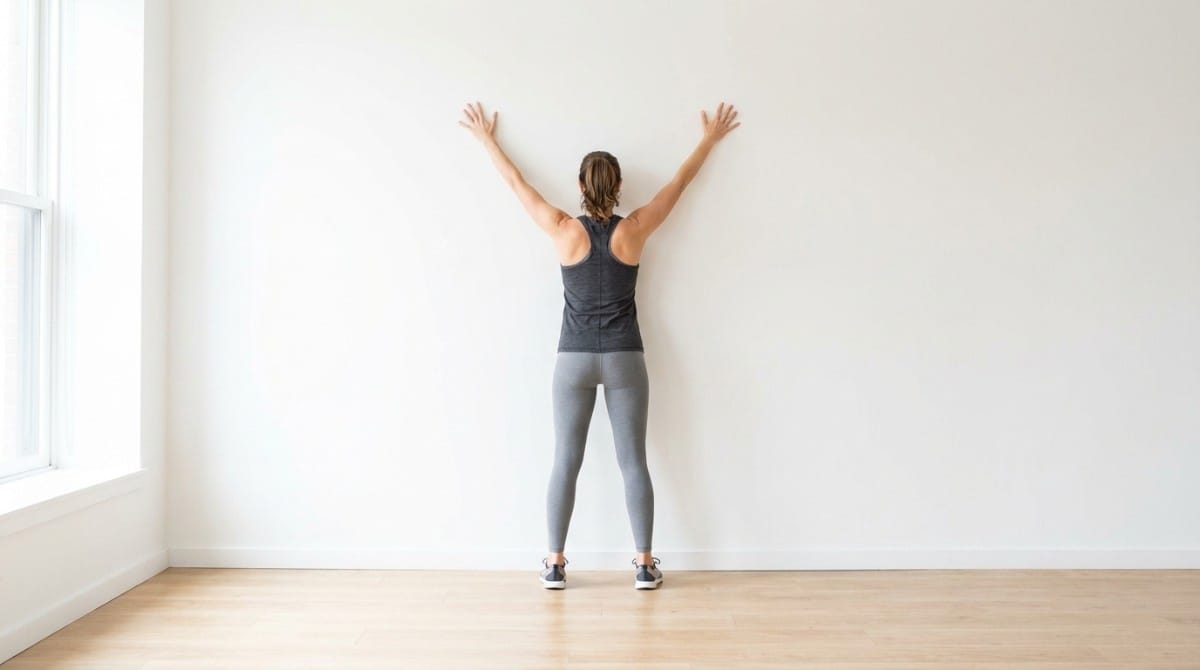
What Are Wall Angels?
Wall angels are a mobility and posture correction exercise performed against a flat wall. The movement mimics a "snow angel" shape - arms starting overhead in a wide V, then sliding down into a W position at shoulder height.
The wall acts as a feedback surface. It forces your spine into neutral alignment and keeps your arms honest. You cannot cheat the movement without immediately feeling where your body is restricted.
They are commonly used by:
- Physiotherapists for thoracic spine rehabilitation
- Desk workers managing neck and upper back tension
- Athletes correcting rounded shoulders from training
- Parents and caregivers dealing with forward head posture
Why Does Rounded Shoulders Posture Happen?
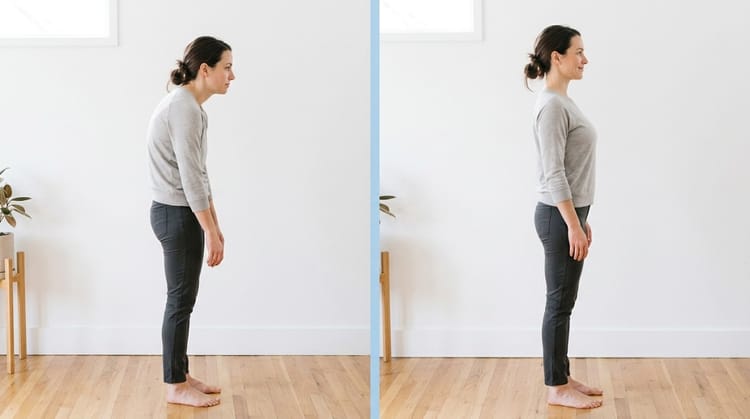
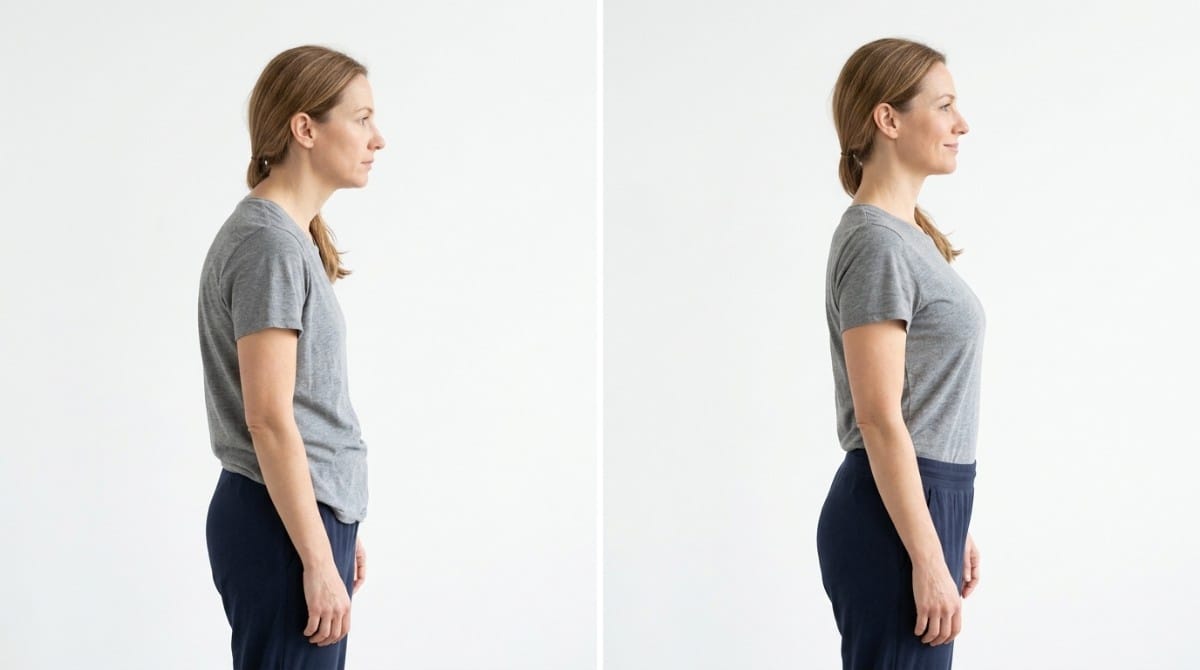
Rounded shoulders develop from hours of repeated forward loading. Typing, scrolling, driving, and carrying all pull the shoulders inward and forward.
Over time, the chest muscles (pectorals) shorten and tighten. The upper back muscles - especially the rhomboids and lower trapezius - weaken from being stretched and underused.
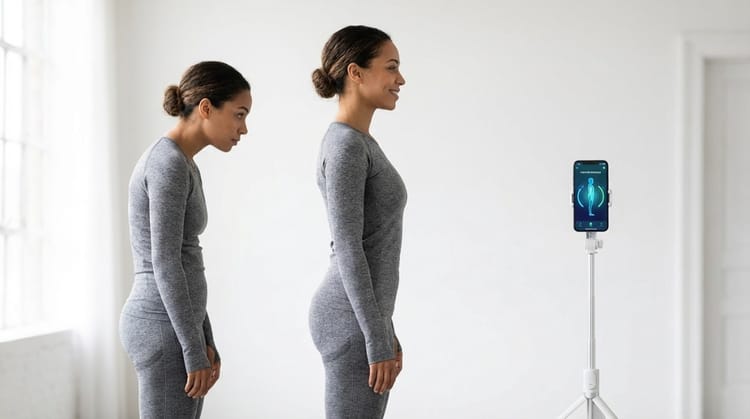
The result: your shoulders creep forward, your head follows, and your upper back rounds into a curve your body starts to treat as "normal."
Wall angels directly reverse this pattern by strengthening the muscles pulling your shoulders back while opening the chest.
What Muscles Do Wall Angels Work?
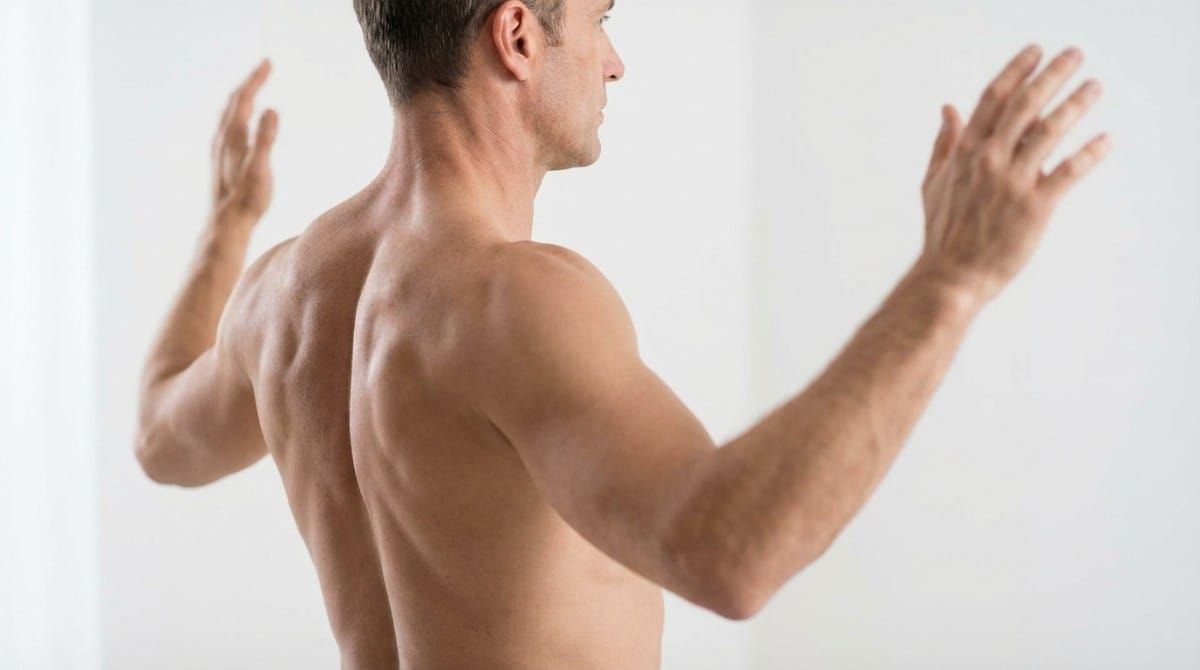
Wall angels target the full upper back and shoulder complex.
Together, these muscles work as a coordinated system. When they are strengthened in alignment, your posture improves across sitting, standing, and movement - not just when you are consciously thinking about it.
How to Do Wall Angels Correctly (Step-by-Step)
This is where most people go wrong. The wall angel looks deceptively simple. The form requirements are specific.
Step 1 - Set your starting position Stand with feet 6-8 inches away from the wall. Press your lower back, upper back, shoulders, and head against the wall. You should feel contact at all four points.
Step 2 - Engage your core Draw your belly button lightly inward. This prevents your lower back from arching away from the wall as your arms move.
Step 3 - Tuck your chin slightly Your head should be in contact with the wall. If it does not reach comfortably, place a small folded towel behind your head. Do not force it.
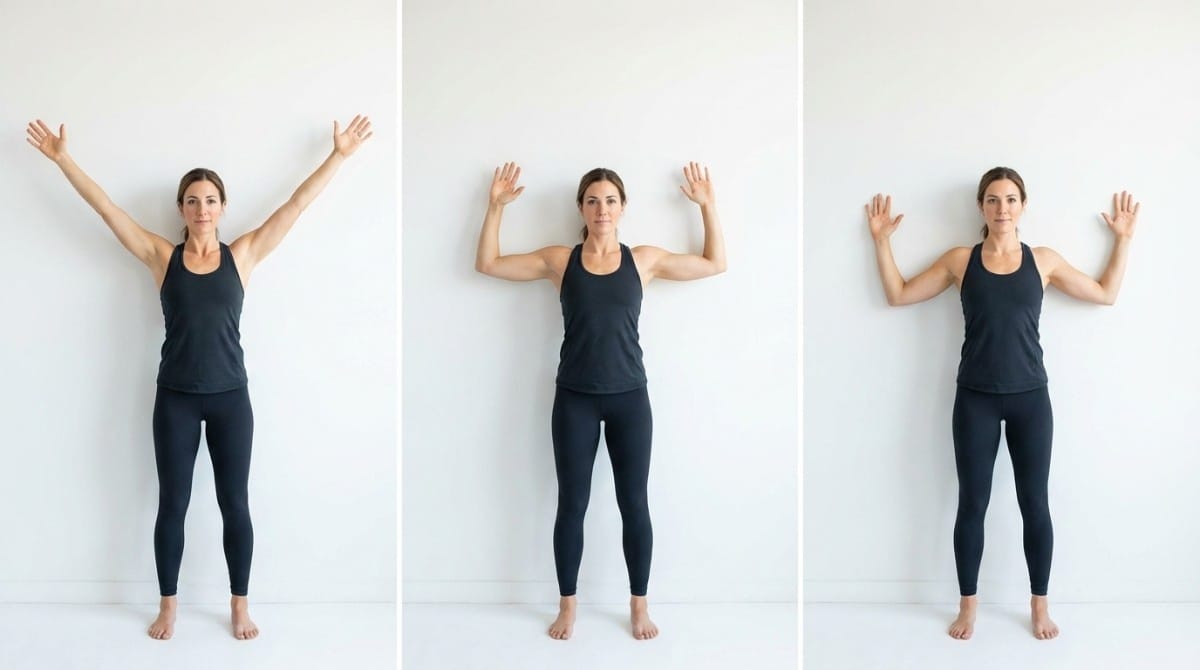
Step 4 - Raise arms to V position Extend both arms straight up overhead, aiming to keep the backs of your hands and elbows touching the wall. This is your starting position.
Step 5 - Slide arms down to W Slowly bend your elbows and slide your arms down the wall until your hands are just above shoulder height and your elbows are at 90 degrees. This is the W position.
Step 6 - Hold and return Hold the W position for a count of 3-5. Feel the squeeze between your shoulder blades. Slowly slide back up to V. That is one rep.
Step 7 - Repeat Aim for 8-10 reps per set. 2 sets daily is sufficient for most people starting out.
💡 Key Insight: If your hands or elbows lose contact with the wall during the movement, your range of motion is limited by chest or shoulder tightness. Do not force contact. Work within your available range and it will improve over 2-3 weeks.
Best Wall Angel Variations (Quick List)
Not everyone can do a standard wall angel on day one. These variations meet you where you are.
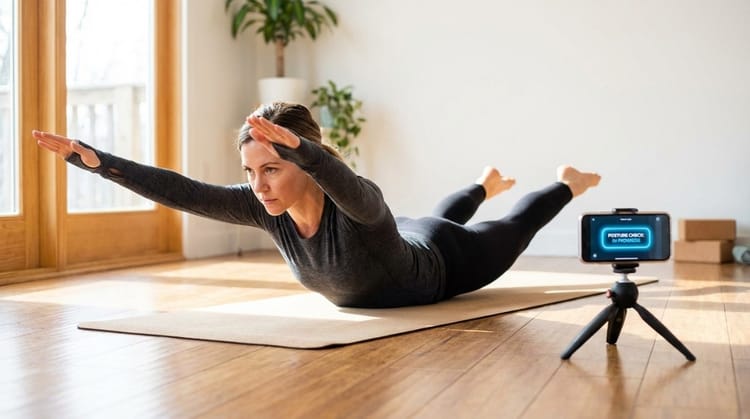
- Floor Angels - Lie on the floor with knees bent and spine flat. Perform the same arm movement with backs of hands on the floor. Lower back supported, easier to control.
- Forward Wall Angel - Stand with arms and elbows slightly off the wall. Use this if full contact causes pain or strain. Progress toward full wall contact over time.
- Narrow Wing Variation - As you get stronger and more flexible, bring your arms closer together during the overhead V. This increases thoracic extension demand.
- Doorway Wall Angel - Stand in a doorway, hands placed on door frame above head. Step one foot through as you slide your hands down. Good for opening the chest at the same time.
- Seated Wall Angel - Sit in a chair pushed against a wall. Perform the movement seated. Useful for those with lower body limitations or who want to practice form at their desk.
💡 Thinking about making wall angels a daily habit? Backed AI builds personalized posture routines around exercises like these - with guided form cues and progress tracking so you can see the difference over time. Try it free.
Common Mistakes and How to Fix Them
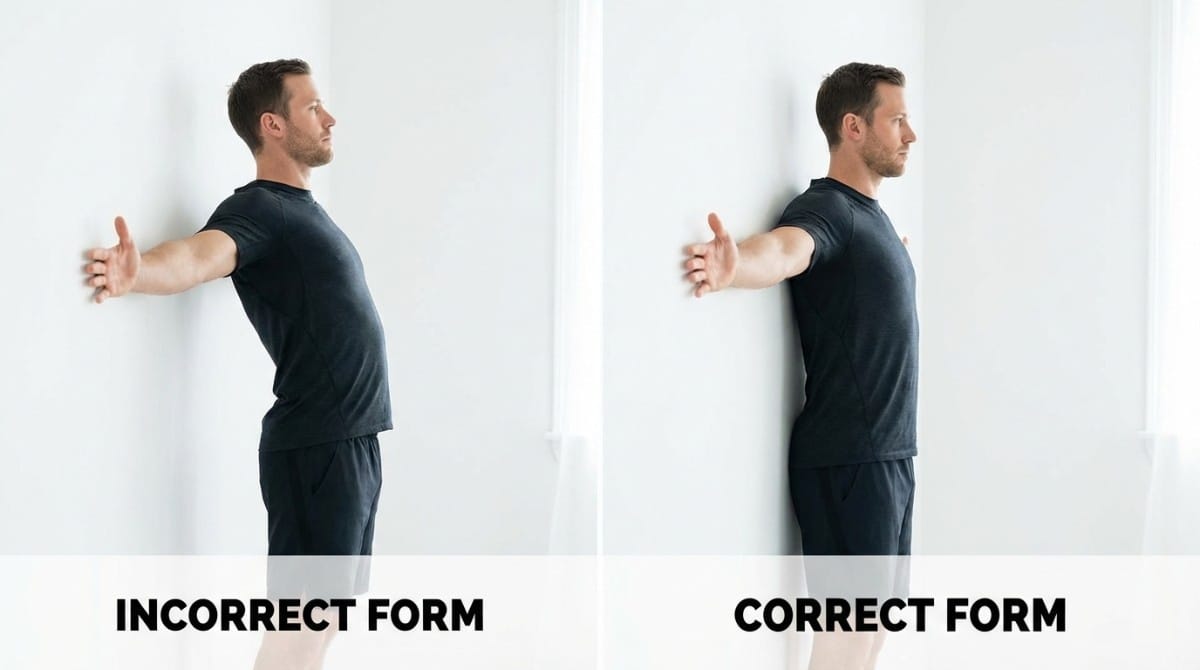
Lifting the Lower Back Off the Wall
This is the most common error. It happens because the chest and hip flexors are too tight to allow the arms overhead with a neutral spine.
Fix: Reduce your range of motion. Do not reach your arms as high. Build gradually.
Arching the Back During the Downward Phase
The lower back arches away from the wall as your arms lower into the W. This is a core stability issue.
Fix: Re-engage your core before each rep. Focus on pressing your lower back flat.
Forward Head Creep
The chin juts forward as you lower the arms. This is often due to tight cervical and chest muscles.
Fix: Add a gentle chin tuck cue before each rep. If your head cannot comfortably reach the wall, use a towel buffer.
Losing Hand Contact
Hands float away from the wall during movement. This is shoulder flexibility restriction.
Fix: Reduce arm width or use the forward wall angel modification. Do not force contact.
How Often Should You Do Wall Angels?
Wall angels are a low-intensity corrective exercise. They are safe for daily use.
Beginner: 2 sets of 8 reps, once daily. Intermediate: 3 sets of 10 reps, once or twice daily. Advanced/Maintenance: 2-3 sets, integrated into a broader posture program.
Physiotherapists often recommend doing wall angels as a morning reset and again mid-afternoon - especially for desk workers who have been sitting for extended periods.
Posture specialists suggest pairing wall angels with a chest stretch (pec doorway stretch) for faster results. The chest stretch releases the tightened muscles, while the wall angel reactivates the weakened ones.
Research and Expert Insight
Research in musculoskeletal rehab consistently shows that corrective exercises targeting the scapular stabilizers - including the rhomboids and lower trapezius - are effective at reducing rounded shoulder posture when performed consistently over 4-8 weeks.
Wall angels are frequently cited in clinical and physiotherapy contexts because they train multiple muscles in functional alignment, not in isolation. Unlike isolated cable rows or face pulls alone, the wall angel requires the head, thoracic spine, and arms to all stay aligned simultaneously - creating a whole-system postural pattern.
Studies on desk worker populations show that upper back strengthening and thoracic mobility work reduces neck pain and headaches associated with prolonged sitting. Wall angels deliver both benefits in one movement.
When Wall Angels Will Not Work
Wall angels are highly effective for most people. But they are not a complete solution in every case.
- If you have a structural spinal condition (significant scoliosis, severe kyphosis, disc herniation), consult a physiotherapist before adding this exercise
- If shoulder pain increases during the movement, stop and seek assessment. Forcing the movement through pain can worsen shoulder impingement
- If you do not build the habit, the exercise has no effect. One session per week is not enough. Consistency is the mechanism, not the single effort
- If your pain comes from a sedentary lifestyle overall, wall angels alone cannot compensate. They need to be part of a broader posture and movement strategy
Step-by-Step Recovery Framework
Week 1-2: Foundation
- Daily floor angels or forward wall angels (modified)
- Focus on getting the movement pattern right
- 2 sets of 8 reps
Week 3-4: Progress to Standard Wall Angel
- Move to standard wall angel against the wall
- Add chin tuck cue and core engagement
- 2-3 sets of 10 reps
Week 5-8: Build Consistency and Add Variation
- Introduce narrow wing variation
- Pair with doorway chest stretch
- Track any change in shoulder rounding and neck tension
Week 9+: Maintenance and Integration
- Wall angels become part of a daily postural habit
- Add alongside other posture exercises targeting lower back and neck
Final Takeaway
Wall angels are one of the most practical posture correction exercises available because they require nothing except a wall and 5 minutes. They directly target the muscles weakened by modern life - sitting, screens, and forward-loading tasks - and train your body to hold a better position naturally over time.
Done consistently with correct form, wall angels can reduce upper back tension, improve shoulder mobility, relieve neck stiffness, and help you stand taller within 4-8 weeks.
The challenge is not learning the exercise. The challenge is consistency.
Why Most Exercise Plans Fail
Most people who try posture exercises see limited results - not because the exercises are wrong, but because of four consistent problems:
- No personalization: Generic exercises do not account for your specific posture pattern, restrictions, or fitness level
- Wrong progression: Most people do the same routine forever without increasing challenge
- Inconsistency: Doing exercises 3 times per week when the problem exists 24 hours a day is rarely enough
- No feedback: Without knowing whether your form is correct, you may be reinforcing compensations instead of fixing them
These are exactly the gaps that make long-term posture correction difficult with YouTube videos or static exercise lists.
Take Your Posture Correction Further with Backed AI
Wall angels are a strong starting point. But fixing posture long-term requires knowing which muscles are most restricted in your body - and following a program that evolves as you improve.
Backed AI uses your phone camera to scan your posture and build a personalized corrective exercise program based on your actual alignment. Not a generic plan. Your plan.
- 📱 AI posture scan - identifies your specific imbalances from a quick camera assessment
- 🎯 Personalized exercise program - exercises targeted to your posture pattern, not a one-size-fits-all list
- 📈 Progress tracking - see measurable improvement over weeks, so you stay motivated and consistent
Wall angels may be one part of your program. But you will know exactly which exercises matter most for your body and in which order to do them.
Download Backed AI and start correcting your posture today. → backedapp.com
FAQ
Q1: How long does it take for wall angels to improve posture?
Most people notice reduced tension and improved shoulder mobility within 2-3 weeks of daily practice. Visible postural change typically takes 4-8 weeks of consistent effort.
Q2: Can I do wall angels every day?
Yes. Wall angels are a low-intensity corrective exercise and are safe for daily use. Physiotherapists often recommend them as a morning and afternoon reset routine.
Q3: Why can't I keep my arms on the wall during wall angels?
This is a common restriction caused by tight chest muscles, tight lats, or limited thoracic spine extension. Use the forward wall angel modification and reduce your range of motion until flexibility improves.
Q4: Are wall angels good for neck pain?
Yes. Wall angels strengthen the upper back and scapular muscles that support the neck. By reducing forward head posture and rounded shoulders, they reduce the muscular load on the neck and can decrease tension-related neck pain over time.
Q5: What is the difference between wall angels and floor angels?
Wall angels are performed standing with the back against a wall. Floor angels are performed lying on the floor with knees bent. Floor angels are easier for beginners because the lower back is supported. Both target the same muscle groups.