
Tight Hip Flexors: Why They Cause Back Pain and How to Fix Them for Good
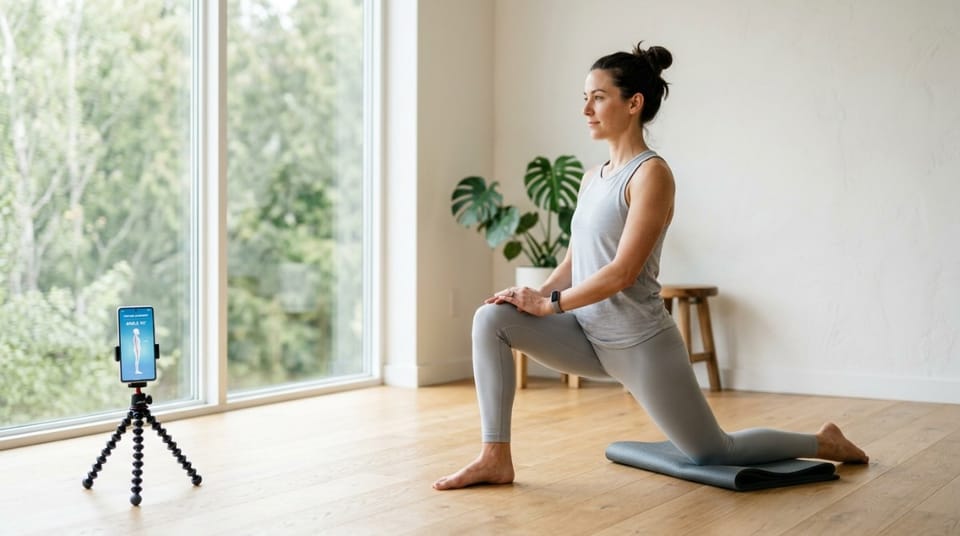
Tight hip flexors are one of the most overlooked causes of lower back pain, poor posture, and reduced mobility - and most people don't even know they have a problem until something else starts hurting. The good news: targeted stretching and strengthening can release hip flexor tension, restore movement, and take pressure off your spine.
Tight hip flexors are a musculoskeletal imbalance where the muscles connecting your thighs to your pelvis become shortened and overactive due to prolonged sitting or postural dysfunction.
TL;DR
- 🦴 Tight hip flexors are usually caused by too much sitting
- 💥 They contribute directly to lower back pain and anterior pelvic tilt
- 🧘 Daily stretching of the iliopsoas and rectus femoris helps release tension
- 🏋️ Strengthening your glutes and core prevents the problem from returning
- ⚠️ Stretching alone isn't enough - you need to fix the root posture pattern
- 📱 Personalized programs are more effective than generic stretch lists
- ✅ Most people see meaningful improvement within 2-4 weeks of consistency
What Are Tight Hip Flexors?
Your hip flexors are a group of muscles in the front of your hips and upper thighs. Their job is to bring your knee toward your chest - every time you walk, climb stairs, or sit down, they're working.
The main muscles involved are:
- Iliopsoas - the deepest and most powerful hip flexor
- Rectus femoris - part of your quad, also crosses the hip
- Tensor fasciae latae (TFL) - runs along the outer hip
- Sartorius - the long diagonal muscle across the thigh
When these muscles stay shortened for hours - like during a long workday at a desk - they stop returning to their full resting length. Over time, they stay contracted even when you're standing. That's tight hip flexors.

Why Do Tight Hip Flexors Cause Lower Back Pain?
This is where posture science gets important - and simple.
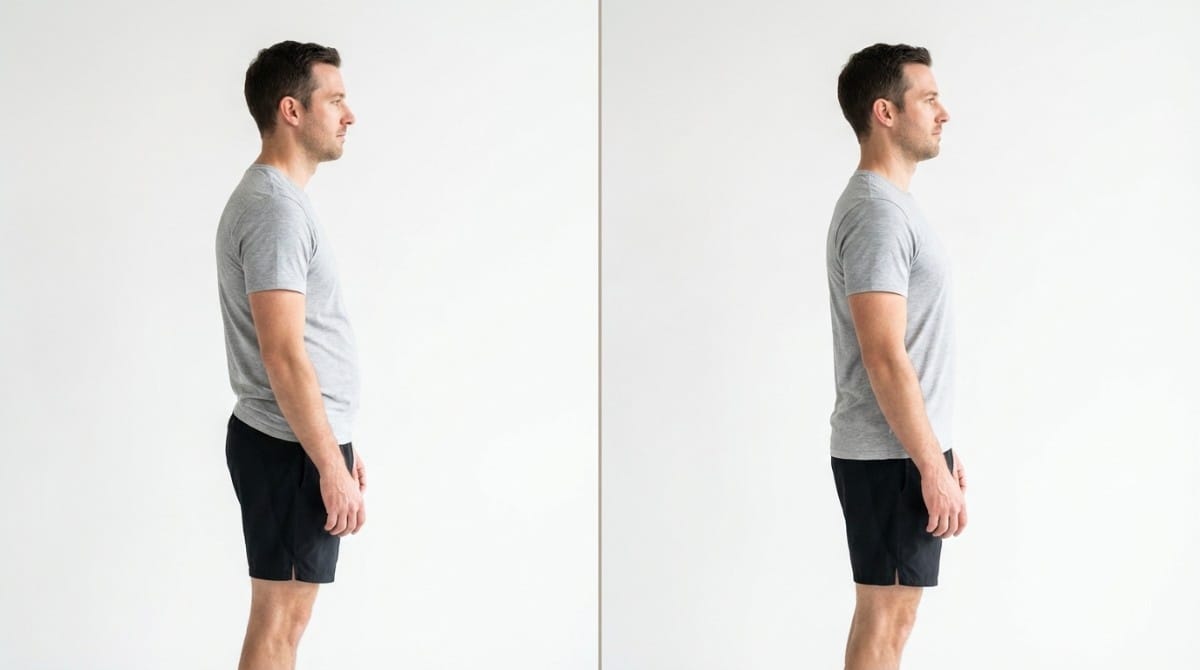
When your hip flexors are chronically tight, they pull the front of your pelvis downward. This tips the pelvis forward into what's called anterior pelvic tilt. When your pelvis tilts forward, your lower back is forced to arch excessively to compensate.
That exaggerated arch puts constant compression on the lumbar discs and joints. It also shuts down the glutes - your body's natural lower back stabilizers. The result? Lower back pain that seems to appear from nowhere, even when you haven't lifted anything heavy.
Posture specialists note that anterior pelvic tilt caused by hip flexor tension is one of the leading contributors to chronic lower back pain in desk workers. If your lower back aches after sitting all day, your hips may be the actual source - as explored in our guide on why lower back pain keeps coming back.
Key Insight: Tight hip flexors don't just affect your hips. They tilt your pelvis, compress your lower back, and switch off your glutes - creating a chain reaction of pain and postural dysfunction throughout your body.
How to Tell If Your Hip Flexors Are Tight
You don't need a clinic visit to check. Use this self-assessment:
The Thomas Test (at home version):
- Lie on your back on a firm surface - a yoga mat on the floor works
- Pull both knees to your chest
- Hold your right knee in place
- Slowly lower your left leg toward the floor
- If your left leg can't lie flat - or your lower back arches to compensate - your left hip flexor is tight
- Repeat on the other side
Other signs your hip flexors are tight:
- Lower back pain that worsens after sitting
- A forward tilt in your pelvis when you stand
- Hip discomfort during squats or lunges
- Difficulty standing fully upright
- Tightness in the front of your thigh when walking
Best Stretches for Tight Hip Flexors (Quick List)
These are the most effective, evidence-supported stretches for releasing hip flexor tension. Do them daily for best results. 🧘
- Kneeling Hip Flexor Stretch - The gold standard for the iliopsoas. Kneel on one knee, drive the hip forward with a tall spine, hold 30-45 seconds per side.
- Standing Lunge Stretch - A functional alternative for those who can't kneel. Step into a long lunge, tuck the pelvis, and feel the pull in the back hip. Hold 30 seconds.
- Pigeon Pose - Excellent for the TFL and deep hip rotators. Targets the outer hip alongside the flexors. Hold up to 60 seconds per side.
- Supine Hip Flexor Stretch - Lie on the edge of a bed or bench, pull one knee to your chest while lowering the other leg. Gentle but highly effective.
- Couch Stretch - Place the back shin against a wall in a kneeling position. Upright torso required. Intense but deeply effective for the rectus femoris.
- Butterfly Stretch - Relieves inner thigh and hip tension. Sit with soles together, lean forward with a flat back. Hold 30-45 seconds.
- Foam Roller Release - Not a stretch but a critical preparation tool. Roll slowly along the hip flexor and TFL for 30-60 seconds per side before stretching.
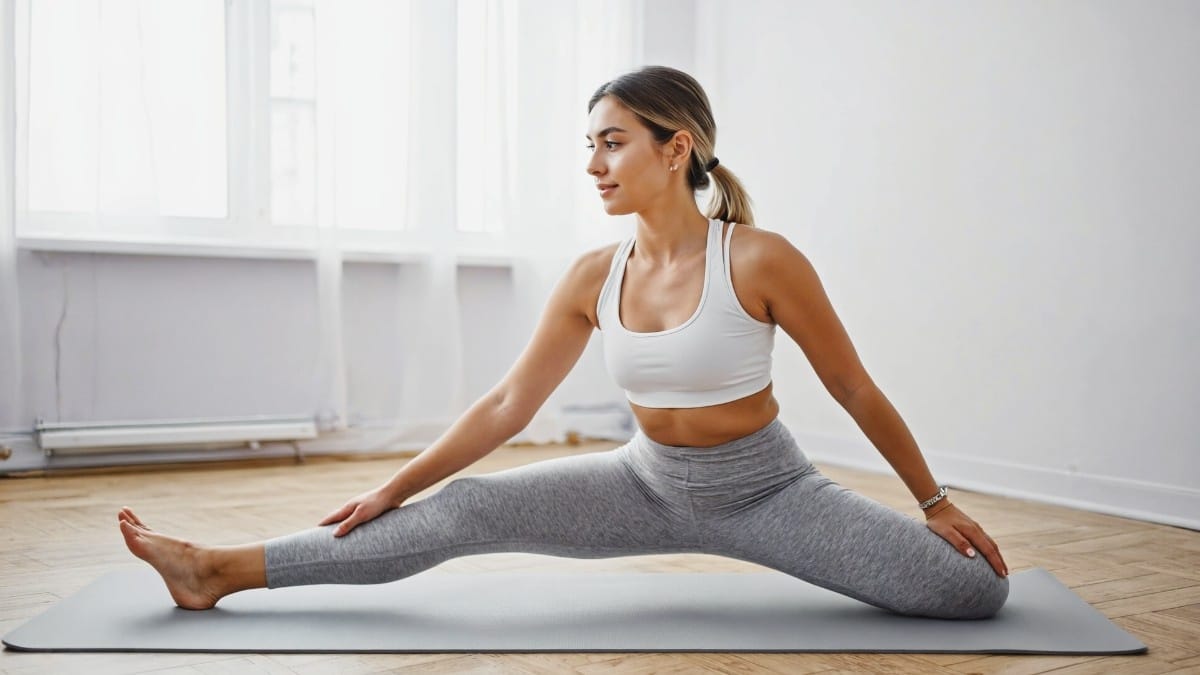
Step-by-Step Recovery Framework: Releasing Tight Hip Flexors in 2 Weeks
Follow this structured plan. It's designed to progress you from basic relief to lasting correction.
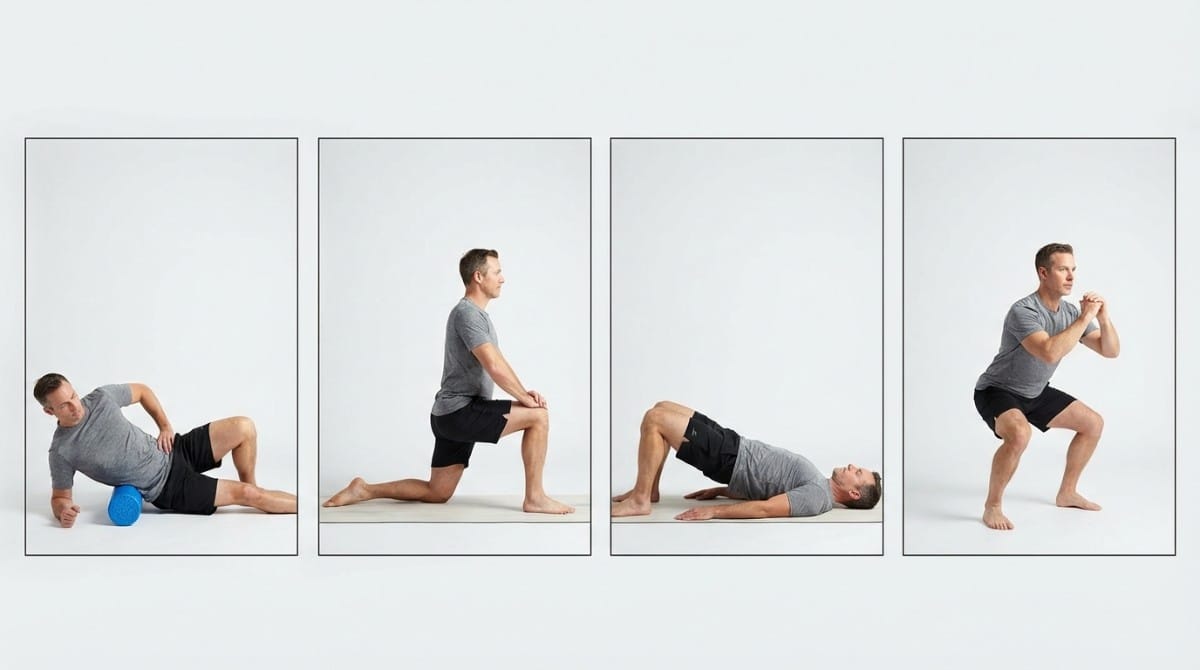
Phase 1 - Relief (Days 1-3) Start with foam rolling the hip flexor and TFL. Follow with the kneeling stretch and pigeon pose. Focus is on reducing acute tension.
Phase 2 - Activation (Days 4-7) Add glute bridges and dead bugs. Tight hip flexors come with inhibited glutes. You must reactivate the posterior chain or the tightness returns. See how bodyweight back exercises support this process.
Phase 3 - Strengthening (Days 8-11) Introduce controlled squats, Romanian deadlifts, and hip hinge patterns. Strength locks in the mobility gains. Without this step, you'll keep losing progress.
Phase 4 - Integration (Days 12-14) Combine everything into a 20-minute daily routine. Add posture checkpoints throughout your day - every time you stand up from your desk, consciously lengthen your hip flexors.
Why Does Hip Flexor Tightness Keep Coming Back?
This is the question most people don't ask - and it's why the problem persists.
Stretching alone treats the symptom, not the cause. If you sit 8-10 hours a day and only stretch for 10 minutes, the math doesn't work in your favor.
The real contributors to recurring hip flexor tightness are:
- Sustained hip flexion - sitting keeps your hip flexors in a shortened position for hours daily
- Weak antagonists - inhibited glutes and hamstrings allow hip flexors to dominate
- Poor posture habits - anterior pelvic tilt reinforces the pattern constantly
- No movement variety - your hip flexors need full range of motion regularly, not just static holds
Research in musculoskeletal rehab shows that combining stretching with targeted strengthening and postural correction produces significantly better long-term outcomes than stretching alone.
If you work at a desk, understanding your full posture correction strategy for desk workers is essential - tight hips are just one piece.
Research & Expert Insight
Physiotherapists often recommend addressing hip flexor tightness as part of a complete lower back rehabilitation plan - not as a standalone fix. The hip-spine connection is well established in musculoskeletal research.
Key evidence points:
- Sitting biomechanics: Studies on sedentary populations consistently identify hip flexor shortening as a key contributor to lumbar lordosis and lower back load
- Glute inhibition: Research in sports rehabilitation shows that tight hip flexors correspond with reduced glute activation, compounding the postural dysfunction
- Mobility + strength: Posture specialists confirm that patients who combine hip flexor stretching with posterior chain strengthening maintain results longer than those who stretch only
The Thomas Test, widely used in clinical settings, remains the most accessible self-assessment for identifying hip flexor tightness before symptoms escalate.
What Happens If You Ignore Tight Hip Flexors?
Tight hip flexors aren't just uncomfortable - left untreated, they create a cascade of secondary problems.
- 🦵 Knee pain - altered hip mechanics increase load on the knee joint
- 🔙 Chronic lower back pain - persistent lumbar compression and disc irritation
- 🚶 Altered gait - shortened stride length and compensatory movement patterns
- 🍑 Glute atrophy - persistent inhibition of the glutes leads to muscle deactivation
- 🪪 Reduced athletic performance - restricted hip extension limits power output in sport and training
This is why physiotherapists often treat hip flexor tightness proactively - before lower back pain becomes chronic. Our article on anterior pelvic tilt and tight hips covers the downstream effects in more detail.
When This Approach Doesn't Work
Hip flexor stretching works for most people - but not for everyone.
Consider seeing a physiotherapist if:
- Pain is sharp, shooting, or radiates down the leg (may indicate a nerve issue or sciatica)
- You've had a recent hip or spine injury
- Stretching consistently increases your pain rather than relieving it
- You've been stretching daily for 4+ weeks with no improvement
- You have a history of hip labral tears or FAI (femoroacetabular impingement)
Tight hips caused by structural issues - not just muscular tension - require clinical assessment. Generic stretches won't fix an anatomical problem.
Lifestyle Habits That Help (And Hurt)
Habits that worsen hip flexor tightness:
- Sitting for 60+ minutes without a movement break
- Sleeping in the fetal position regularly
- Wearing high heels daily (tilts the pelvis forward)
- Skipping warm-ups before exercise
Habits that accelerate recovery:
- Standing or walking for 5 minutes every hour
- Sleeping on your back with a pillow under your knees
- Adding a brief morning hip flexor routine before your day starts
- Using a standing desk for part of your workday
Small lifestyle adjustments compound over time. The stretches matter - but so does what you do between stretches.
Why Most Exercise Plans Fail
Most people search for a hip flexor stretch routine, follow it for a few days, and then stop when life gets busy. Or they do the same three stretches forever - without progressing.
Here's why generic plans underdeliver:
- No progression - the same stretch at the same intensity stops producing results after week one
- Wrong sequence - stretching without glute activation just restores range of motion without stability
- No form feedback - bad form during stretches can reinforce the very patterns you're trying to fix
- No personalization - a desk worker's hip flexor issue is different from an athlete's or a senior's
💙 A Smarter Way to Fix Your Hip Flexors
Generic stretch lists are a starting point - but they're not a plan.
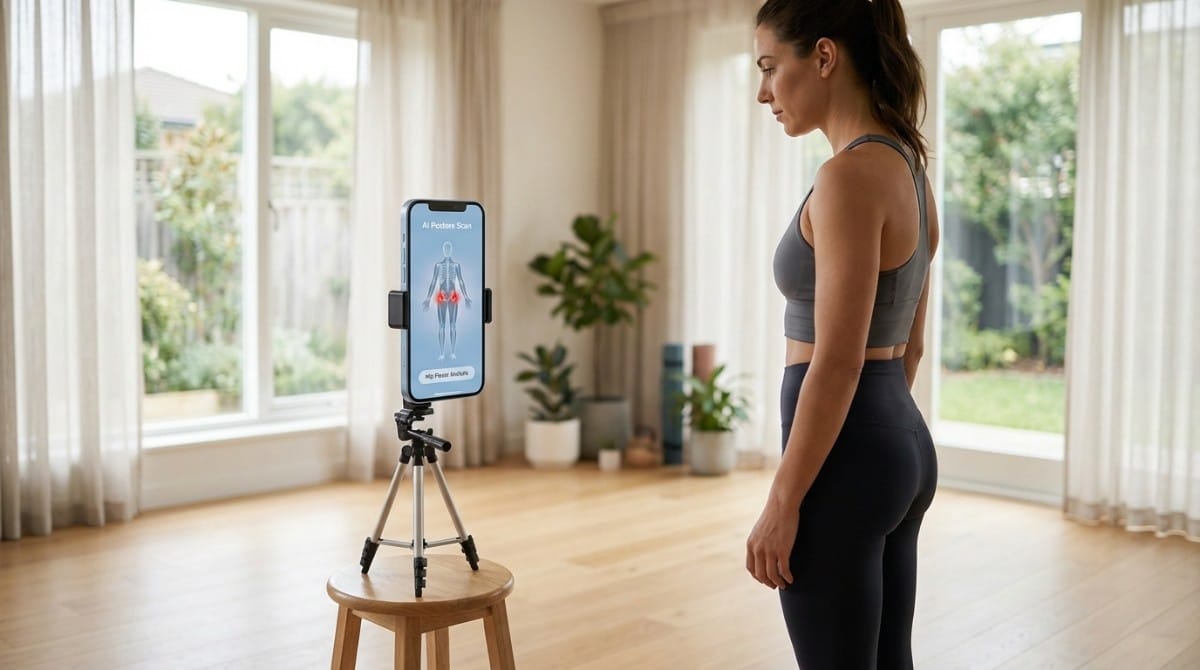
Backed AI uses your phone's camera to scan your posture, identify whether tight hip flexors and anterior pelvic tilt are actually present in your body, and build a program specifically around your imbalances.
Instead of guessing which stretches to prioritize, Backed AI tells you exactly what your body needs - and adapts as you improve.
What makes it different:
- 📸 AI posture scan - identifies your specific imbalances, including hip flexor-driven anterior tilt
- 🎯 Personalized exercise program - not a generic list, but a sequenced plan built for your body
- 📈 Progress tracking - you can see your posture improving over time, which builds consistency
If you've tried hip flexor stretches before and felt like you were spinning your wheels, the issue was probably personalization - not effort.
Download Backed AI and start correcting your posture today.
Final Takeaway
Tight hip flexors are a common, correctable problem - but they rarely fix themselves. They're caused by sustained sitting, reinforced by weak glutes, and worsened by poor posture habits. The solution requires three things working together: consistent stretching, targeted strengthening, and postural awareness through your day.
Start with the kneeling hip flexor stretch daily. Add glute bridges within the first week. Break up your sitting every hour. And if you want a structured plan that adapts to your actual body, Backed AI gives you that without the guesswork.
For readers also dealing with a tight lower back alongside hip tightness, the tight lower back recovery guide is a natural companion read.
FAQ
Q1: What are the symptoms of tight hip flexors?
Tight hip flexors typically cause pain or stiffness in the front of the hip or upper groin. You may also notice lower back aching after sitting, an anterior pelvic tilt when standing, and reduced range of motion during activities like squats or lunges.
Q2: How long does it take to loosen tight hip flexors?
Most people notice reduced tension within 1-2 weeks of daily stretching. Meaningful postural correction - addressing the underlying tilt and glute weakness - typically takes 4-8 weeks with a consistent combined stretching and strengthening routine.
Q3: Can tight hip flexors cause lower back pain?
Yes. Tight hip flexors pull the pelvis into anterior tilt, which compresses the lumbar spine and inhibits the glutes. This is one of the most common underlying causes of chronic lower back pain in people who sit for long periods.
Q4: Should I stretch or strengthen tight hip flexors?
Both. Stretching reduces the acute tightness, but strengthening the glutes, core, and hamstrings prevents it from returning. Stretching alone without strengthening is a temporary fix.
Q5: What is the best stretch for tight hip flexors?
The kneeling hip flexor stretch (low lunge with a tall spine and posterior pelvic tuck) is consistently recommended by physiotherapists as the most effective stretch for the iliopsoas - the deepest and most impactful hip flexor muscle.