How to Relieve a Tight Lower Back: Stretches, Root Causes, and a Recovery Plan That Actually Works
Targeted stretches and mobility work can relieve lower back tightness quickly - but to stop it from coming back, you need to understand what's causing it. Most tight lower backs stem from a combination of muscle imbalance, prolonged sitting, and weak supporting muscles. This guide gives you both: fast relief today and a framework to fix the root problem.
TL;DR
- Lower back tightness is usually caused by prolonged sitting, poor posture, or weak glutes and core
- Stretching alone provides temporary relief - you need mobility work and strength too
- The most effective stretches target the lumbar muscles, hips, and hamstrings together
- Consistency matters more than intensity - 10 minutes daily beats 60 minutes once a week
- If tightness keeps returning, your posture and movement patterns are likely the real cause
Lower back tightness is a musculoskeletal condition where the muscles surrounding the lumbar spine become overactivated, shortened, or fatigued - typically due to sustained poor posture or movement imbalances.
What Is Lower Back Tightness?
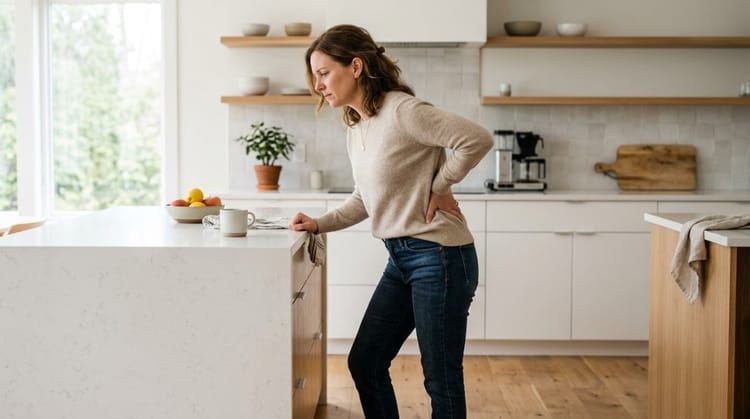
Lower back tightness refers to a feeling of stiffness, tension, or restricted movement in the lumbar region - the five vertebrae between your ribcage and pelvis. 🧠
It's not always painful. Many people describe it as a heaviness, a pulling sensation, or a feeling that their back "won't loosen up" - even after sleep.
The lower back is a load-bearing zone. It supports your upper body weight, connects your hips to your spine, and transfers force between your legs and torso. When muscles here tighten, everything above and below is affected.
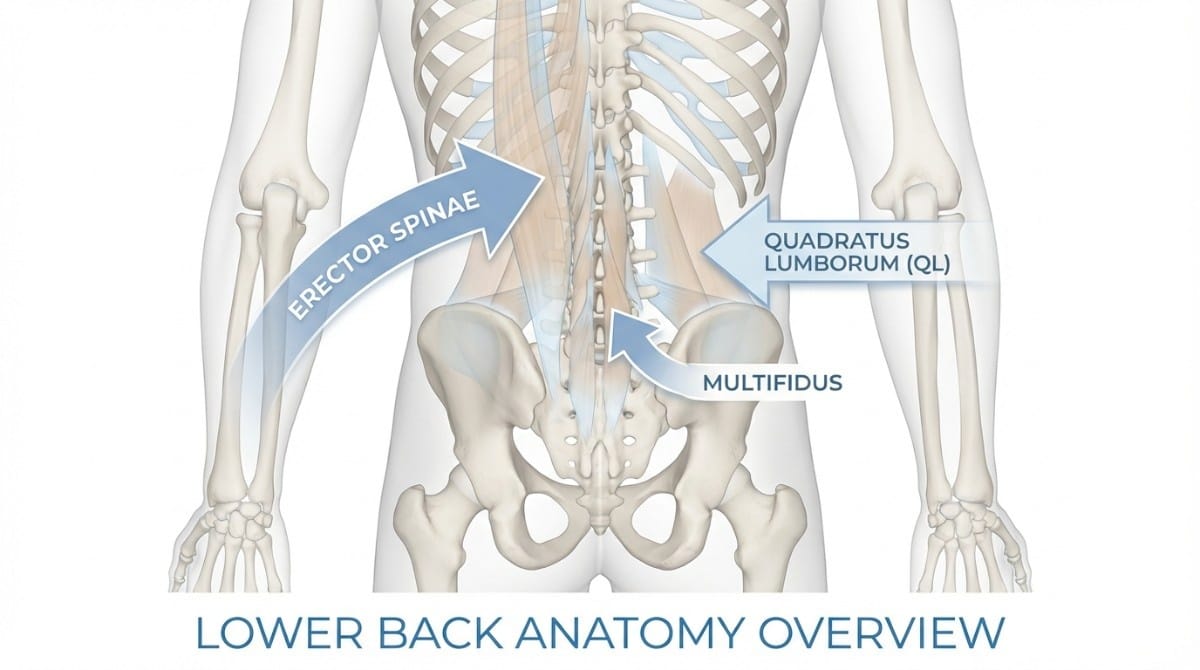
Why Does the Lower Back Get Tight?
Most lower back tightness has a pattern. It rarely appears randomly. Common triggers include:
- Prolonged sitting - Hip flexors shorten and pull on the lumbar spine
- Weak glutes - When glutes don't fire properly, the lower back overcompensates
- Tight hamstrings - Pull the pelvis into a posterior tilt, loading the lumbar muscles
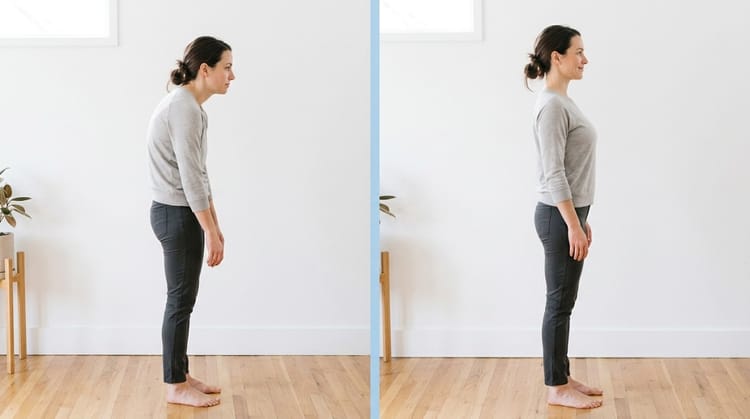
- Poor posture - Rounded or hyperextended lower back changes muscle activation patterns
- Anterior pelvic tilt - The pelvis tilts forward, compressing the lumbar joints
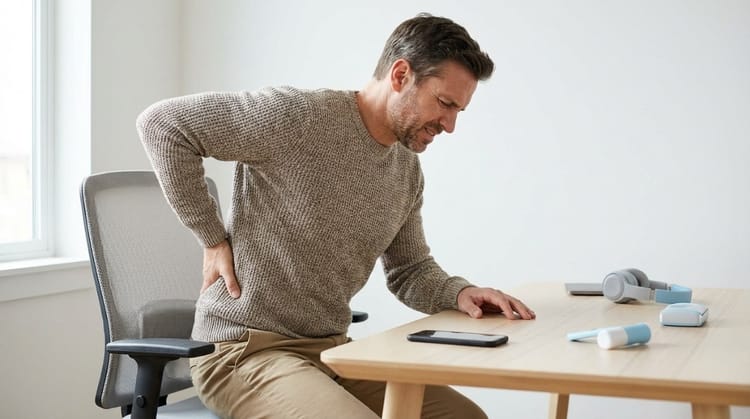
If you sit at a desk for 6+ hours a day, your lower back isn't just tight - it's being structurally loaded in a position it wasn't designed to hold for that long. Understanding the types of bad posture that drive this can help you address the root cause, not just the symptom.
What Happens If You Ignore Lower Back Tightness?
Ignoring persistent tightness creates a reinforcing cycle. 🔄
The tight muscles become more restricted. Surrounding muscles compensate. Movement patterns change. Over time, this can lead to:
- Reduced spinal mobility
- Recurring lower back pain episodes
- Hip flexor dysfunction
- Referred pain into the glutes or legs
Research in musculoskeletal rehab shows that untreated soft tissue restriction often progresses into chronic pain patterns that become significantly harder to reverse. Early intervention - even simple daily stretching - dramatically improves outcomes.
💡 Key Insight: Tightness is your body's warning signal. It means something in your movement system is under-recovered or overloaded. Stretching relieves the symptom. Correcting posture and building strength addresses the cause.
Best Stretches for a Tight Lower Back (Quick List)
These are the highest-value stretches for releasing lumbar tightness. Each targets a different part of the problem.
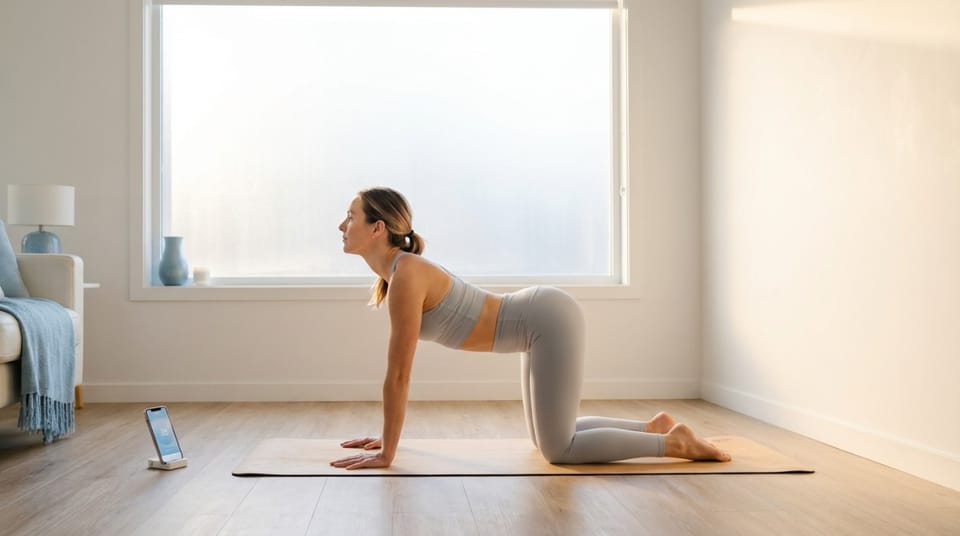
- Cat-Cow - Mobilizes the full spine and restores natural lumbar rhythm. Do 10 slow controlled reps.
- Knees-to-Chest - Decompresses the lumbar vertebrae and stretches the erector spinae. Hold 30 seconds.
- Child's Pose - Lengthens the lower back and gently stretches the hips and glutes. Hold 60 seconds.
- Supine Twist (Windshield Wipers) - Releases the sacral and lumbar muscles with a rotational stretch. Do 60 seconds alternating.
- 90/90 Hip Stretch - Targets the hip external rotators that pull on the lower back when tight. Hold 45 seconds per side.
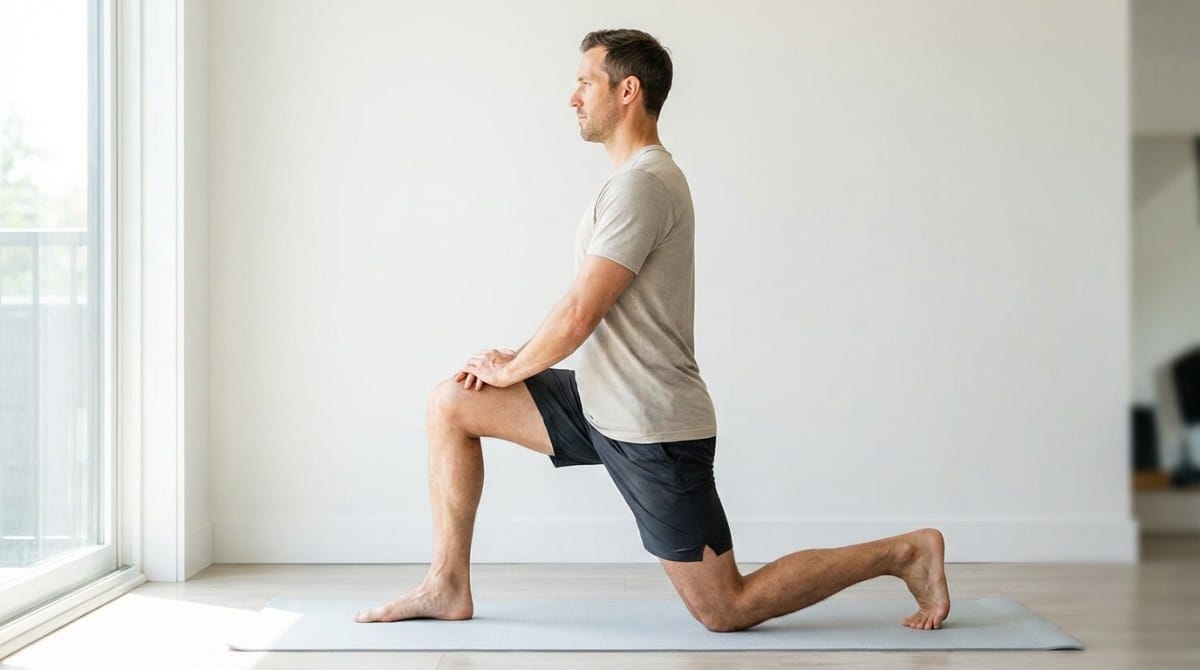
- Standing Hip Flexor Stretch - Releases the psoas and iliacus, which directly load the lumbar spine. Hold 30 seconds per side.
- Single-Leg Hamstring Stretch (Supine) - Reduces hamstring tension that pulls the pelvis and compresses the lower back. Hold 30 seconds per side.
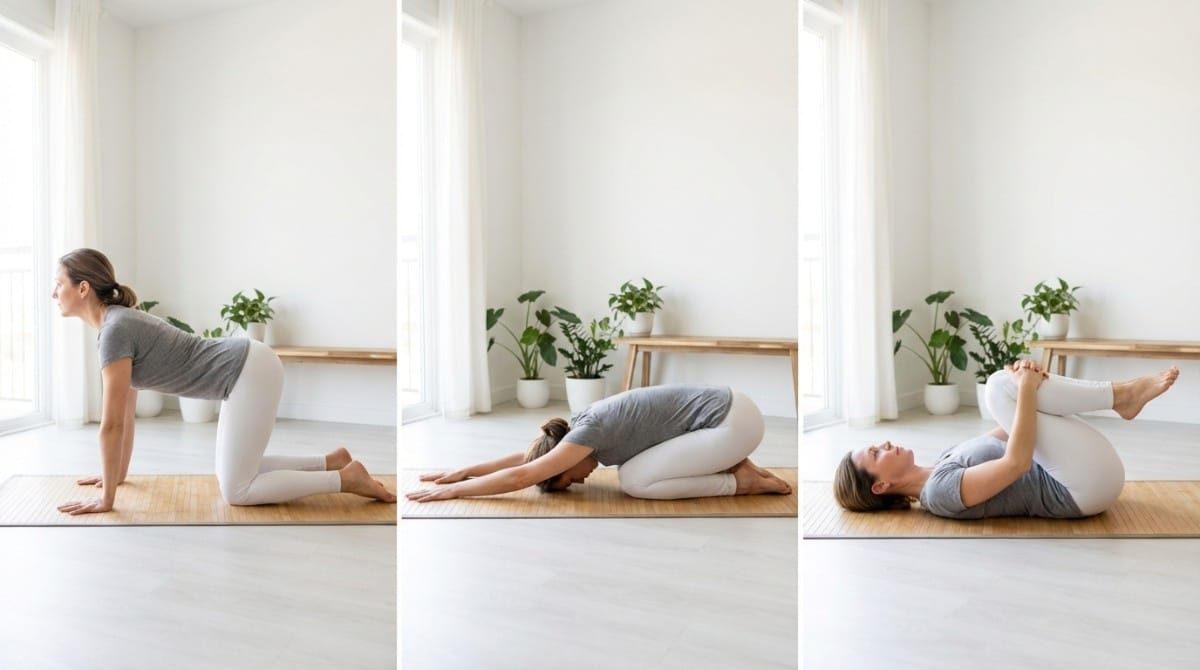
How to Do the 5 Most Effective Stretches (Step-by-Step)
1. Cat-Cow 🐱
Muscles targeted: Erector spinae, multifidus, rectus abdominis
- Start on all fours - wrists under shoulders, knees under hips
- Inhale and drop your belly toward the floor, lifting your head and tailbone (cow)
- Exhale and round your spine toward the ceiling, tucking chin and pelvis (cat)
- Move slowly - 1 full breath per position
- Do 10 reps. Focus on feeling the movement at each spinal segment.
Common mistake: Rushing the movement. Slow, controlled motion increases mobility. Fast rocking doesn't.
2. Knees-to-Chest 🦵
Muscles targeted: Lumbar extensors, glutes, hip flexors
- Lie on your back with both legs extended
- Draw both knees toward your chest simultaneously
- Wrap your hands around your shins or behind your thighs
- Gently rock side to side for 10 seconds, then hold still for 30 seconds
- Release and repeat 3 times
Progression: Try pulling one knee at a time while extending the opposite leg for a deeper lumbar stretch.
3. Supine Spinal Twist (Windshield Wipers)
Muscles targeted: Erector spinae, obliques, sacral muscles
- Lie on your back with knees bent, feet flat
- Extend both arms out to the sides at shoulder height
- Exhale and slowly drop both knees to the right
- Hold for 5 seconds, inhale back to center
- Repeat on the left - 5 reps per side, then hold each side for 20 seconds
Mistake to avoid: Lifting your opposite shoulder off the floor. Keep both shoulders grounded.
4. Child's Pose 🧘
Muscles targeted: Lumbar extensors, glutes, hip rotators
- Kneel with big toes touching, sit back toward your heels
- Walk your hands forward until your forehead rests on the mat
- Let your arms extend fully or rest alongside your body
- Breathe deeply - each exhale, allow your lower back to soften further
- Hold 60 seconds minimum for real tissue release
Tip: A pillow under your hips reduces strain if you have knee sensitivity.
5. Standing Hip Flexor Stretch
Muscles targeted: Psoas, iliacus, rectus femoris
- Step your right foot forward into a lunge position, knee above ankle
- Lower your left knee to the ground (use a cushion if needed)
- Keep your torso upright - don't lean forward
- Gently push your hips forward until you feel a deep stretch at the front of your left hip
- Hold 30 seconds. Repeat on the other side.
Physiotherapists often recommend this stretch for desk workers because the psoas - the primary hip flexor - directly attaches to the lumbar vertebrae. When it's tight, it creates a forward pull that compresses the lower back.
Research & Expert Insight
Posture specialists note that lower back tightness in desk workers is rarely isolated to the lumbar muscles themselves. It's usually the result of a chain reaction: tight hip flexors pull the pelvis forward, glutes switch off, and the lower back takes on excessive load throughout the day.
This is why stretching alone - without addressing the posture pattern driving the tightness - often provides only temporary relief. If you're stuck in that cycle, understanding why back pain keeps returning is a useful next step.
Step-by-Step Recovery Framework: 10-Minute Daily Routine 📋
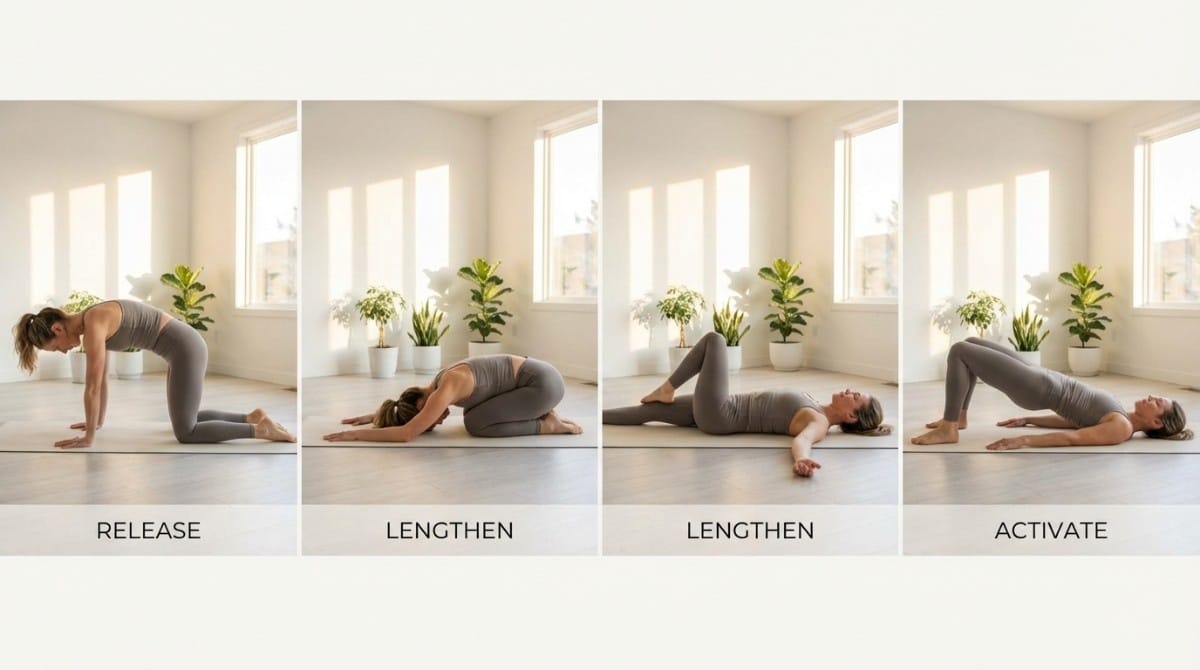
This framework follows a release-activate-integrate sequence used by physiotherapists for lumbar tightness recovery.
Phase 1 - Release (3 minutes)
- Cat-Cow: 10 reps
- Knees-to-Chest: 30-second hold x2
Phase 2 - Lengthen (4 minutes)
- Child's Pose: 60 seconds
- Supine Spinal Twist: 20 seconds each side x2
- Supine Hamstring Stretch: 30 seconds each side
Phase 3 - Activate (3 minutes)
- Pelvic Tilts: 10 reps (engage deep core before moving)
- Glute Bridges: 10 slow reps (focus on glute squeeze, not lower back arch)
Do this daily. Morning works best for many people - the spine benefits from gentle mobilization after a night of compression in sleep.
💡 If you want a fully personalized version of this routine - one that adapts to your specific posture pattern rather than a generic template - Backed AI builds a tailored recovery plan based on your actual posture scan, so you're not guessing which exercises apply to you.
How to Prevent Lower Back Tightness from Returning
Stretching is the start. Keeping tightness away requires habit change. 🔁
At your desk:
- Set a timer to stand every 45-60 minutes
- Adjust your chair so your hips are at 90 degrees
- Position your screen at eye level to avoid forward head drift
- Use a lumbar support cushion or roll
In daily movement:
- Strengthen your core - not just crunches, but deep stabilization work
- Strengthen your glutes - this is the single biggest lever for lower back health
- Build hip mobility - stiff hips force the lower back to compensate
Posture specialists suggest that most adults with recurring lower back tightness are in a cycle they don't recognize: they sit, they tighten, they stretch, they sit again. Breaking that cycle means addressing the posture pattern driving it.
For desk workers specifically, a structured daily posture routine can provide a practical starting point that takes under 15 minutes.
When This Approach Doesn't Work
Stretches and mobility work are highly effective for most cases of lower back tightness. But there are situations where they won't be enough - or where they require modification.
See a healthcare professional if:
- Pain is severe, sharp, or radiating down your leg (possible sciatica)
- Tightness appeared after a fall, collision, or sudden movement
- You have a known disc condition or spinal structural issue
- Symptoms worsen during or after stretching
- Numbness, tingling, or weakness is present in the legs
Where stretching alone falls short:
- Structural imbalances (leg length discrepancy, scoliosis)
- Significant anterior pelvic tilt requiring targeted corrective work
- Chronic pain with central sensitization - this requires professional guidance
Stretching is a tool, not a cure-all. Most people with tight lower backs benefit most from a combination of mobility, strength, and posture correction - not just stretching in isolation.
Final Takeaway
Lower back tightness is one of the most common physical complaints in adults - and one of the most preventable. The stretches in this guide will give you real relief. But the key to lasting results is understanding what's causing the tightness and addressing that pattern directly.
Release the muscles. Lengthen the tissue. Activate the weak links. Then build the habits that keep it from coming back.
If you want to go beyond generic stretching and work with a plan built around your actual posture and movement patterns, that's where personalized AI posture correction becomes a genuinely useful upgrade.
Why Most Exercise Plans Fail
Generic stretch lists help in the short term. But most people cycle through the same routines without lasting results. Here's why:
- No personalization - The same 9 stretches don't work equally for everyone. If your tightness is driven by anterior pelvic tilt, you need different priority exercises than someone whose issue is tight hamstrings.
- Wrong form, no feedback - Incorrect technique reduces effectiveness and can worsen the problem. Without real-time guidance, most people don't know if they're doing it right.
- No progression - The body adapts. Doing the same stretches indefinitely stops producing results. A good plan evolves with your recovery.
- Inconsistency - Doing a routine once after reading an article doesn't build lasting change. Consistency over weeks is what actually rewires muscle patterns.
A Smarter Way to Fix Lower Back Tightness
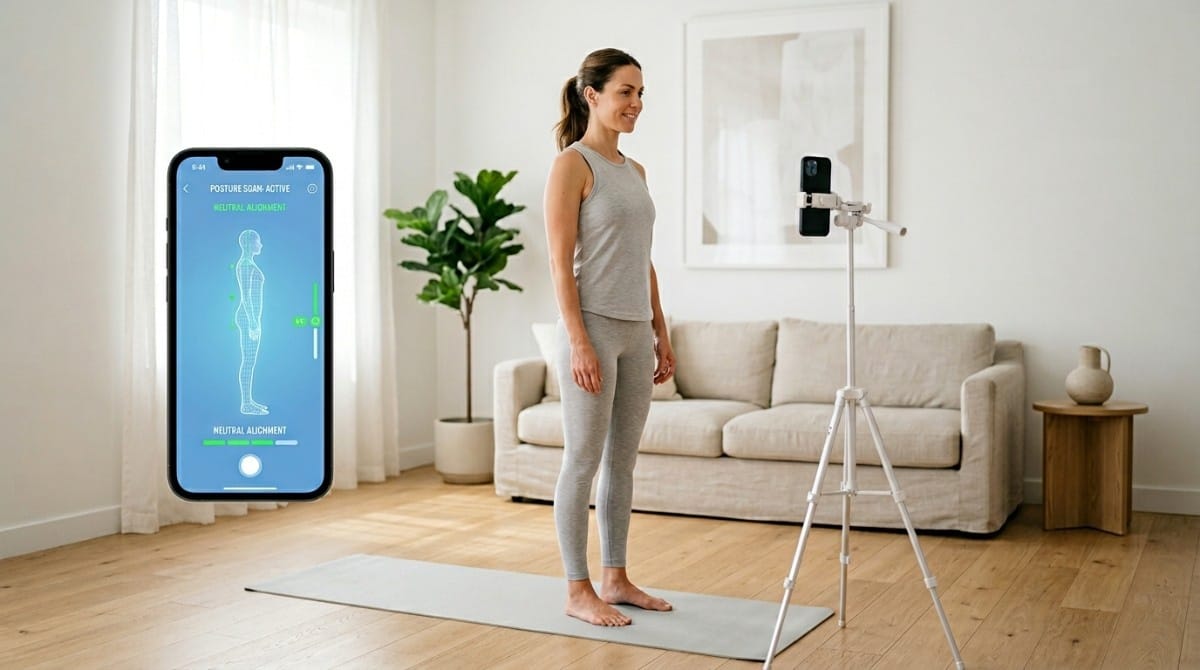
Backed AI was built specifically for this problem. It's an AI-powered posture correction app that doesn't give you a generic stretch list - it analyzes your actual posture using your phone's camera, then builds a personalized corrective exercise plan around your specific patterns.
What makes it different:
- 📸 AI posture scan - Identifies your specific imbalances in under 60 seconds
- 🎯 Personalized routines - Exercises matched to your posture profile, not a one-size-fits-all template
- 📈 Smart progress tracking - Your plan evolves as your posture improves
If you've been stretching the same muscles for months with limited results, the issue probably isn't effort - it's that you're working on the wrong things for your body.
Download Backed AI and start correcting your posture today.
FAQ
Q1: How long does it take to relieve lower back tightness?
Most people feel meaningful relief within 5-10 minutes of targeted stretching. For lasting results, daily practice over 2-4 weeks is typically needed to see consistent improvement.
Q2: Why is my lower back tight even though I stretch regularly?
If stretching isn't fixing the problem, the tightness is likely being driven by a structural issue - such as weak glutes, tight hip flexors, or anterior pelvic tilt - that stretching alone doesn't address. Targeted strengthening and posture correction are usually needed alongside mobility work.
Q3: Is it okay to stretch a tight lower back every day?
Yes. Gentle daily stretching is safe and beneficial for most people with lower back tightness. Avoid aggressive or ballistic stretching. Focus on slow, controlled movements with steady breathing.
Q4: What causes lower back tightness in the morning?
Morning lower back tightness is common and usually caused by the spine compressing during sleep, combined with reduced circulation to the lumbar muscles overnight. A short 5-minute mobility routine after waking can significantly reduce this stiffness.
Q5: When should I stop stretching and see a doctor?
Stop stretching and consult a healthcare professional if your symptoms worsen during or after exercise, if you have pain radiating into your leg, or if you experience numbness, tingling, or sudden weakness in the lower limbs.